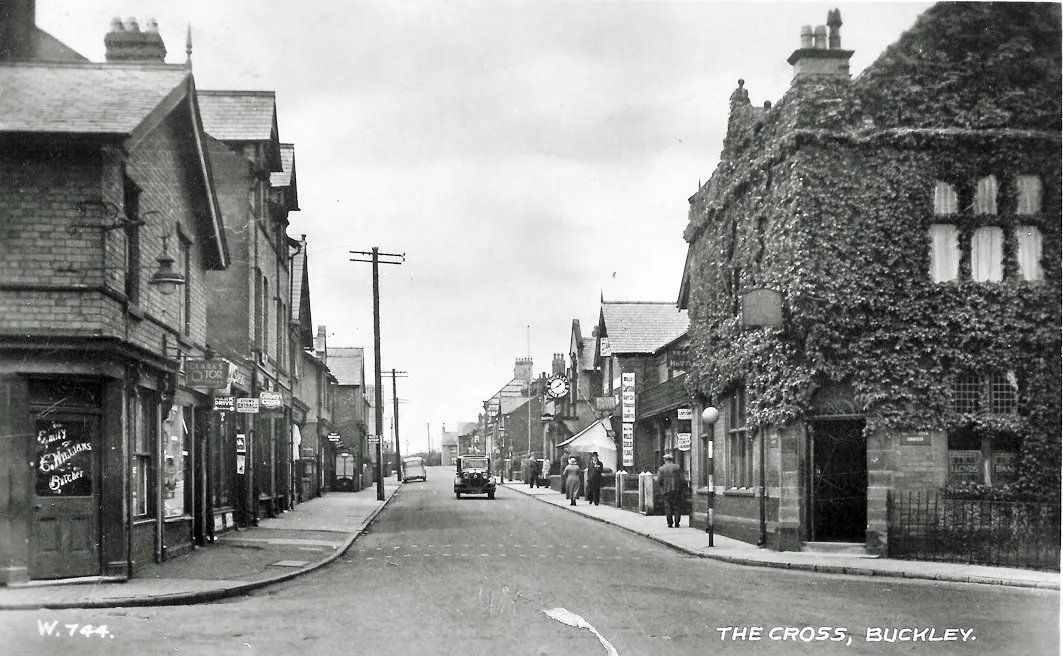
The Cross c.1940 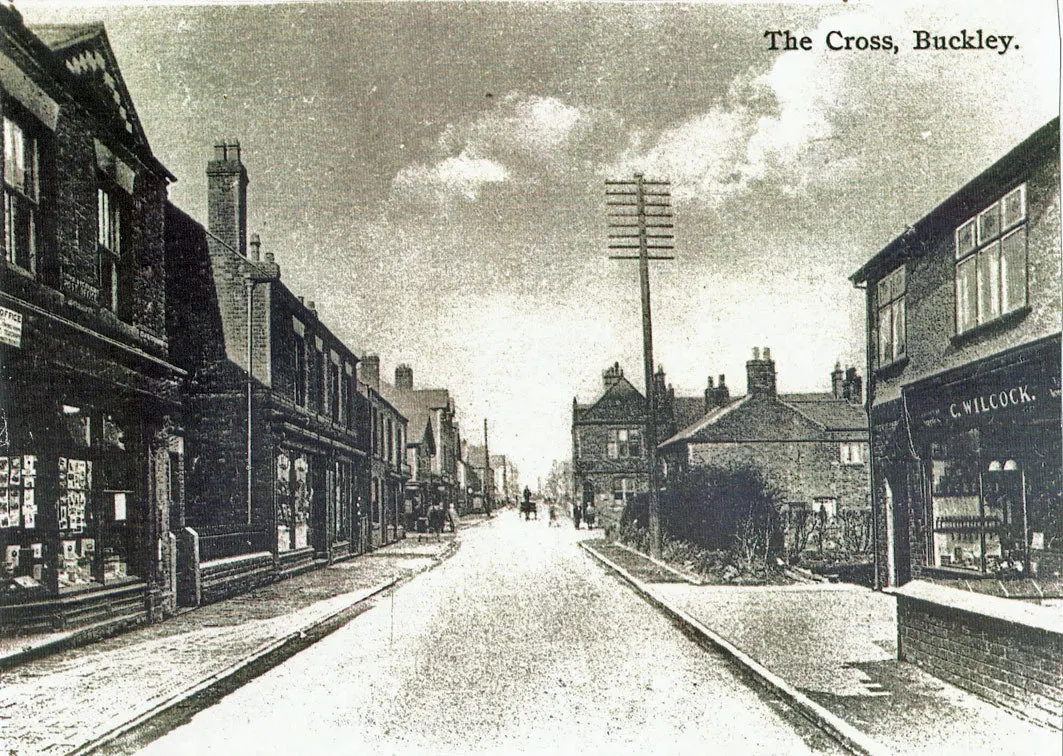
The Cross c.1930
Take a tour of the four corners of The Cross by scrolling down
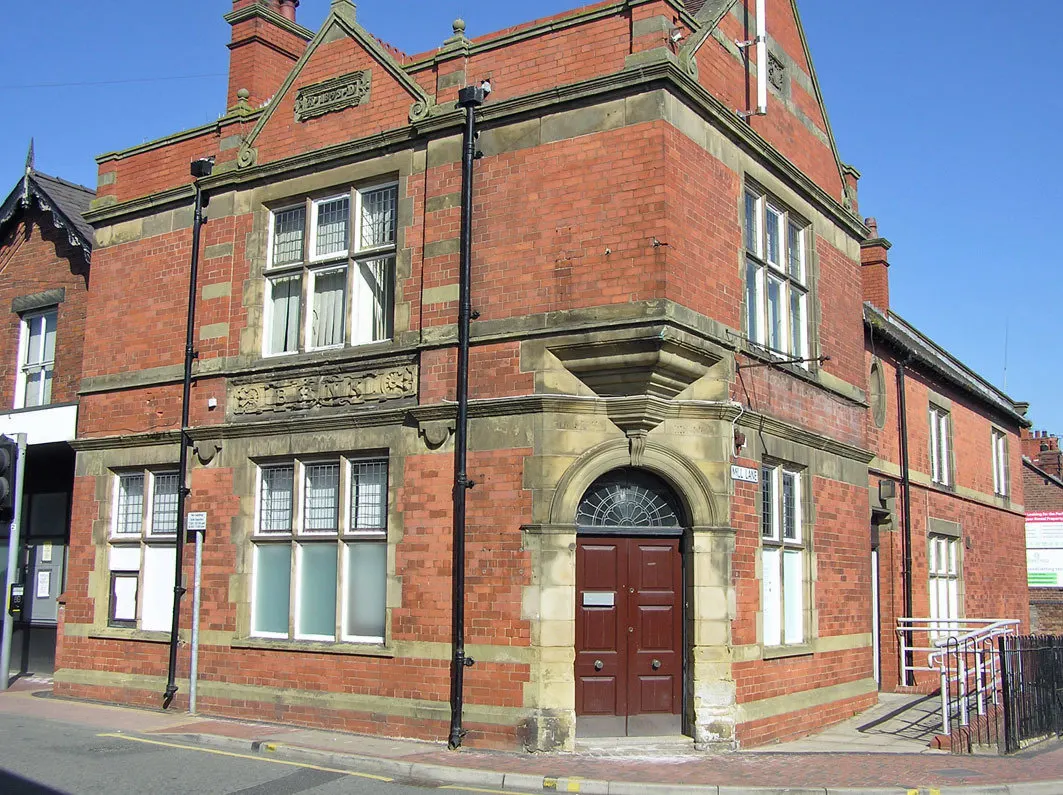
Lloyd's Bank built in 1893 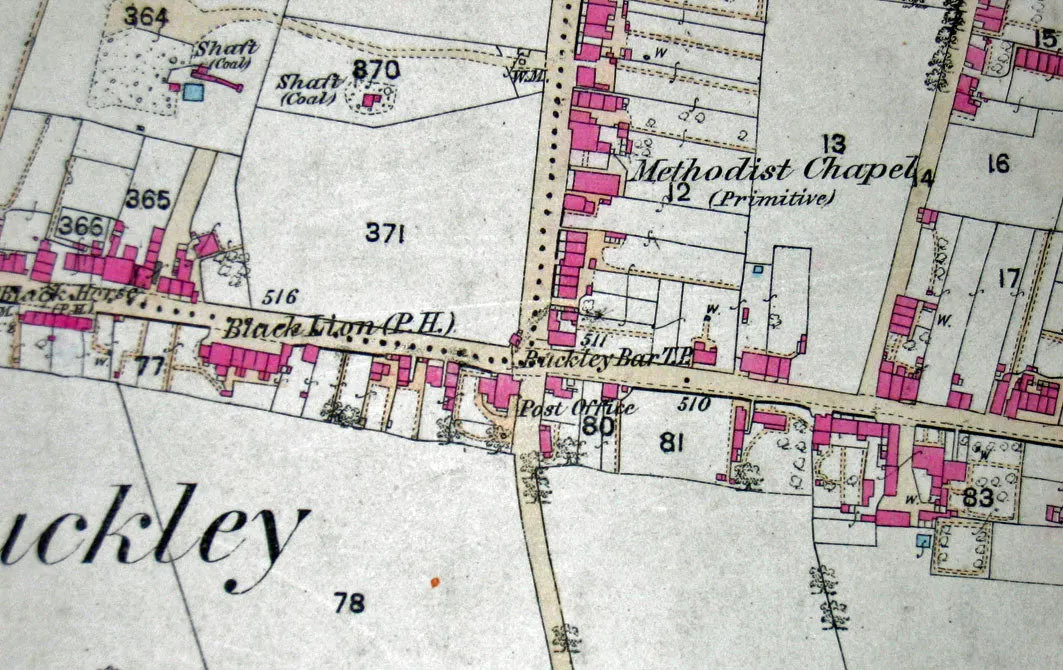
1870 map showing the toll bar and booth 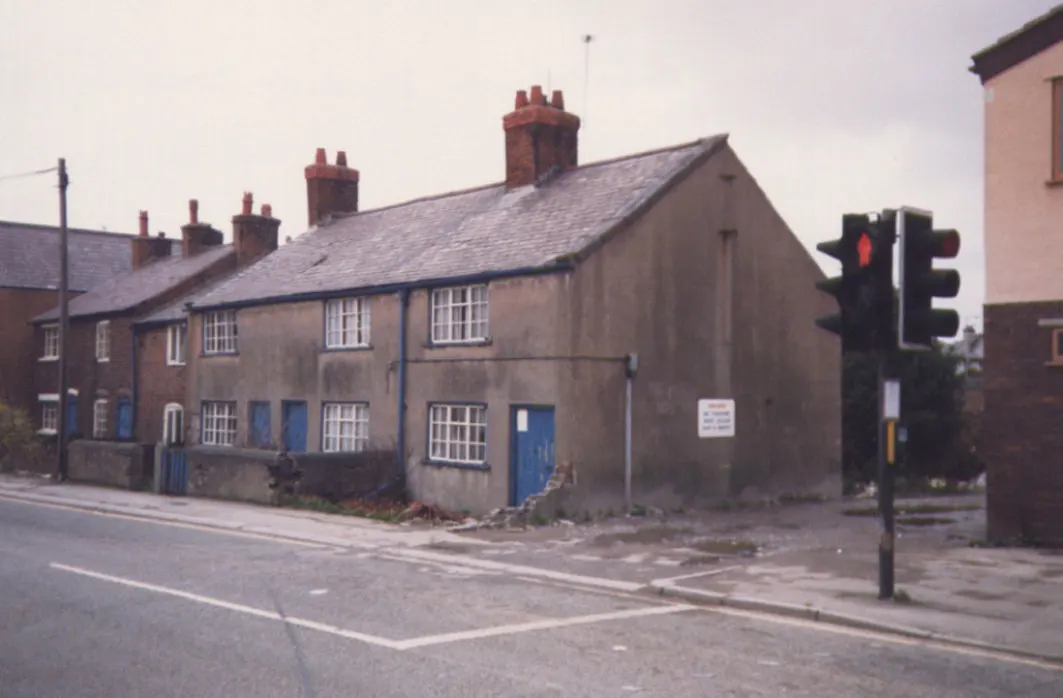
Old cottages Mill Lane 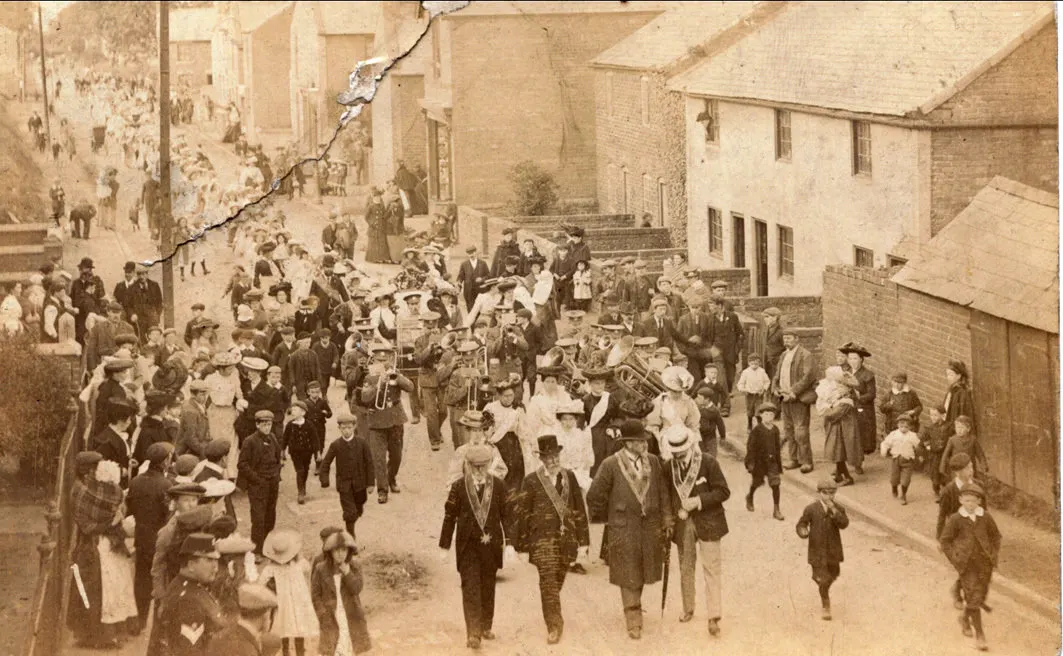
Ladies Day Parade passing Mill Lane Cottages the day after the Buckley Jubilee in 1907 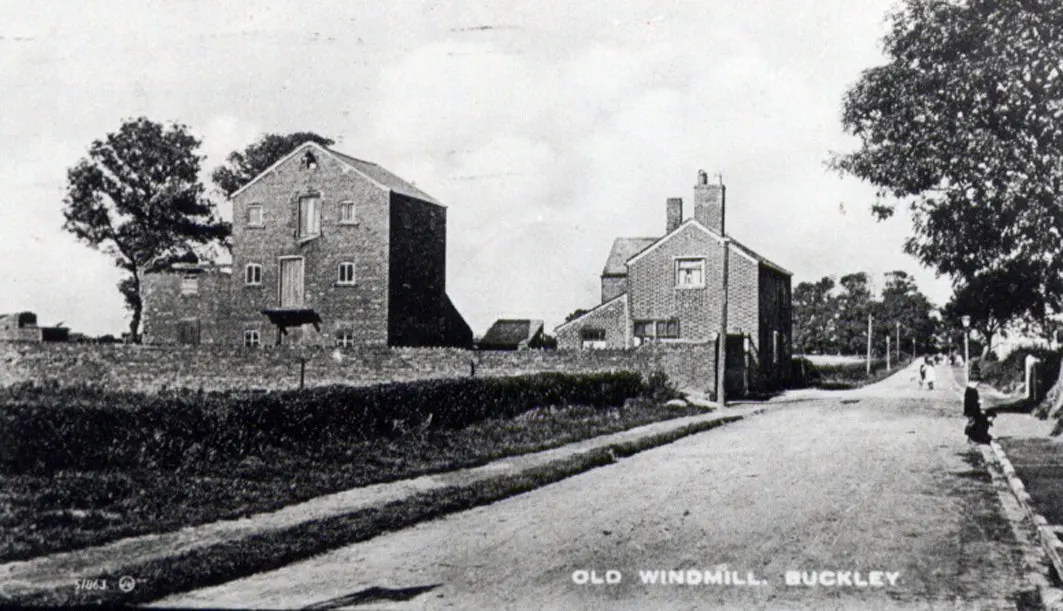
The old windmill, Mill Lane 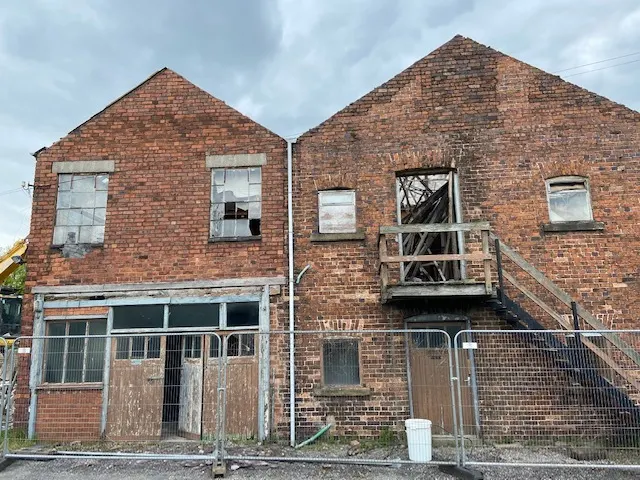
Demolition of the old windmill building 3.5.2020 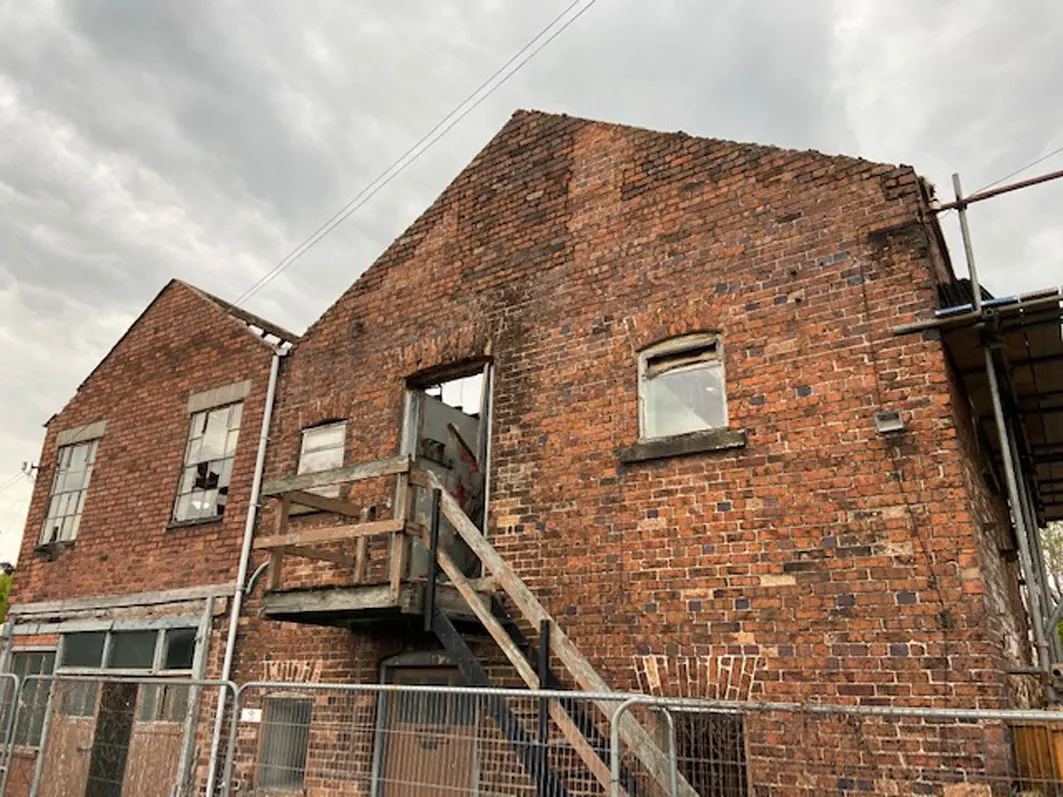
Demolition of the old windmill building 3.5.2020
Mill Lane/ Mold Road Corner (N.W.)
In the late 1810’s a proposal was made to drive a turnpike road from Broughton through Padeswood to join up at the Wylfa Hill with an existing turnpike road that had already been created from Broughton to Mold via the Warren Wood and Buckley Mountain. This new project was confirmed in 1820; the small dwelling housing the toll collector stood where the former Lloyd’s Bank now stands. The bar crossed Mold Road, the pillars of which now stand in front of a house near the Tivoli. The turnpike had fallen into disuse by the late 1880s, Lloyd’s Bank being built in 1893.
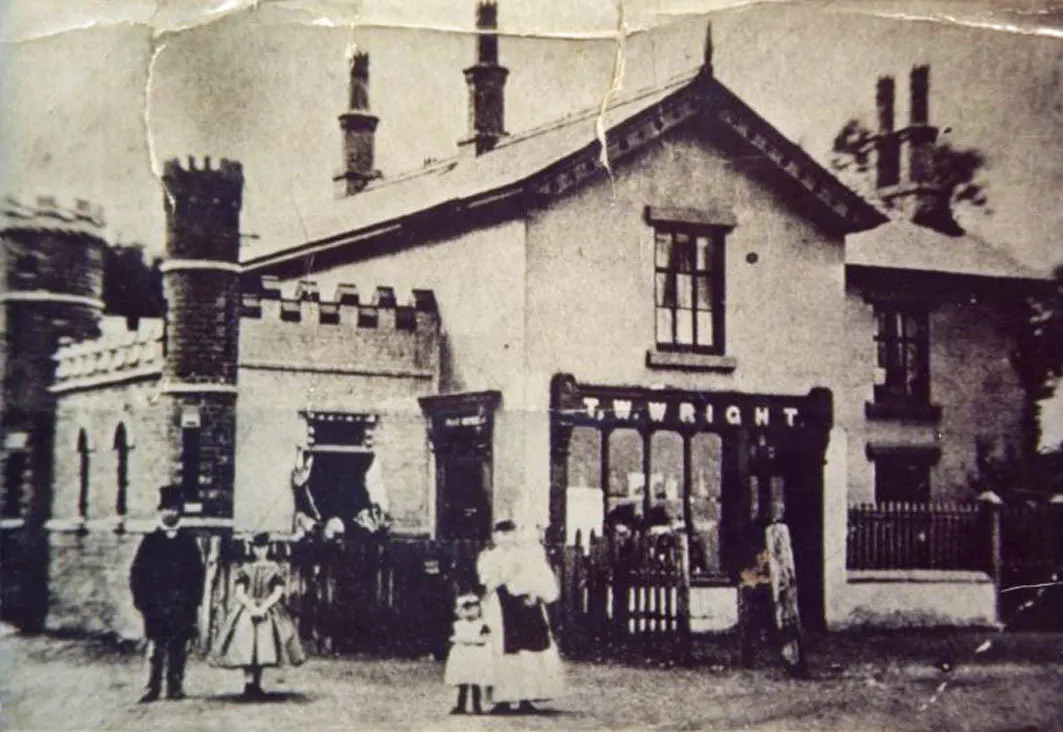
Wright's Chemist and Post Office 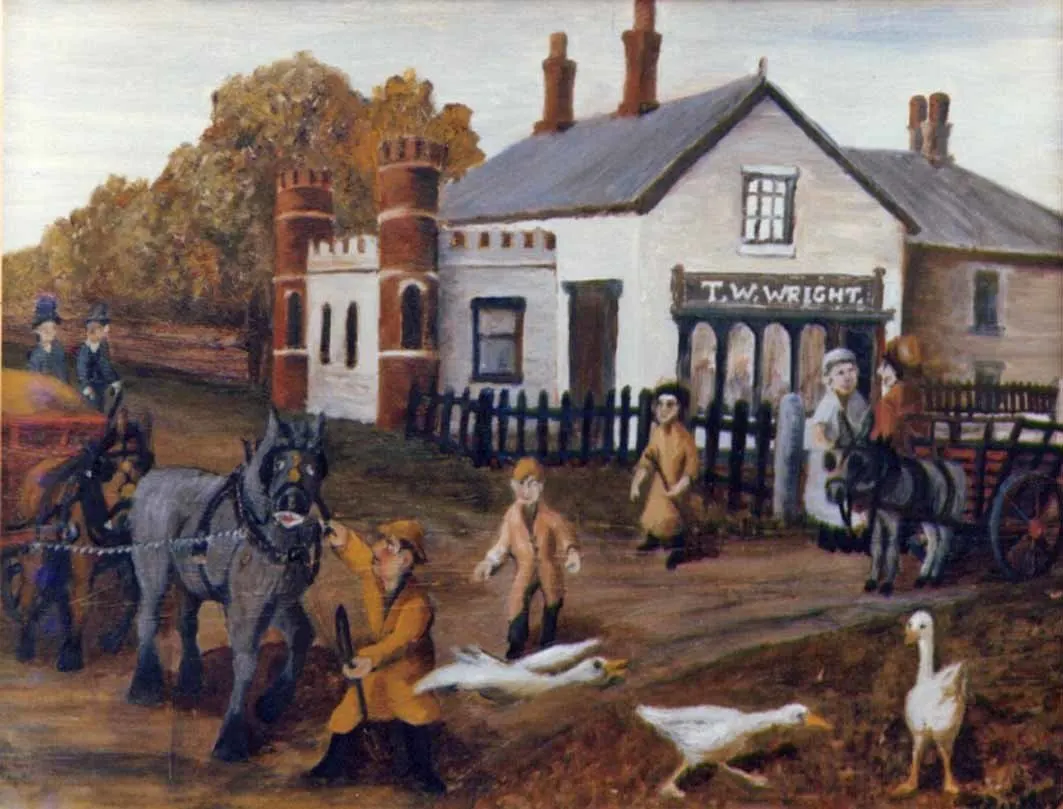
'Chaos at the Cross' - a painting by the late James Bentley 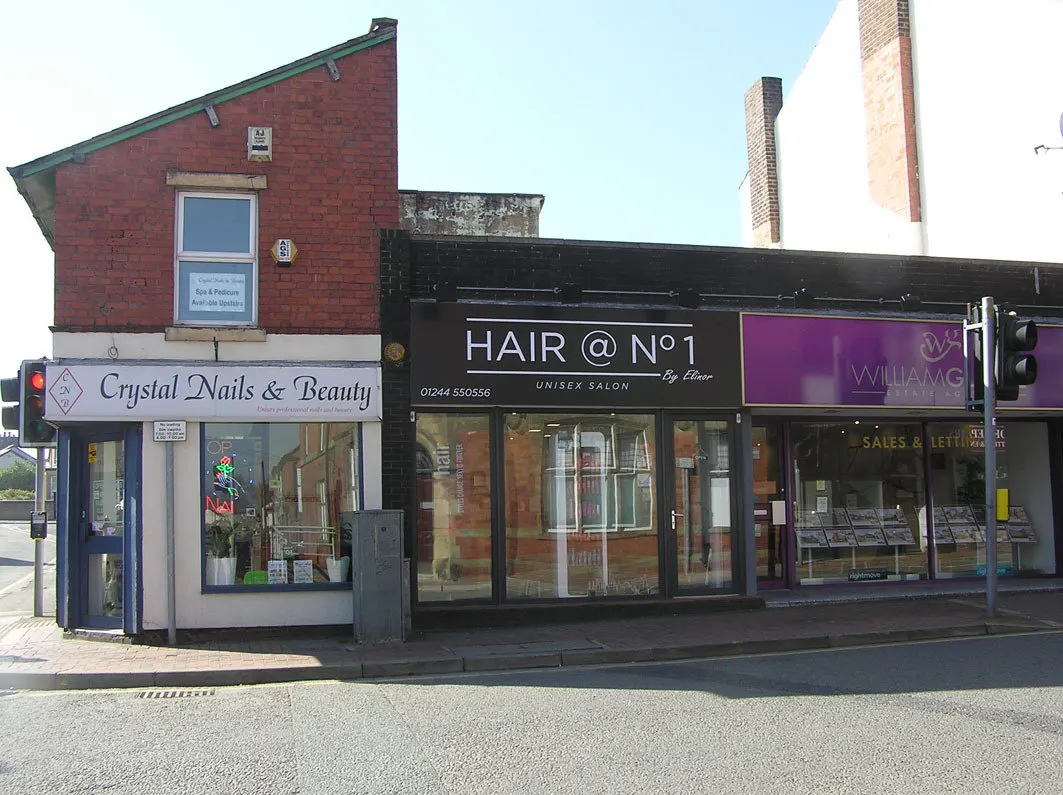
S.W. Corner - junction with Padeswood Road 2019 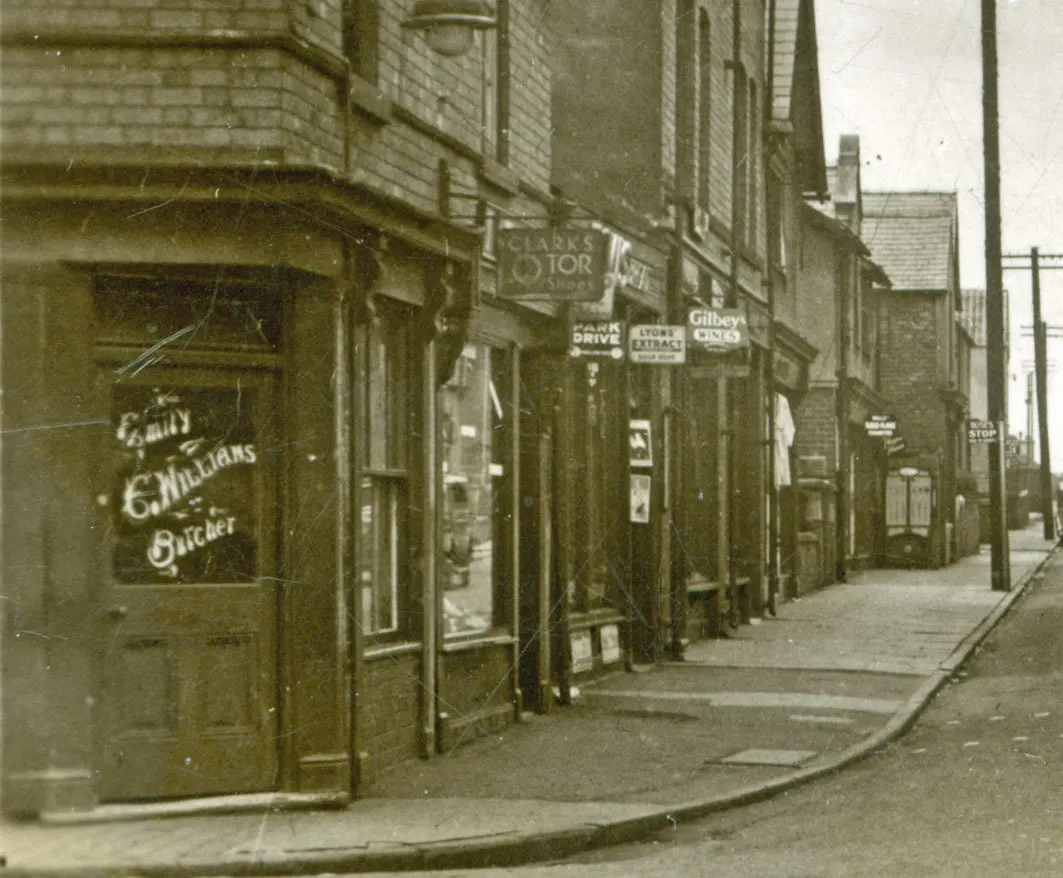
E Williams Butcher's c.1940 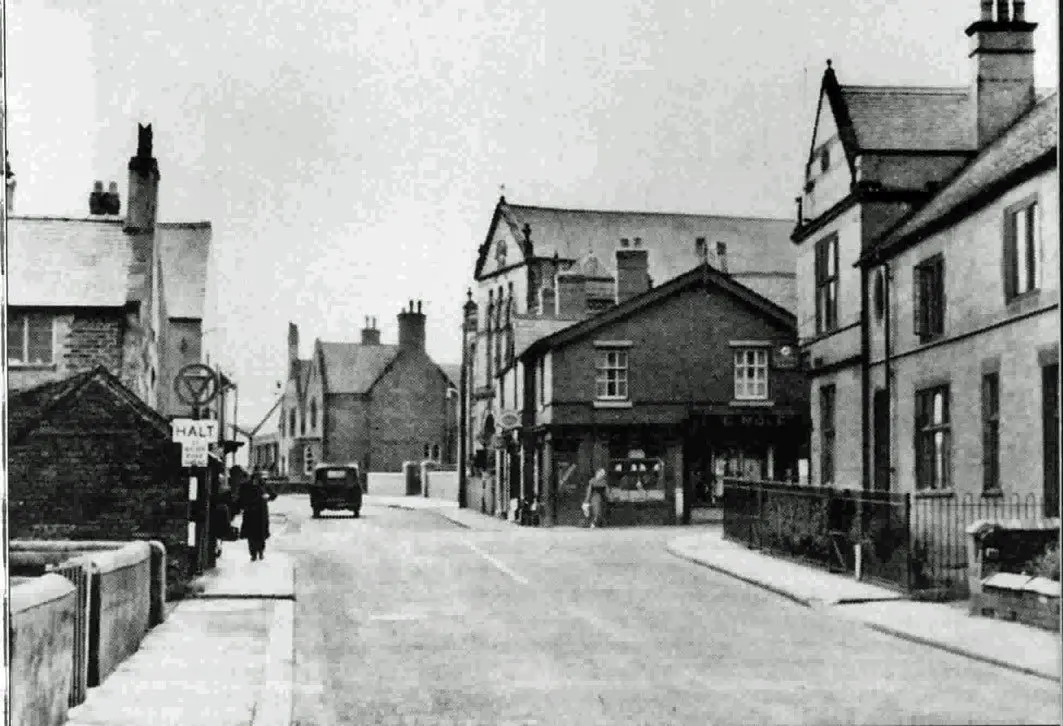
The view from Mill Lane to the Cross and Padeswood Road 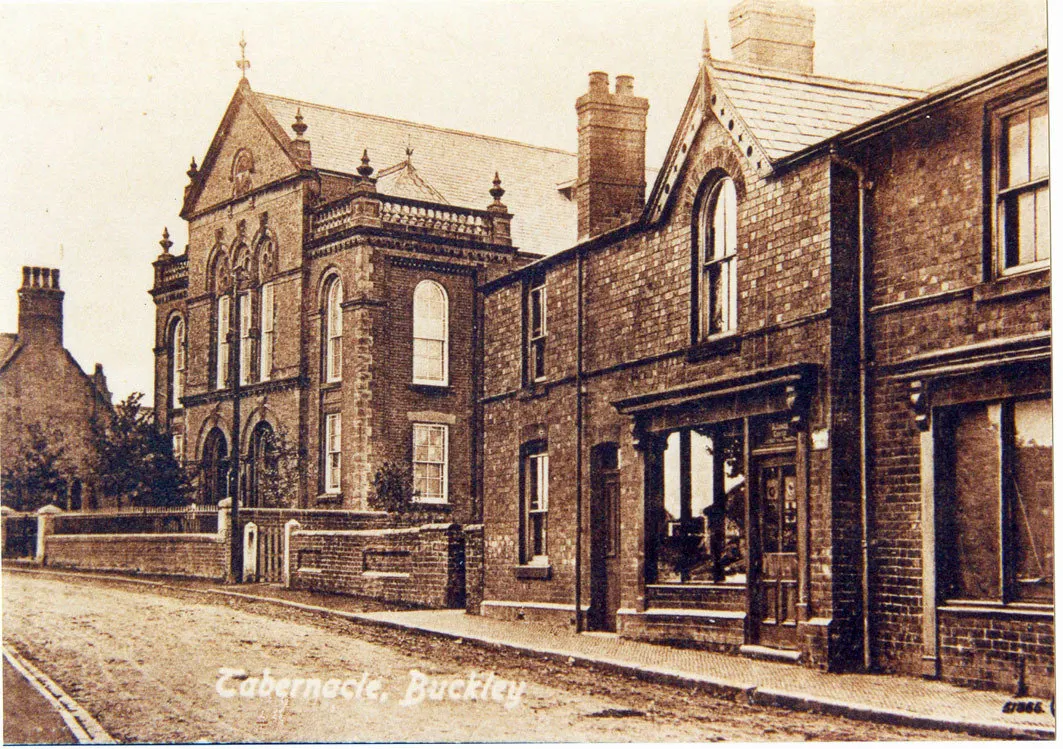
View up Padeswood Road with shops and Tabernacle Church 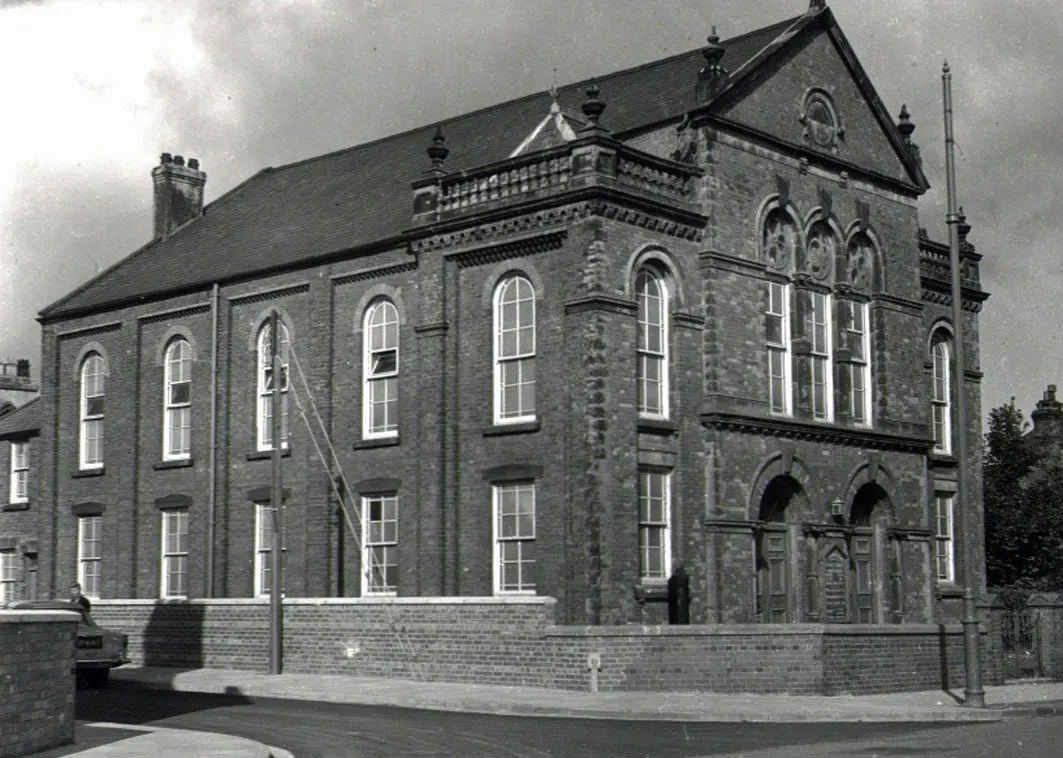
Former Tabernacle Church c.1960 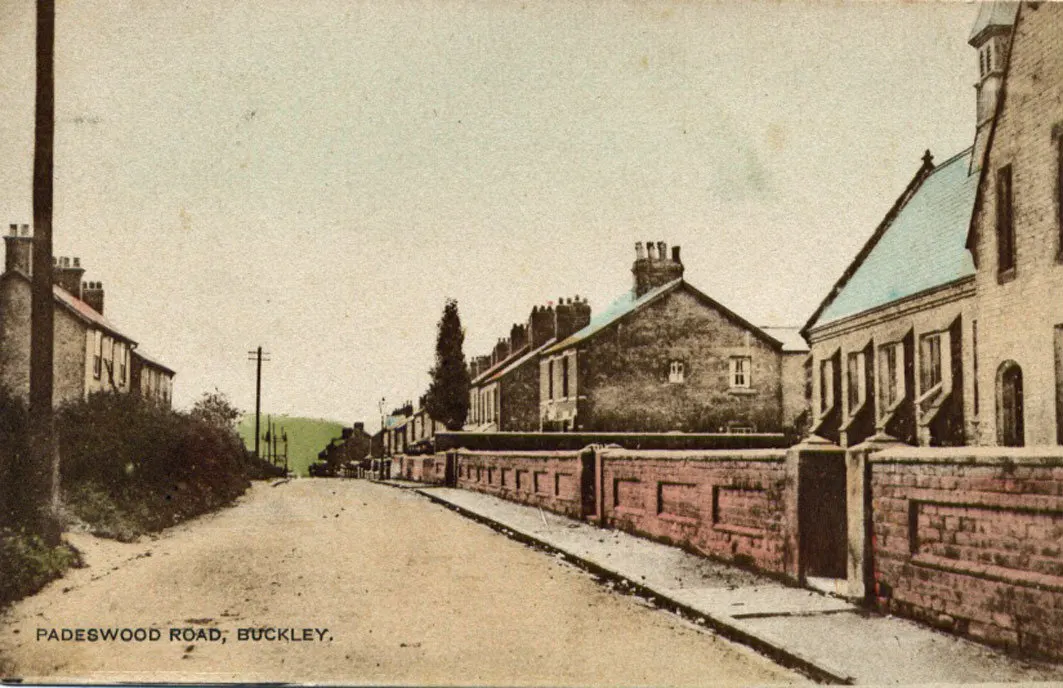
Padeswood Road c. 1900
Padeswood Road/Mold Road Corner (S.W.)
The ornate crenelated building was until recently thought to be the Buckley toll house. However, the building around 1860 was owned by TW Wright, listed as a chemist and druggist. By 1870, it was a post office. Sometime before 1899, it was demolished to be replaced by the current building. In the 1950s, it was a butcher’s shop.
Around the corner in Padeswood Road, at the junction to Tabernacle Street, stood the vast Tabernacle Primitive Methodist Church (1876 – 1994); the 200,000 bricks required were made on site and it took until 1919 for the building debt to be paid. It is replaced by the Buckley Cross Community Centre.
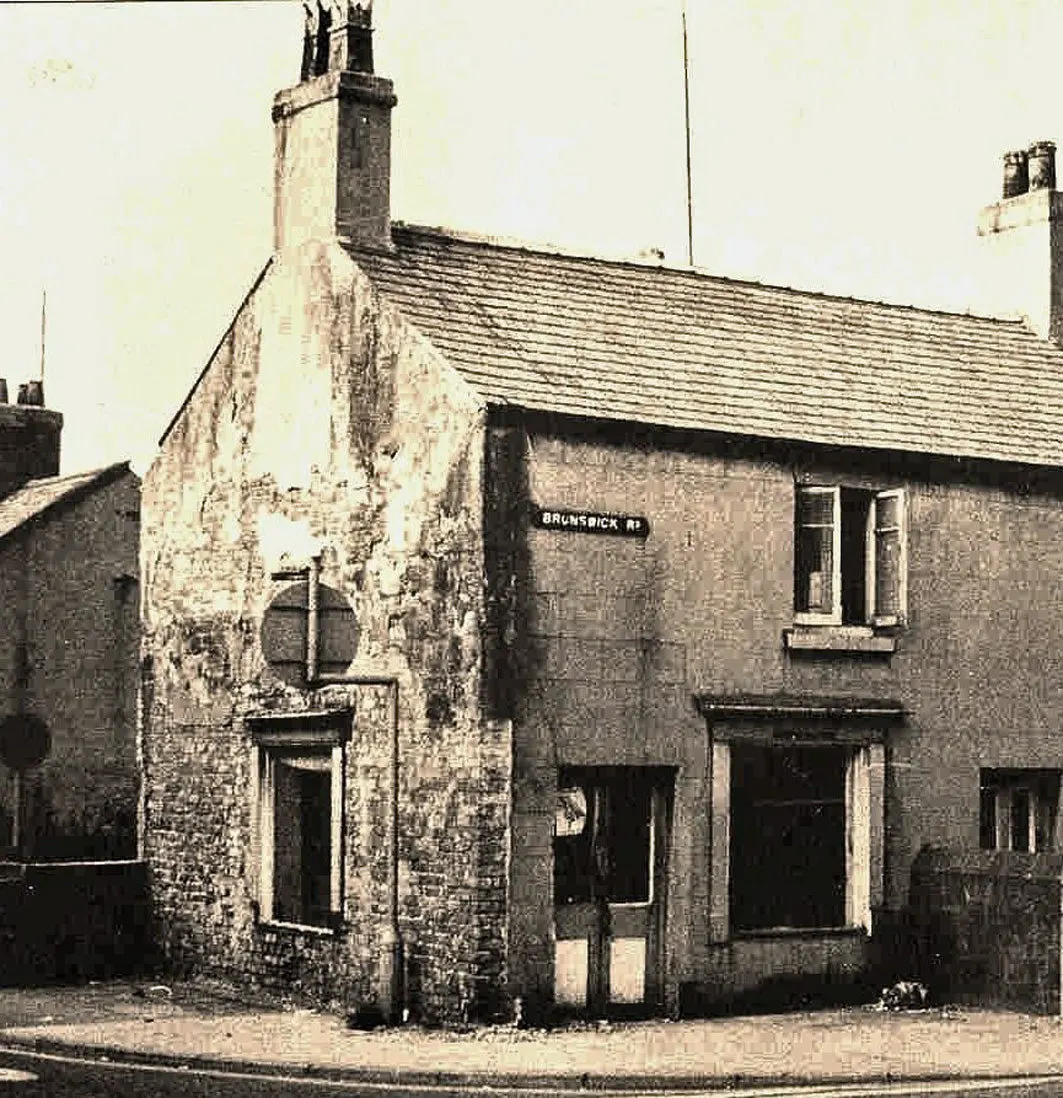
Hill's Chip Shop 1988 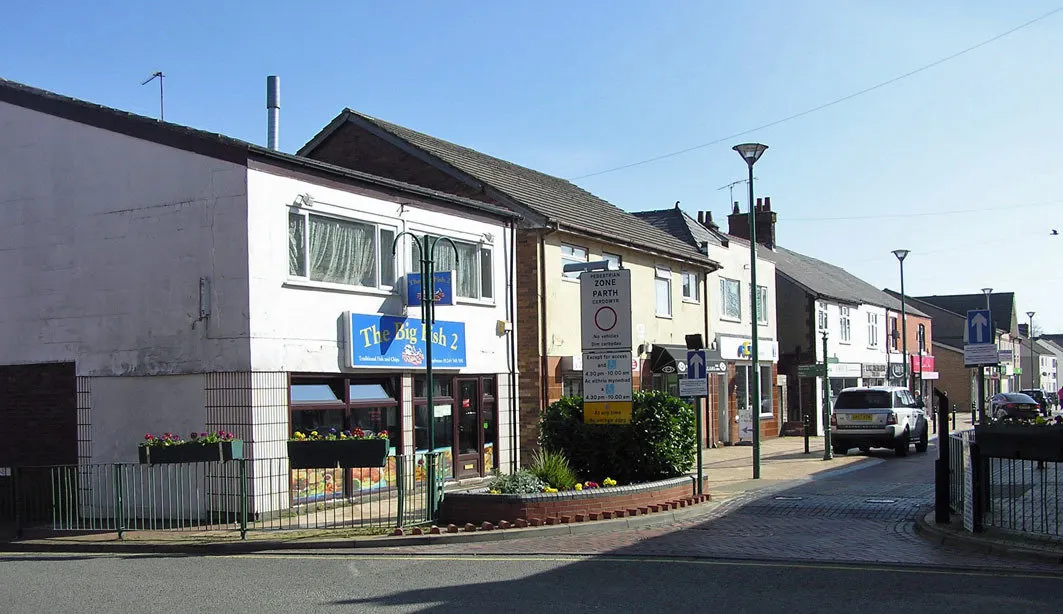
The Big Fish 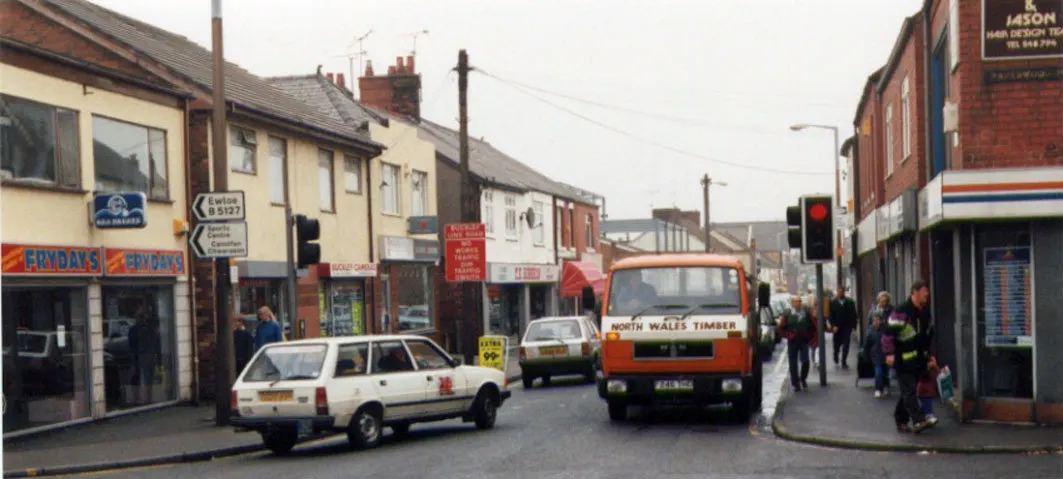
The Cross 1996 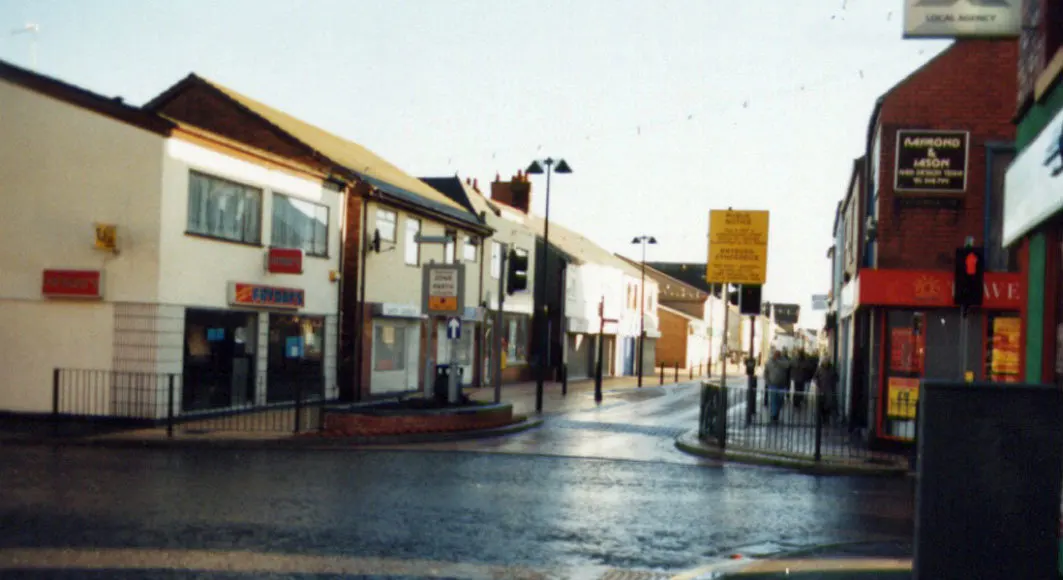
The Cross 2000 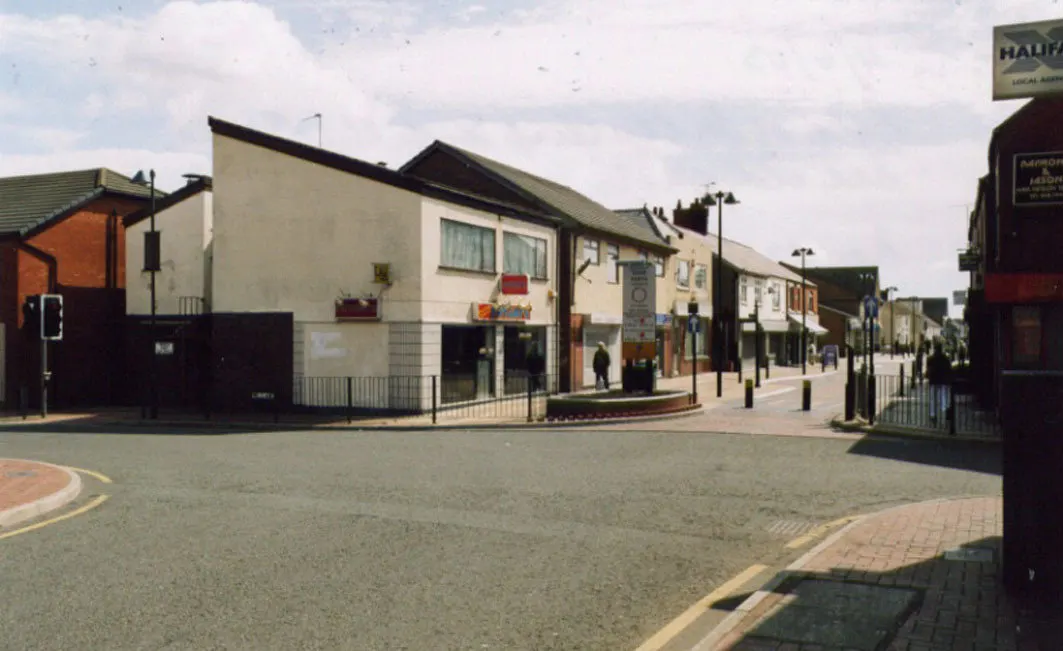
The Cross 2003
Padeswood Road/Brunswick Road Corner (N.E.)
For several decades now, a take-away has stood at this corner. Hill’s Fish and Chip Shop served Buckley for many years before the old building was replaced by the current one sometime in the 1990s. A mix of shops and cottages stood from The Cross to opposite The Precinct. In the 1940s and 1950s, if you walked up to the Precinct you would pass a boot and shoe repairers, an electrical shop, a butcher’s/grocer’s, a confectioner’s, a clothes shop, and a bread and milk shop as well as some cottages.
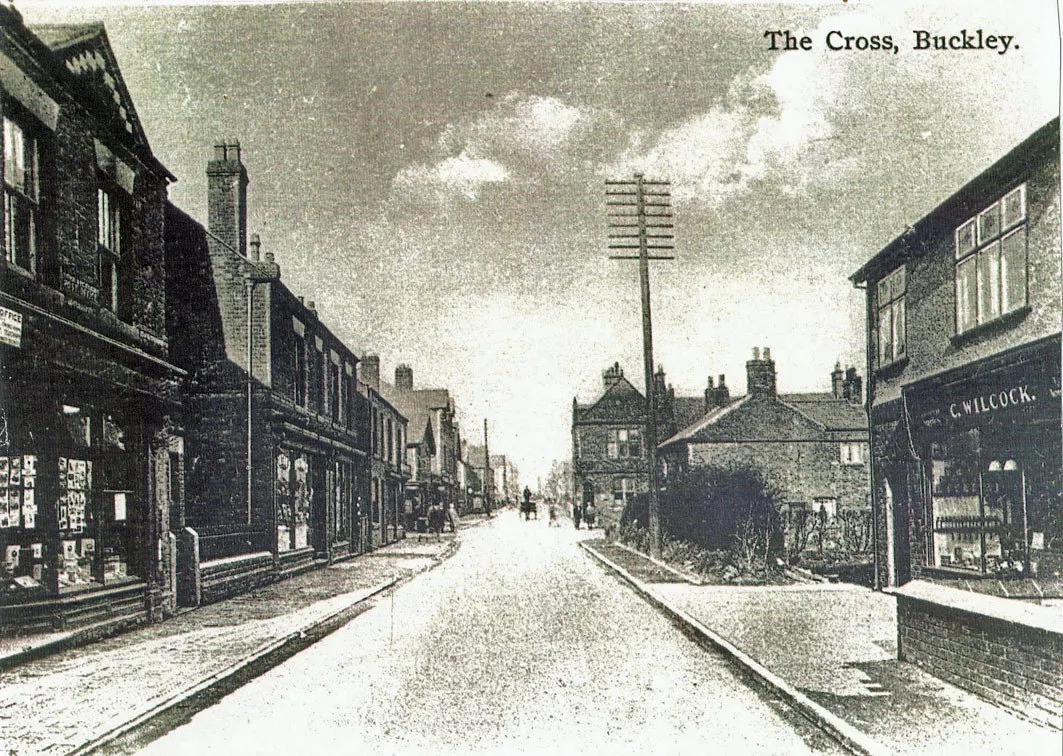
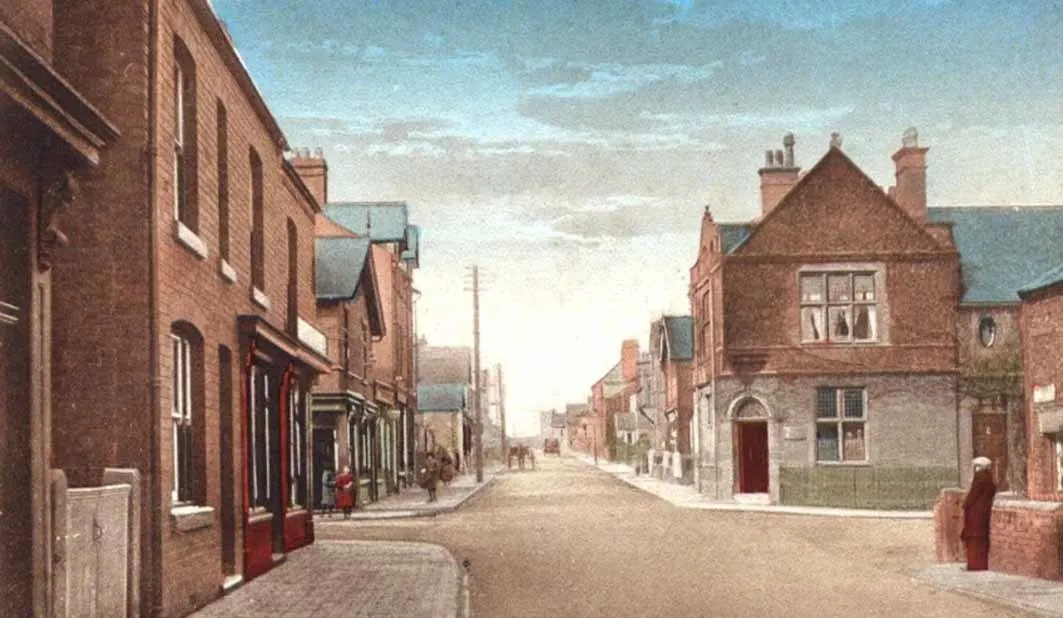
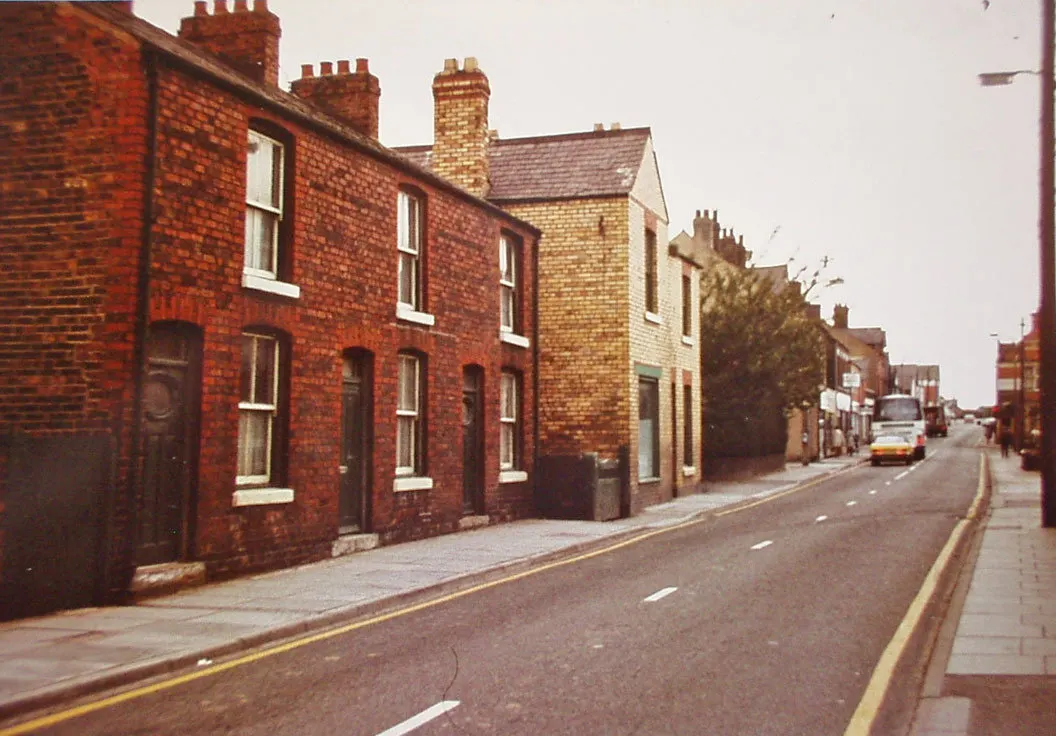
Cosy Cafe is the yellow brick building c.1960
Mill Lane/Brunswick Road Corner (S.E.)
On this corner of Brunswick Road once stood a grocer’s followed by a baby clothes shop, a men’s clothes shop, a post office, a doctor’s surgery, some cottages, a café, a photographer’s and another grocer’s.
The café was called Cosy Café or “The Cosy”. In their time, the Buckley Rechabites Friendly Society and others, the National Union of General Workers (in 1916), school classes (1940s) held their meetings at “The Cosy”. It was a favourite with commercial travellers and in 1918 was described as a temperance hotel.