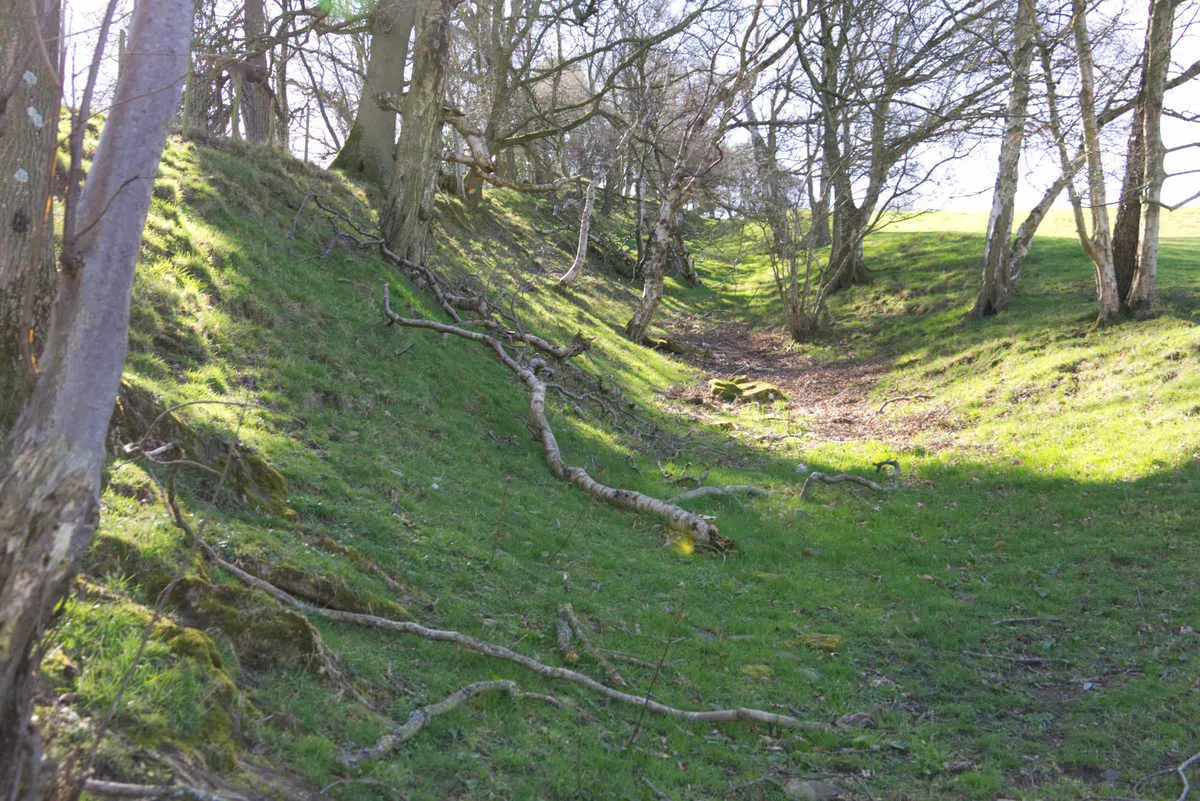
Offa's Dyke
Parking: On the bridge at Castle Mills
Go to the three ‘Battle of Crogen’ panels at Castle Mill.
To see Chirk Castle and Offa’s Dyke, walk up the path from the three panels (two ancient oaks are on the right, the ‘Oak at the Gate of the Dead’ and the ‘Duelling Tree’), up through the trees to the edge of a field where you walk alongside Offa’s Dyke on your left. At the top of the field climb over the stile to see Chirk Castle.
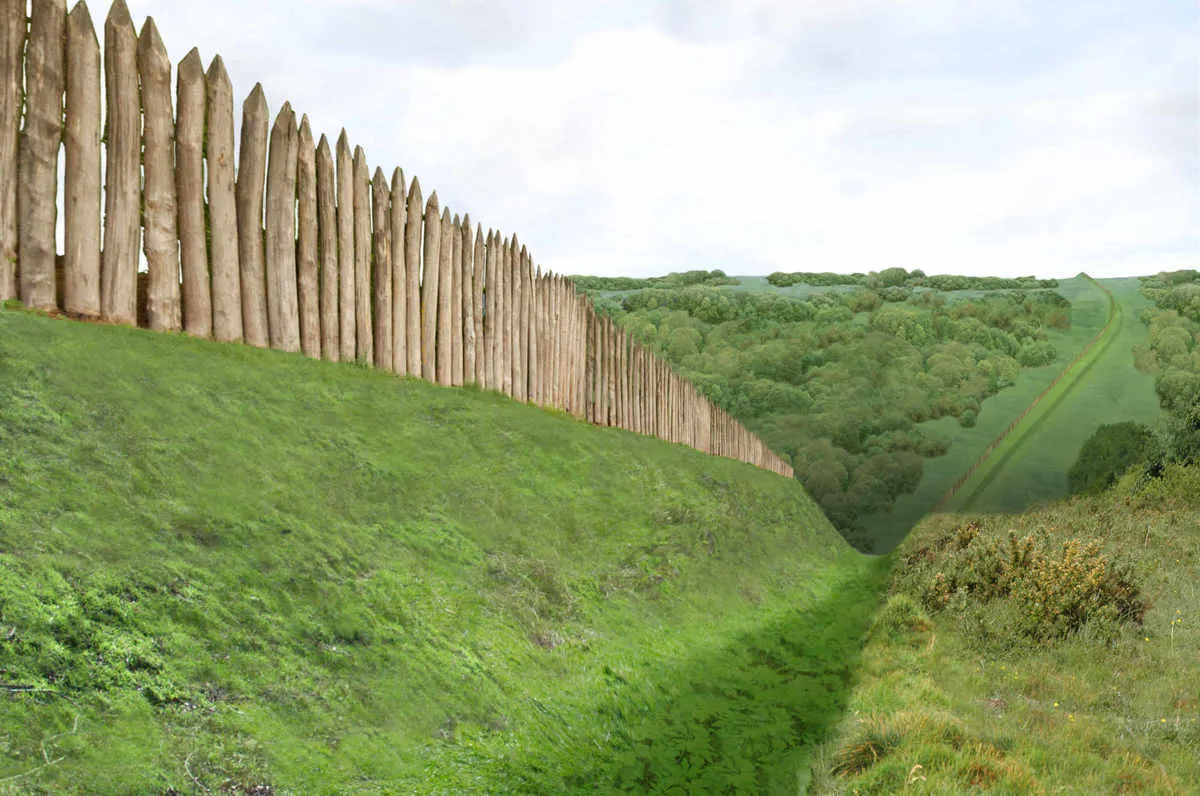
Reconstruction of Offa's Dyke 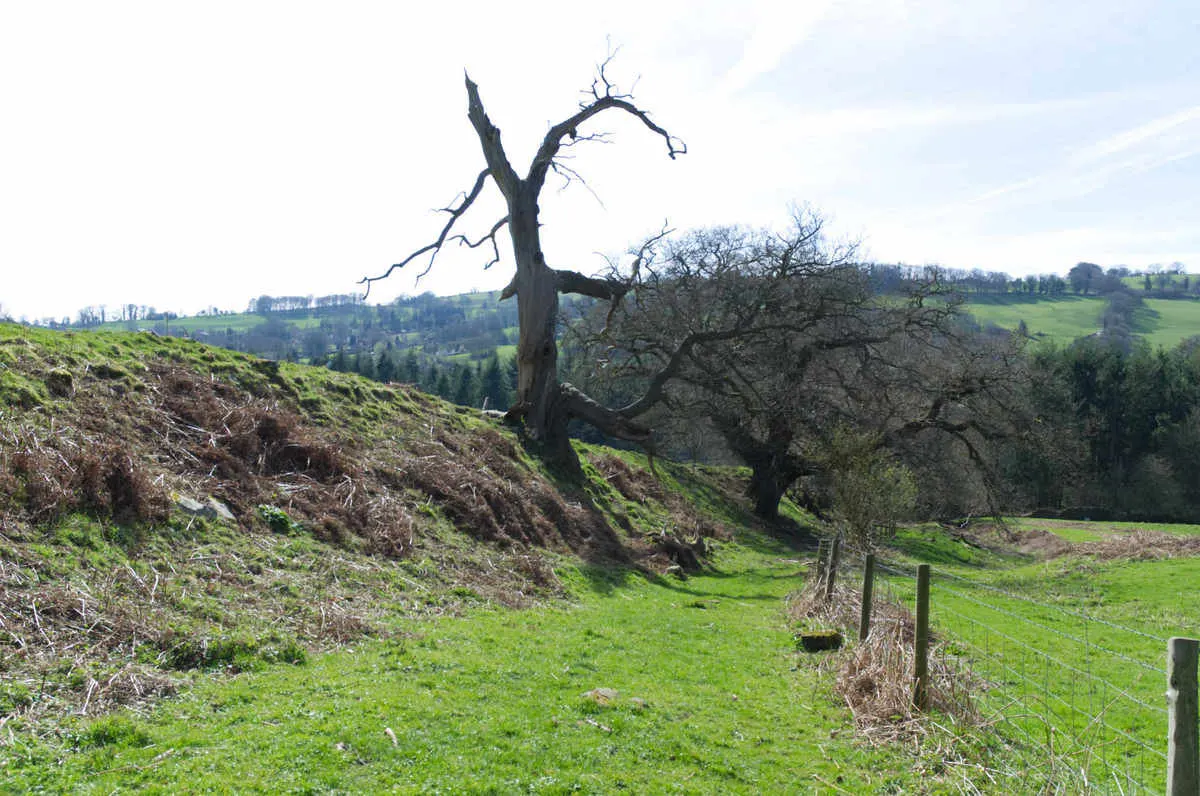
Offa's Dyke as it is now
Offa's Dyke
Offa’s Dyke was built in the 8th century at a time when Britain was not a single state but a number of small kingdoms. The Ceiriog Valley was part of Powys which had included much of modern Shropshire and Cheshire but those areas had been taken by the kingdom of Mercia. The kings of Powys fought to regain their lost territory by attacking the Mercian settlements. In response, Offa, king of Mercia, commanded the building of what was to be the longest bank and ditch in Britain to mark the boundary between Powys and other Britonic kingdoms to the south, and Mercia.
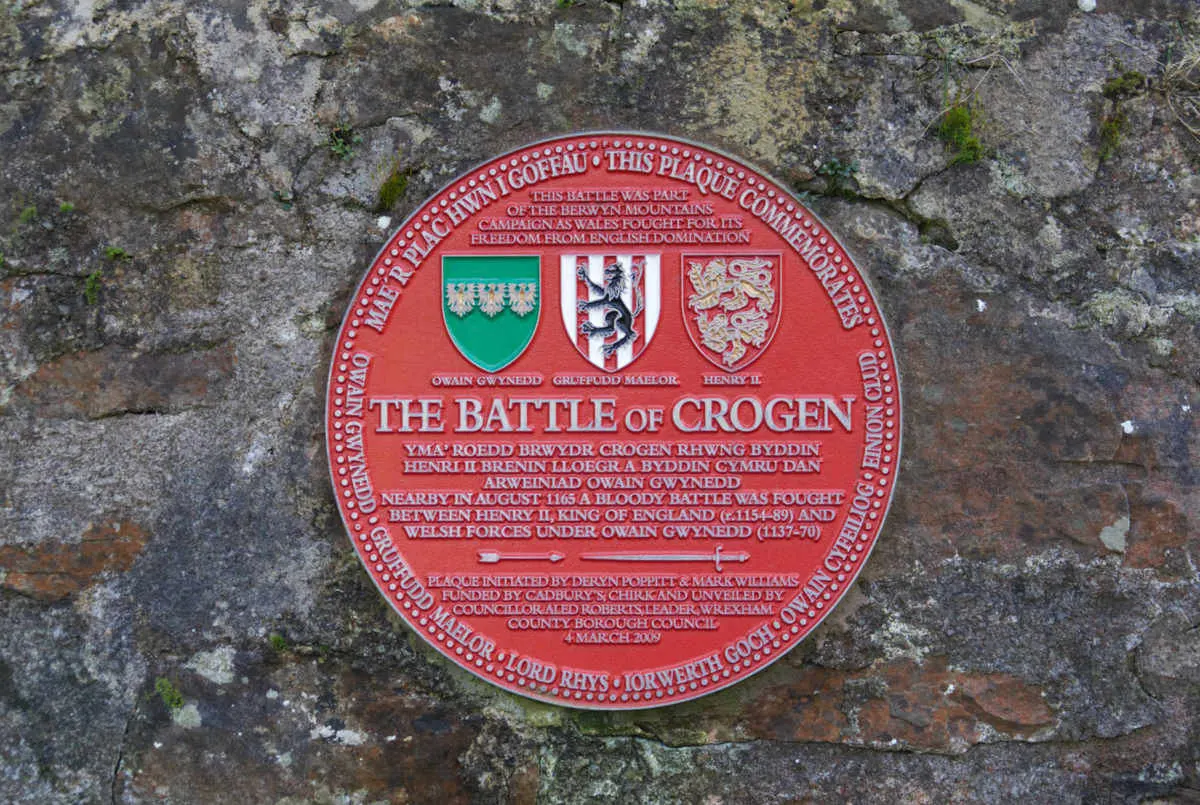
Plaque on the bridge. 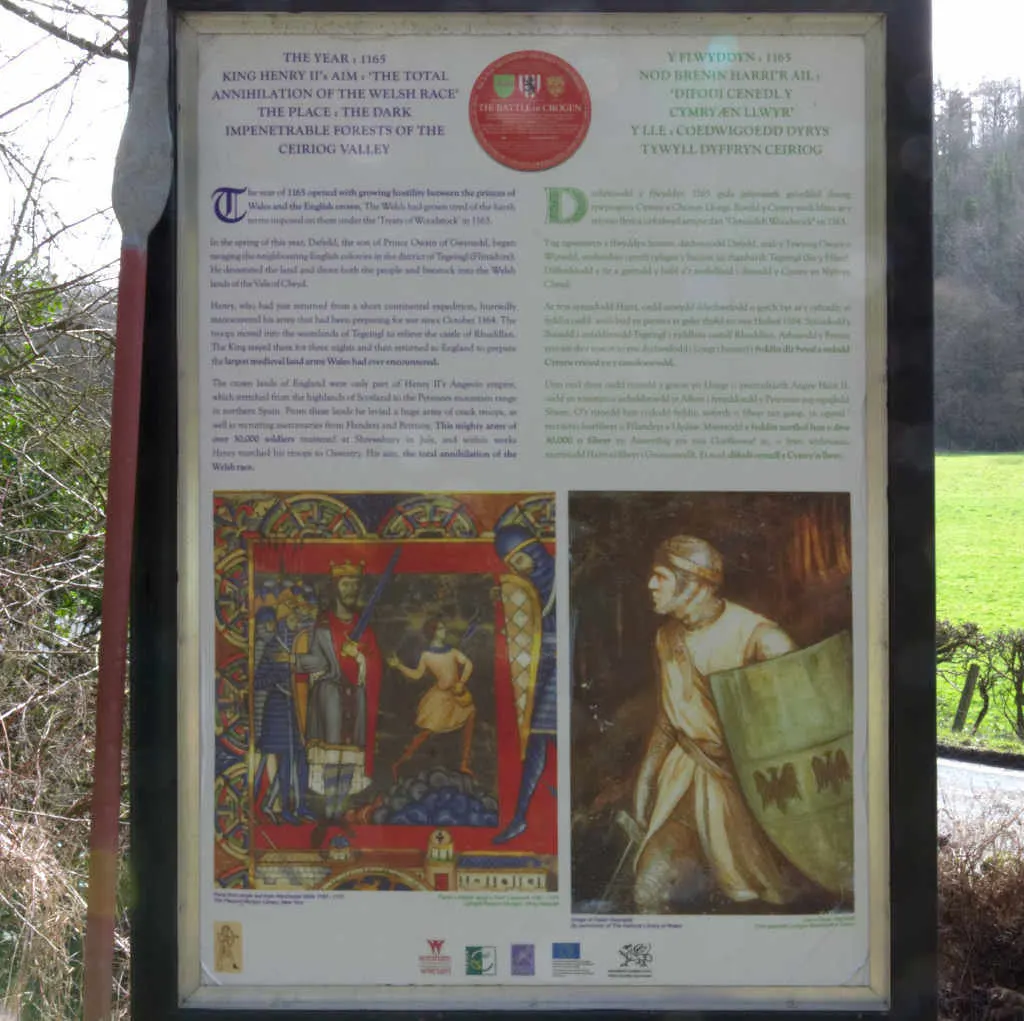
Battle of Crogen panel 1 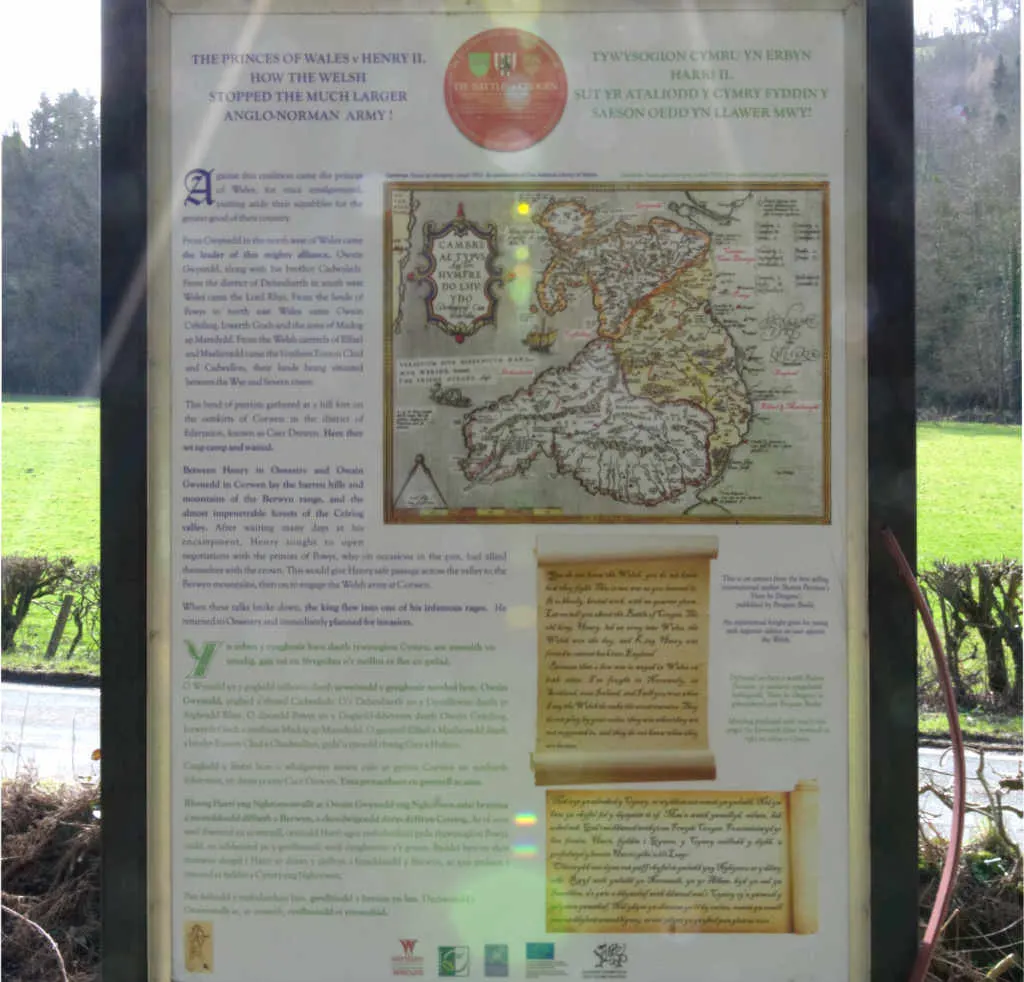
Battle of Crogen panel 2 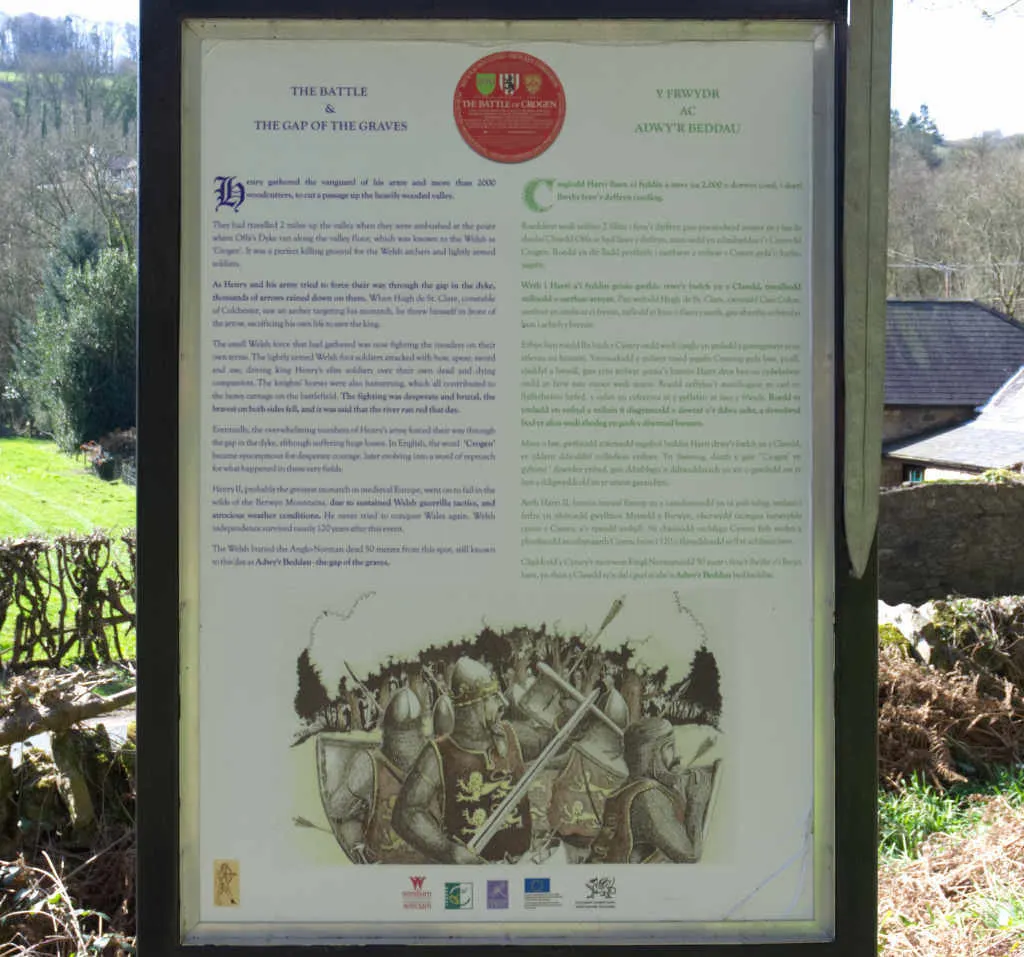
Battle of Crogen panel 3
The Battle of Crogen
The Welsh-English border did not become fixed along the 8th century dyke however. Land was regained in 1055 when Gruffudd ap Llywelyn, Prince of Gwynedd repossessed Chirk for Wales. It was just between where the borderline leaves Offa’s Dyke at Castle Mill to encircle Chirk along the River Ceiriog and Castell Crogen, a timber and earthern castle thought to have occupied the same site as Chirk Castle, that Henry II brought the full force of his army against the Welsh forces in 1165.
Find out about the Battle of Crogen by reading the three information panels nearby.
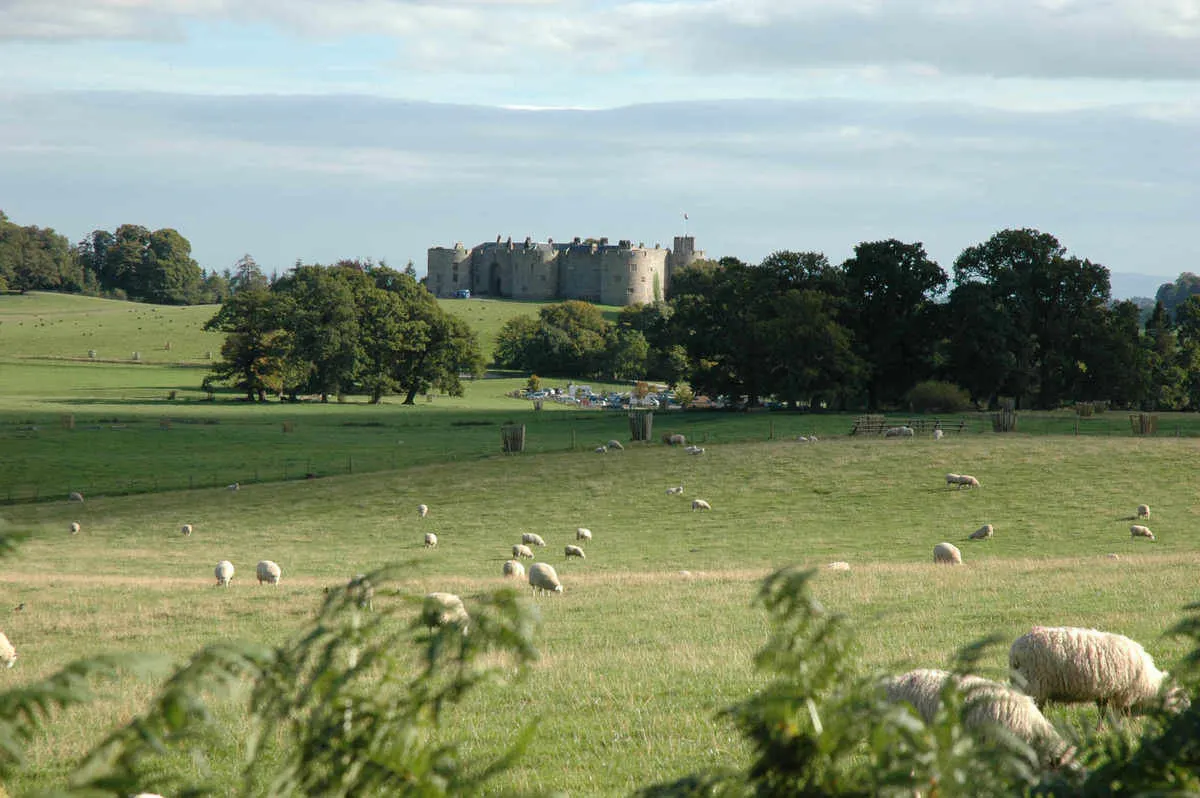
Chirk Castle
At the outbreak of war between Edward 1 and the Welsh princes in 1282, the lord of Chirkland was Llywelyn ap Gruffydd ap Madog. As king Edward’s enemy, Llywelyn’s lands became forfeit to the Crown and were granted to Roger Mortimer. Building of Chirk castle began in 1295 as one of the the king’s ‘ring of stone’, the chain of fortresses to surround and control the Welsh.
In 1593 the castle was bought for £5000 by Thomas Myddleton, a Welsh merchant adventurer, whose descendants lived at Chirk until recently when it was placed in the care of the National Trust.
The Myddleton family’s coat of arms includes a hand which has various lurid stories to explain its blood red colour. The truth however is that it is the Red Hand of Ulster and represents the baronetcies King James I sold for £1095 to raise money to send troops to Ireland. Anybody who bought this title could add a red glove to their crest to show their status as a baronet. But if you delve into the origins of the Red Hand of Ulster you come across a similar tale to those at Chirk, of a race to claim land by racing to touch it first where the winner cut off his own left hand and threw it at the target with his right.
There are four local hotels named the ‘Hand Hotel’, in Chirk, Llanarmon Dyffryn Ceiriog, Llangollen and Llanrhaeadr ym Mochnant.
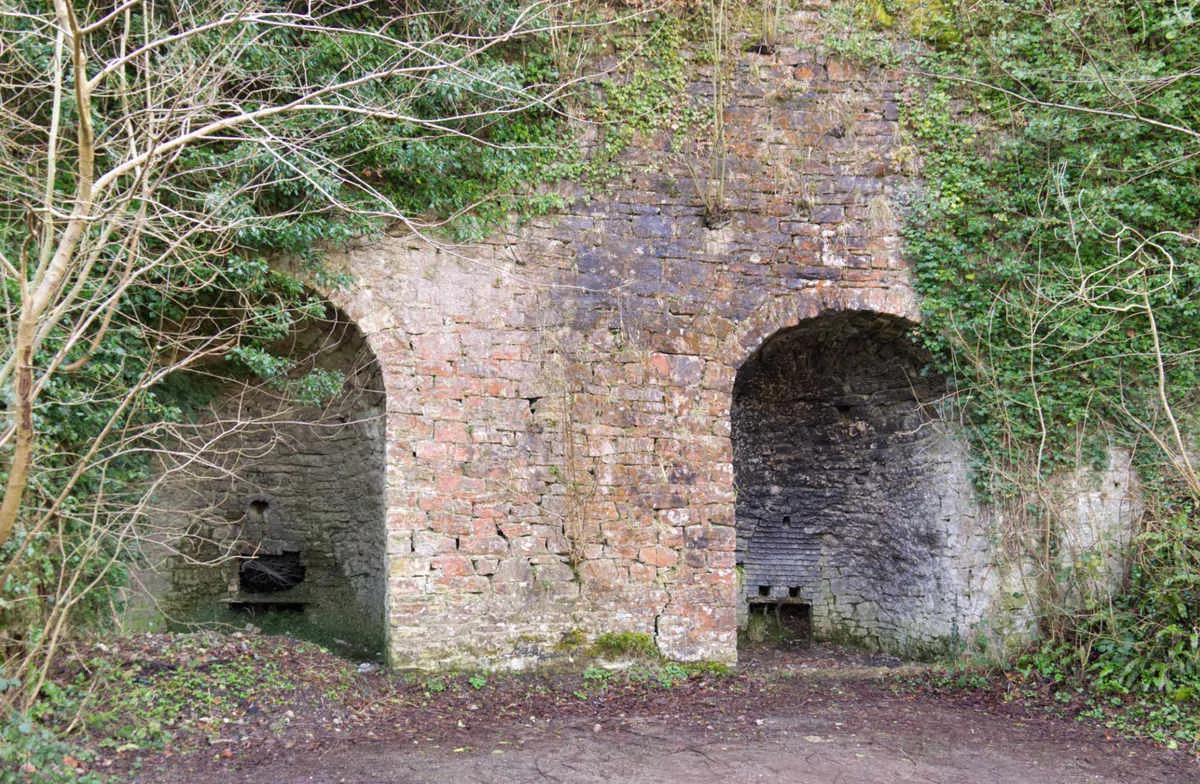
Bronygarth Limekilns 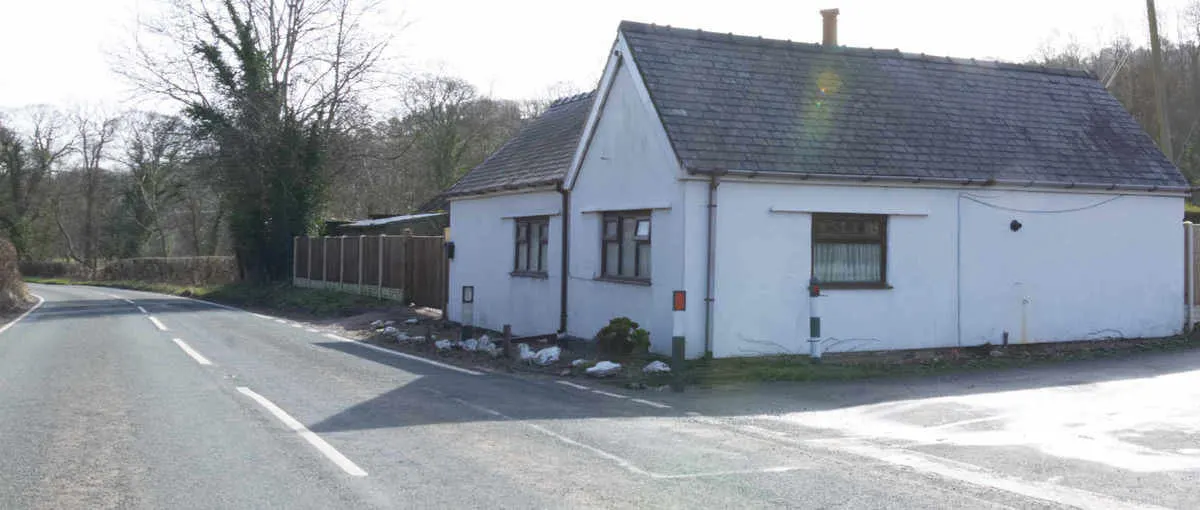
Herber Tollgate
Glyn Valley Tramway
In the 1770s the Wem and Bronygarth turnpike road was constructed to provide access to the Bronygarth limekilns. In 1860 the Wem and Bronygarth Road Act was passed, which gave consent to an extension of the road up to Llanarmon Dyffryn Ceiriog and a link to Chirk. To the west of Castle Mill is Herber Toll Gate where the tolls were collected for using the road. As the tramway ran on that road without it there would have been no tramway.
A spur known as tramway No: 6 was taken from the main tramway, along the road and over the bridge at Castle Mill terminating near the limekilns, to the south of which was an extensive limestone quarry.
Nature Note
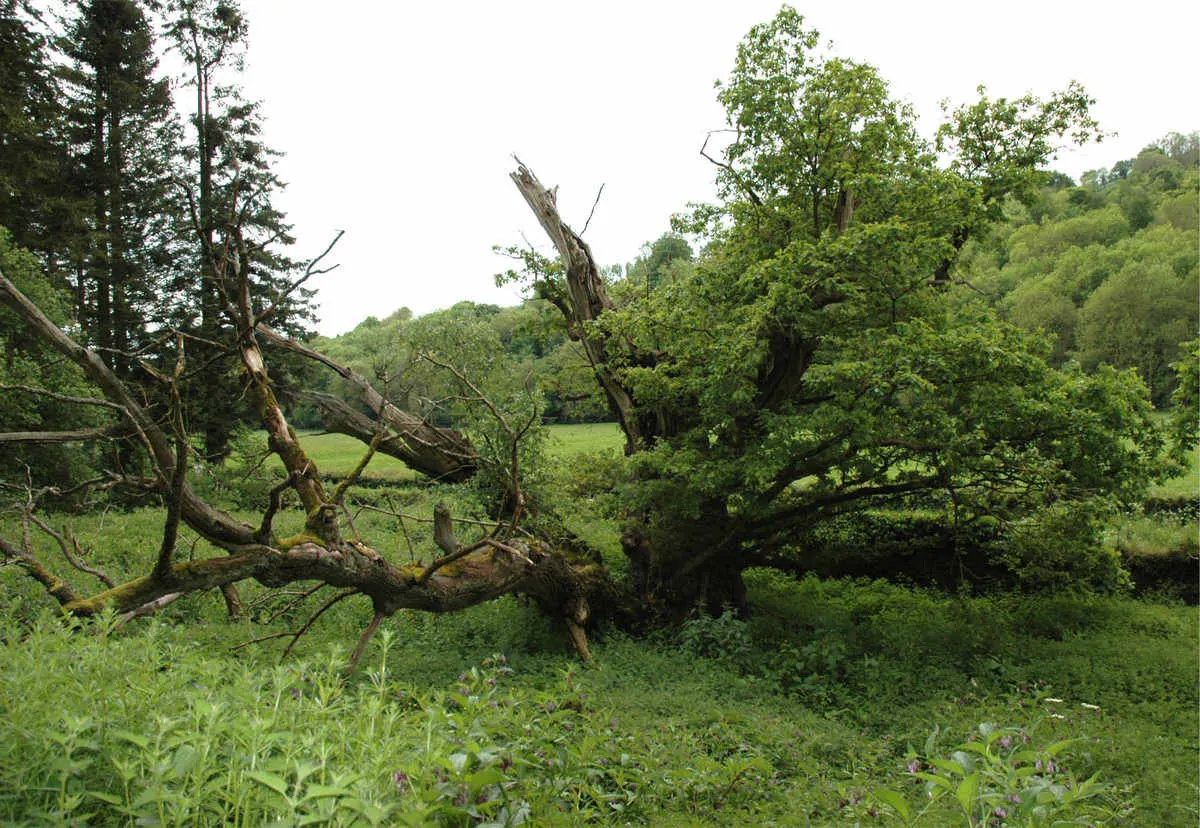
When Henry II’s army came here in 1165 the Ceiriog Valley was so thickly wooded that he had woodsmen fell trees to clear a way through. Nearby is an ancient oak that has split in two, that has been named the ‘Oak at the Gate of the Dead’ from the belief that those killed in the Battle of Crogen were buried nearby. Further up is another old oak that is known as ‘The Duelling Tree’. Classified ancient oaks are also to be seen on Offa’s Dyke in Chirk Castle’s medieval parkland. Ancient oaks provide a rich and diverse range of habitats, their broad hollow trunks support more than branches, they are sanctuaries of biodiversity.
‘Ancient trees are precious. There is little else on Earth that plays host to such a rich community of life within a single living organism.’ Sir David Attenborough.