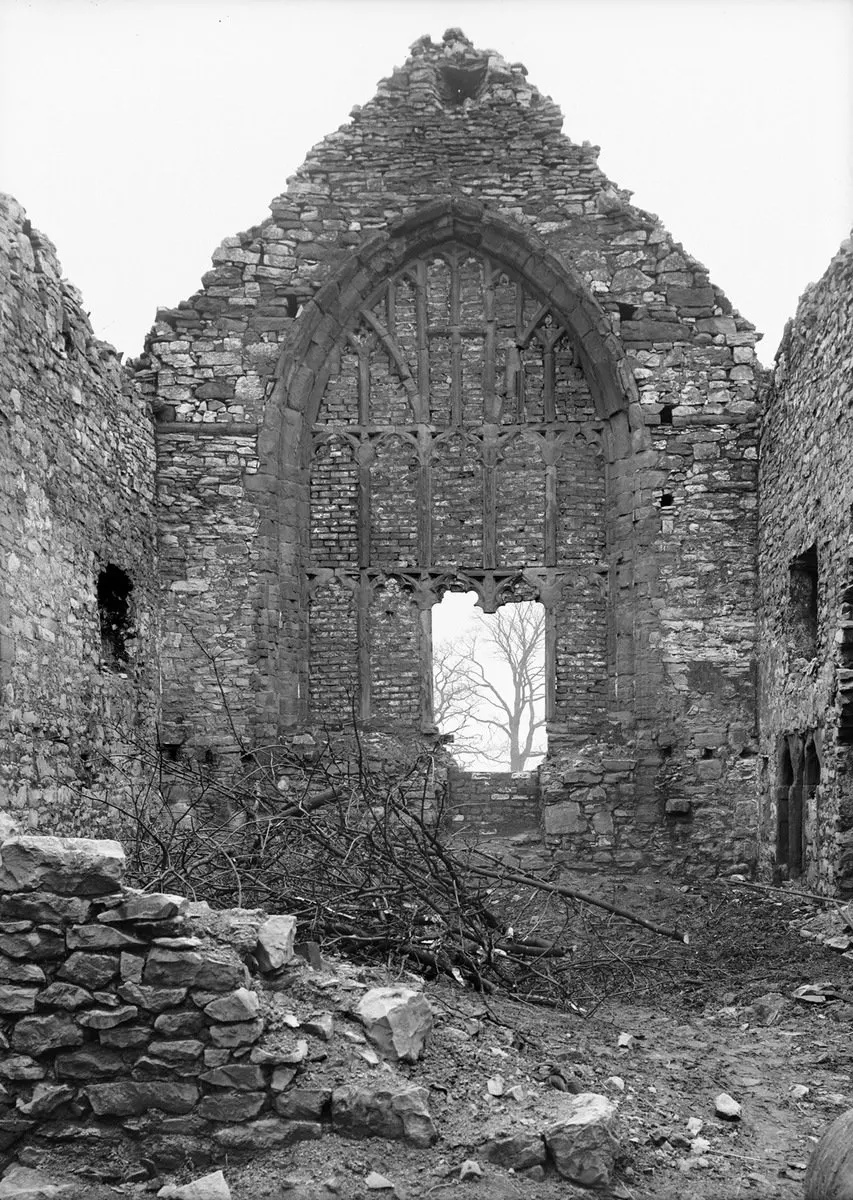
Denbigh Friary (also known as White Friars or Henllan Friary) was the only Carmelite friary to be founded in Wales. Located at the north end of Vale Street outside the medieval town, the origins of this unique site are shrouded in uncertainty as very little documentary material relating to the site has survived.
From looking at the available historical evidence, it is generally believed that the friary was founded between 1270 and 1280. The eminent Welsh antiquarian Thomas Pennant (1726 – 1798) profligated the theory that the friary was established by John Salusbury, whose father, Thomas, was inspired by the order at Mount Carmel, whom he encountered during the first crusade and wished to import their teachings to Wales. A ‘founders list’ records that Denbigh friary was the 35th of 39 such institutions in Britain, and suggests that Sir John de Swynemore, a major landholder in the area of the friary in the early fourteenth century was responsible for the foundation in in 1339.
During the reformation, the friary was suppressed in 1537 at which time it was recorded that there were four friars in residence. Later in the sixteenth century, it is recorded that the bishops of St Asaph’s resided in the friary, in the 'Bishop's Chamber', which stood on the east cloister range. An inventory taken at the time of the suppression lists the various buildings of which the friary comprised, namely, the choir, vestry, chamber, hall, kitchen, brewhouse and buttery. Other contemporary sources mention stables, demesnes, terraces, gardens and orchards. The remains consist of the ruined church, intact until it was gutted by fire in 1898, and the greatly altered dormitory and refectory block, now Abbey Cottage.