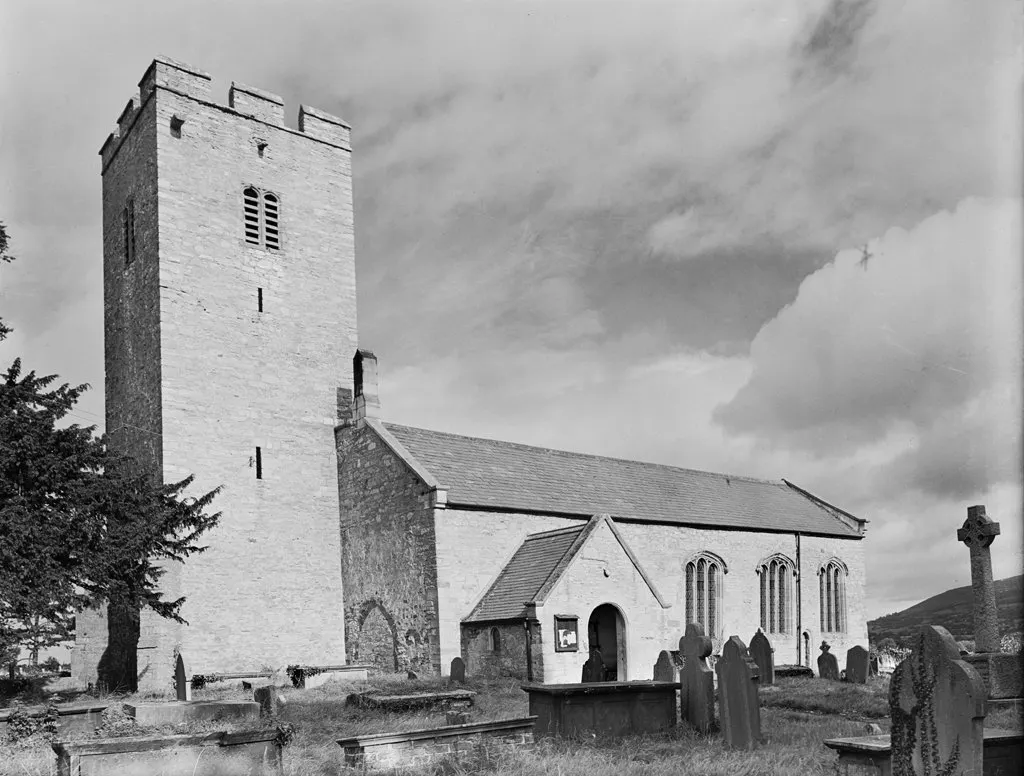
St Marcella’s (also known locally as Whitchurch or Eglwys Wen - ‘the white church’) is a medieval parish church. Although there is reference to St Marcella’s church in the 13th Century, nothing of the present building remains from this period. The present building rather dates largely to the 14th and 15th centuries, both of which were extensive periods of church building within the country.
The church is dedicated to the 6th century Saint Marchell the Virgin, which local tradition suggests she occupied a hermitage next to a holy well within the area. The foundation date of the church is unknown, although its earliest reference is within in the Norwich taxation of 1252. There is also reference in 1334 within De Bekele’s Survey that ‘the freemen and natives of the commote of Isaled were accoustomed to construct and maintain at their own cost a hall, chamber, wardrobe and one chapel for the prince’, suggesting that the thirteenth century Welsh settlement at Denbigh was provided with a church. However, there is little evidence as to the specific location of this settlement making it impossible to speculate whether this chapel could have provided the origins of St Marcella’s site, although this would explain why the church is located is outside of the borough established by Henry de Lacy in 1282.
The church houses some extremely impressive features, the first being the 10-bay hammerbeam roof to both chambers which dates to the 15th century. At the base of each of the main principles supporting the roof are stone carvings depicting a range of animal and human figures, while below the wall plates are stone cornices that have been decorated with painted carvings of flowers, animals and humans. Some early fragments of the stained glass also survive in the porch window which is thought to originate to the late 15th or early 16th century. The church also houses a number of significant 16th century monuments including the tomb of Sir John Salusbury of Lleweni, which was erected in 1588.