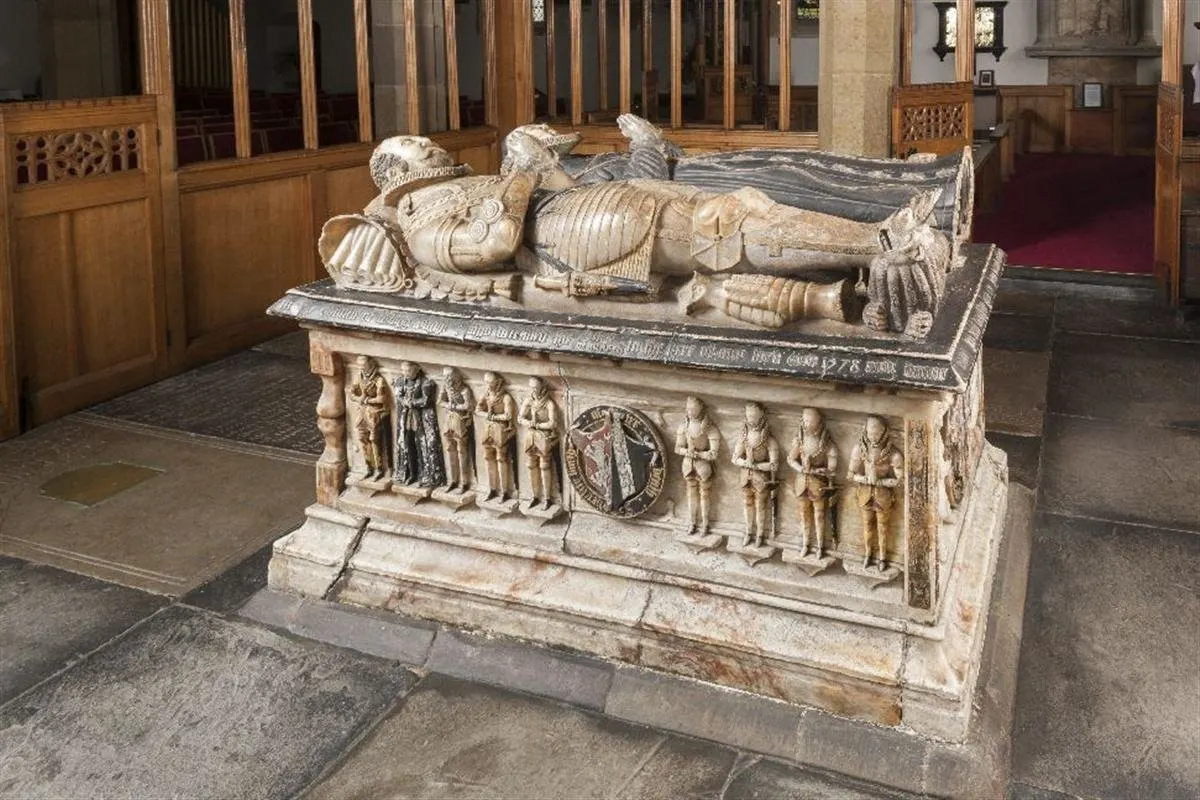
Sir John Salusbury (1567 – 1612) was a Welsh knight, politician and poet of the Elizabethan era. He is widely known for his opposition to Robert Devereux, 2nd Earl of Essex and for his patronage of poetry and literature.
The Salusbury family of Lleweni in the Vale of Clywd owned a considerable estate, including Lleweni Hall. Throughout the 15th and 16th centuries, various members of the family acquired honours and appointments through their support of the Tudor monarchs. Salusbury was born in 1567 and was the son of Sir John Salusbury and Katheryn of Berain, and the younger brother of Thomas Salusbury, who was executed in 1586 for his involvement a plot against Queen Elizabeth I. After his brother's execution, he succeeded to the estates, but the family's lands were severely reduced due to the loss of crown leases. It took him several years to restore them. Salusbury became noted for his ostentatious loyalty to the queen, in contrast to other members of his family, who were associated with catholic sympathies and implicated in plots against her.
Salusbury was a staunch Protestant and was also an opponent of the Robert Devereux, 2nd Earl of Essex. In the aftermath of the Essex Rebellion (14th June 1601), Salusbury was knighted for his support in suppressing it. He became MP for Denbighshire in December 1601, but only took his seat for a few days before parliament was dissolved. After Elizabeth's death in 1603, Salusbury spent little time in London, as the Earl of Essex's surviving supporters returned to favour at the court King James I. He died on 24th July 1612.