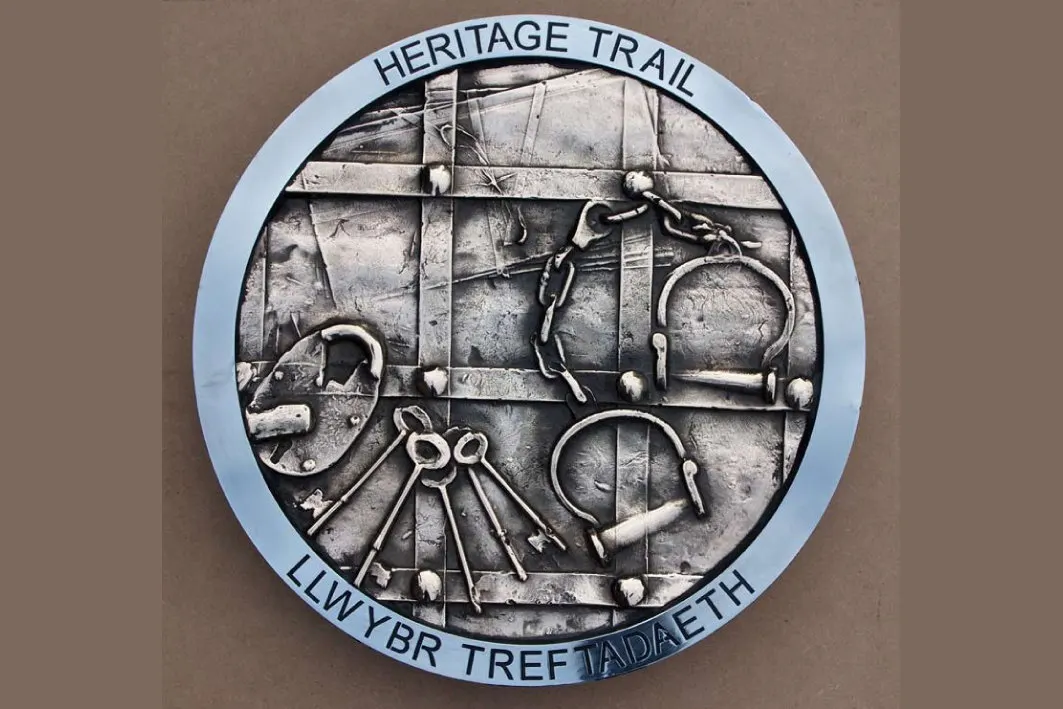
Old Court House 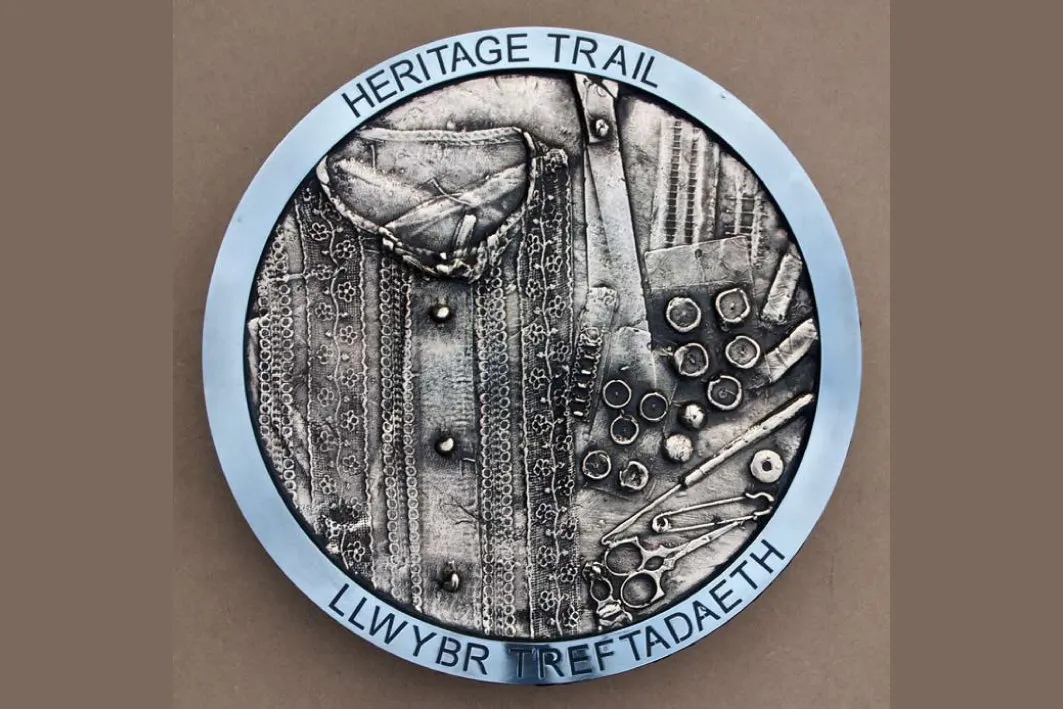
Glasgow House 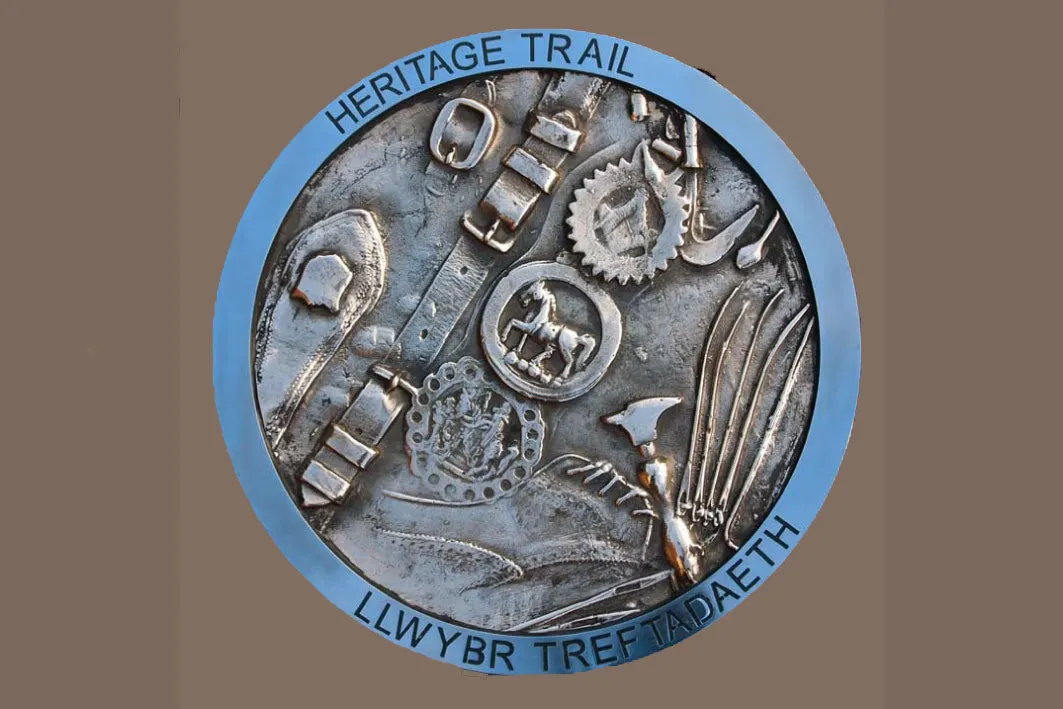
Hughes the Saddlers 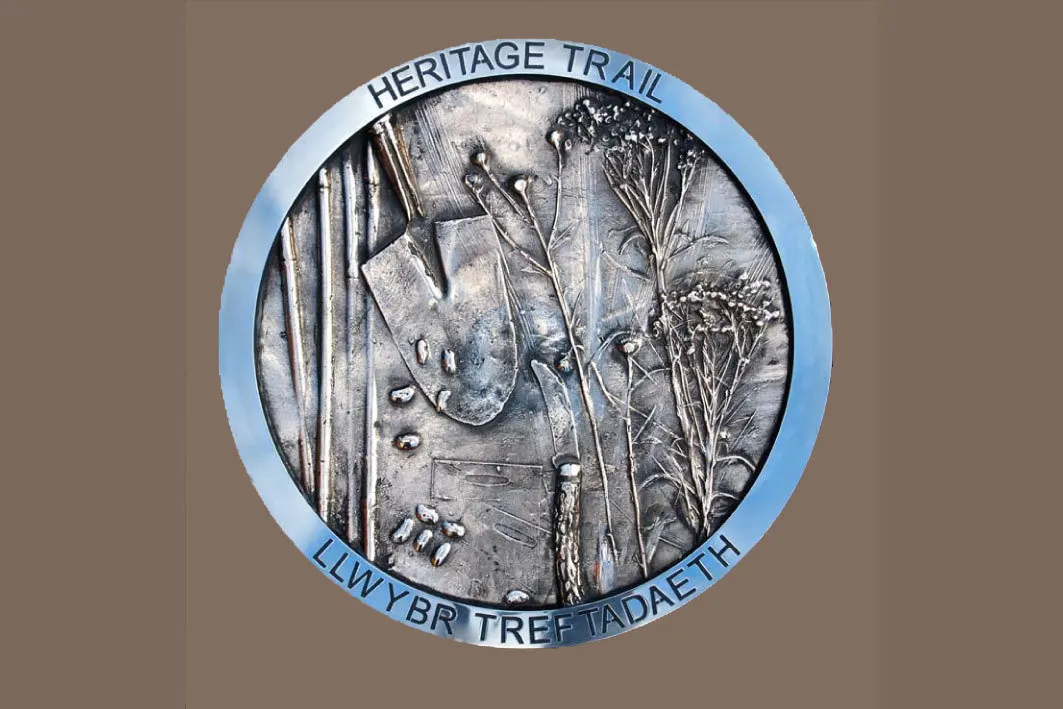
Jones the Gardeners 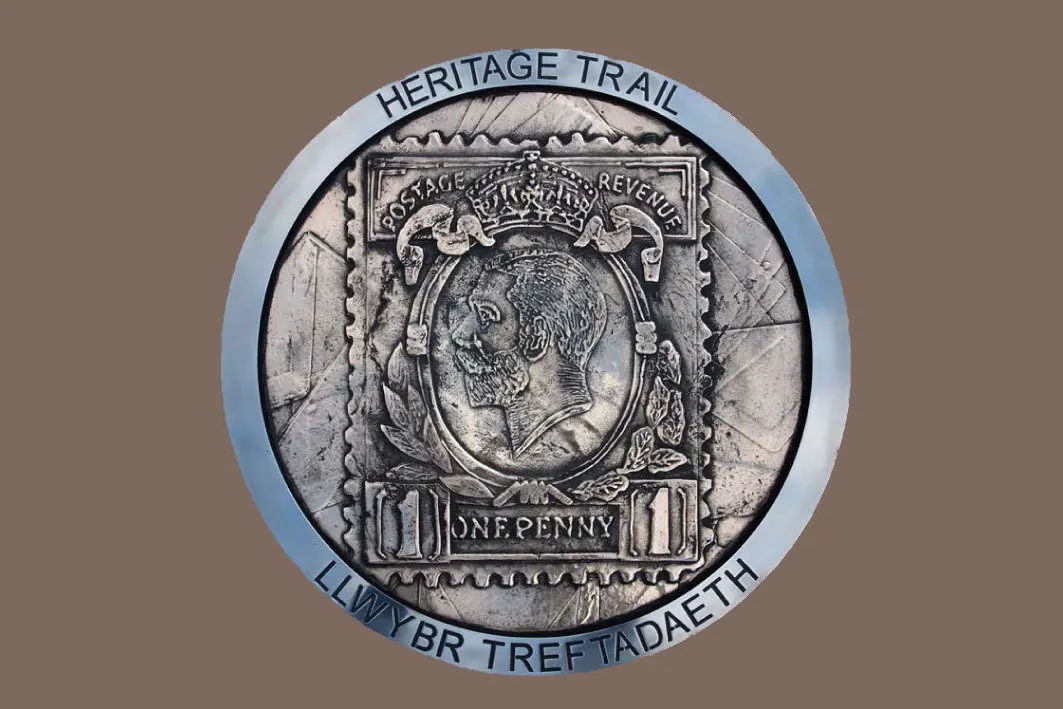
The Old Post Office 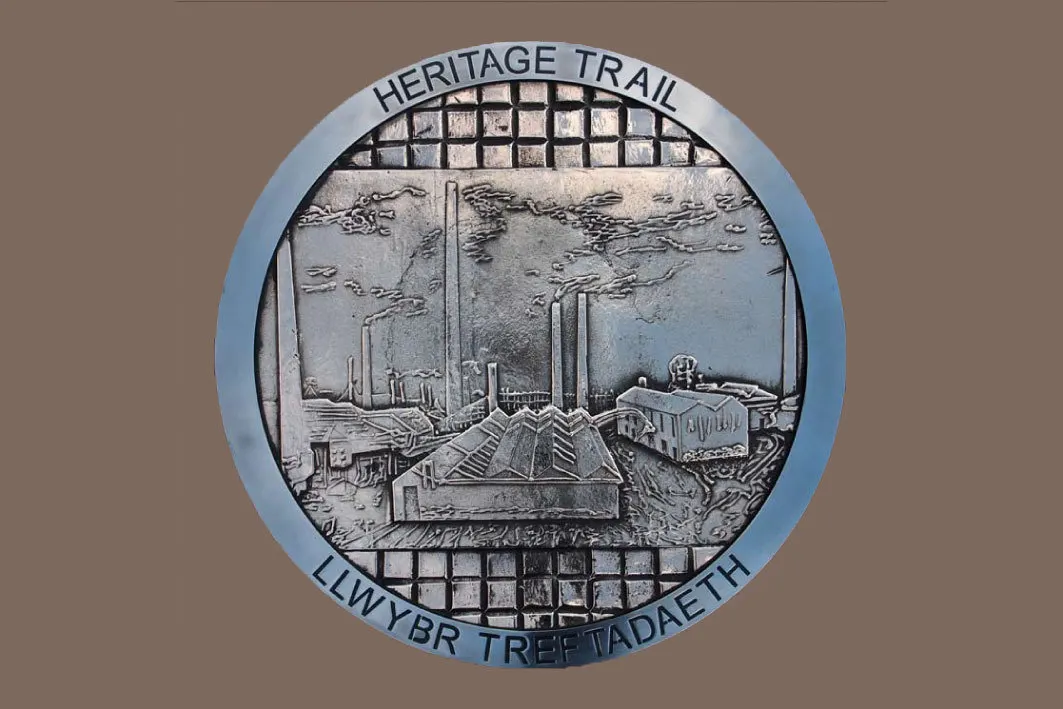
Trelawny House 
Trelawny Square
The bronze plaques in the pavement represent some of the trades and businesses that flourished in the town centre.
Glasgow House
The 1922 Trade directory lists the owner of Glasgow House as Robert Davies, general draper. The plaque depicts the sort of items they might have sold. It was later a Co-op selling wide range of goods, including shoes and linoleum.
Hughes the saddlers
Peter Hughes set up business in Church Street as a saddler around 1875. For many years the family were known locally as ‘Hughes the Saddlers’. His son took over the business in 1918 when he returned from the First World War, selling manufactured shoes. In the 1950s he was joined by his two sons, who expanded the business, opening a Holywell shop in 1960 and one in Connah's Quay in 1965. The Flint store was sold when they retired in the 1990s but family members still run the Holywell store.
'As a child living on Feather Street, I remember watching the men mending shoes in the back. We used to play in all the empty shoe boxes until we were chased away.’
Ken Davies
Jones the Gardeners
This shop was a greengrocers for over 70 years, spanning four generations of the same family. They grew vegetables at their small holding on Halkyn Road for sale in the shop. Look for the name Bank House on the adjoining building, reminding that it was the first bank in Flint.
Old Post Office (now Havana)
This handsome building was built as the town’s post office in the 1930s. The brass post box still remains. In the early 1800s the post office was on Raven Square. Flint was not on the main post route from Chester to Holyhead. The nearest stop for the mail coaches was the posting inn at Northop so the Flint postmaster was responsible for taking post there and bringing back the Flint mail.
The Post Office moved to a small building on Church Street around 1840 and the mail began to be taken by train soon after. This larger and grander building, built in neo-Georgian style with sash windows, replaced the smaller building.