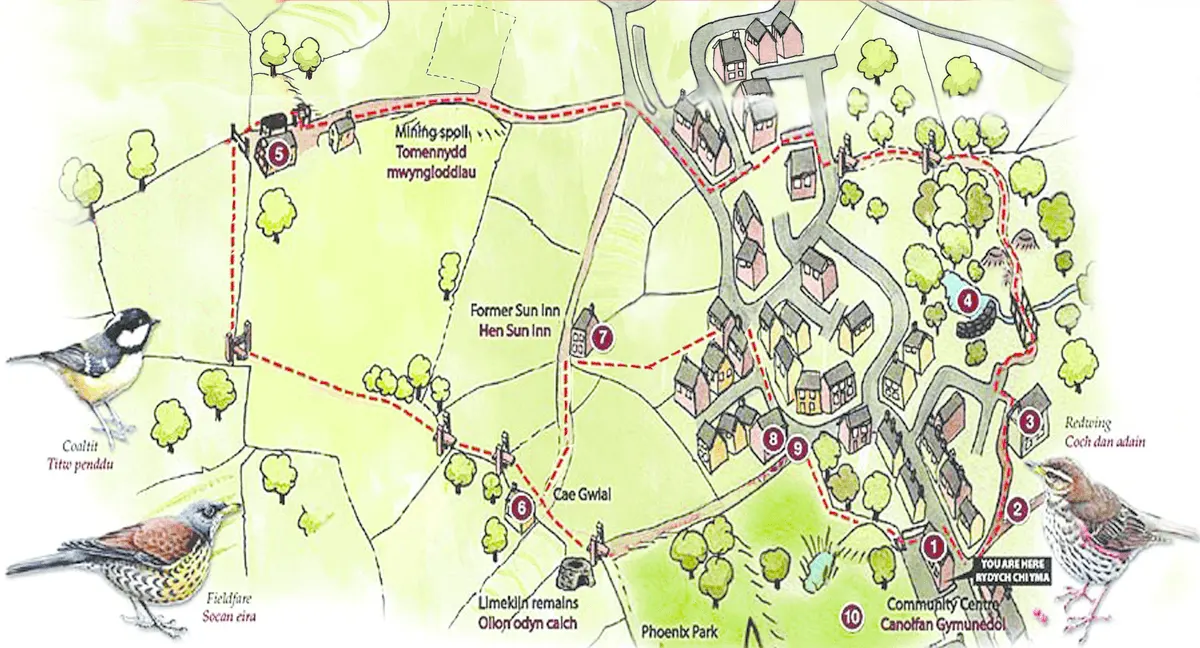
Follow the heritage trail displayed on the notice board in front of the Community Centre
1. The Community Centre was once the Board School that opened in 1880. It originally housed two separate schools, one for infants and one for mixed juniors each with their own entrance. Here education was free with children mainly coming from non-conformist families. With your back to the Community Centre cross the road and take the track to the right behind Britannia Road.
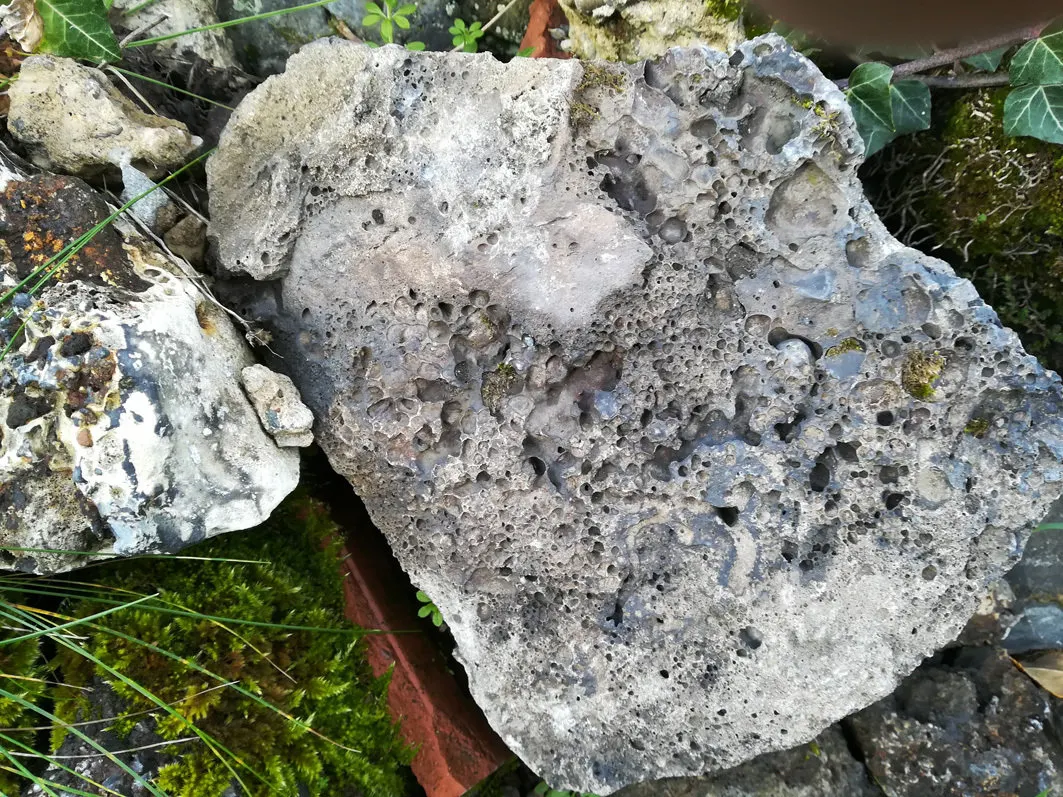
2. If you look closely at the wall you’ll see that it is partly built from slag, the waste product from the blast furnace. Limestone was burned with iron ore to remove any impurities and the molten slag was drained off the top. Take the track bearing left behind the houses.
3. The stone house ahead is all that remains from the ironworks which would have covered most of this area with an engine house, saw pit and kiln.
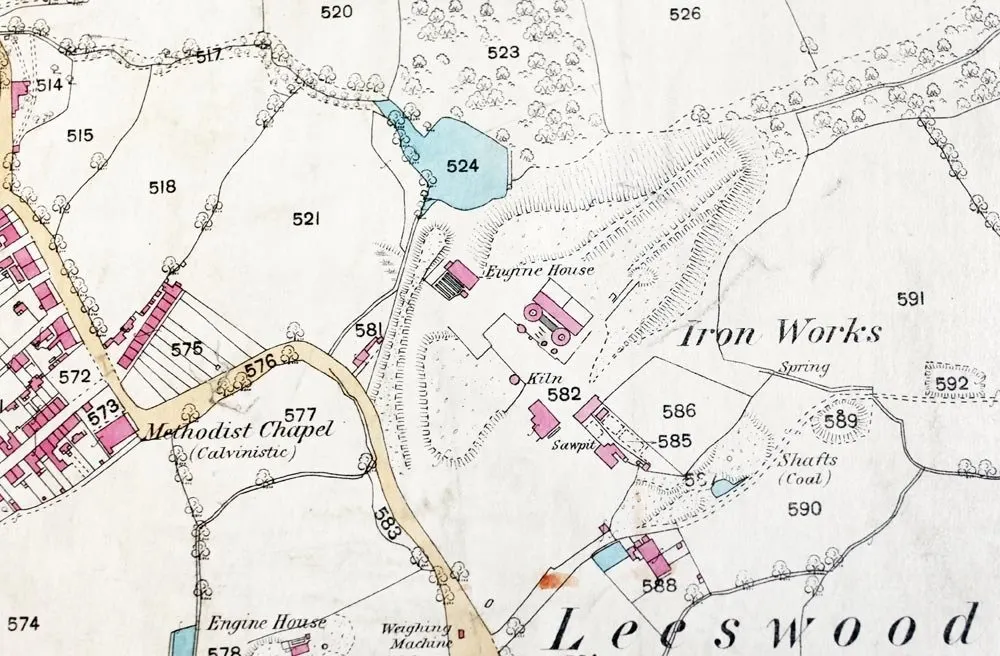
4. Iron production needed a good flow of water to power the steam engines that forced air into the furnace to keep the fire burning. Follow the track to the left turning right onto Bronallt down the hill past the sewage treatment works into Blast Wood and cross the bridge. The stream in Dingle Wood was dammed - looking left from the bridge - to create a reservoir. You can see the remains of the stone dam and also two hollows which mark old mine shafts in the woods, now safely capped. Pass through the wood and turn left along the perimeter of the wood taking the path between the houses onto Oak Drive, turning right and left into the end of Birch Court taking the path to the left to the main road. Turn right on the main road passing the farm, past the bus stop and take the lane to the left passing the allotments on you right.
5. The barn at the top of the lane is a splendid example of a sixteenth century cruck barn. Straight timbers were needed for ship building and so curved ones were used for houses and barns. Turn left at the field gate past Leeswood Green Farm following the path along the fence, turning left at the end of the field taking the path along the hedge and track to Cae Gwiail.
6. Cae Gwiail was the home of John Young, the manager of Leeswood Green Colliery whose relationship with the colliers led to the Mold Riots in 1869. The men eventually attacked him and frog-marched him to the railway station. Several colliers were arrested and stood trial at Mold Magistrates Court on 2nd June. Two of the men were sentenced to hard labour and a riot broke out as the authorities led the men to the railway station. Soldiers fired into the crowd, killing 4 people including an innocent young woman. Turn back from Cae Gwiail down the track taking the field path to the right, then the track to the left to the Sun Inn.
7. Only half of the Sun Inn is left, in what appears to be in the middle of nowhere. It was once known as Y Ceffyl Glas or The Blue Horse and was owned by Bents Brewery of Liverpool. Turn right immediately before the Sun Inn taking the path through the field down to the Prince of Wales pub in the village. It belonged to a local brewery, Lassall Sharman of Caergwle. Turn right on he main road towards the Bethel Chapel.
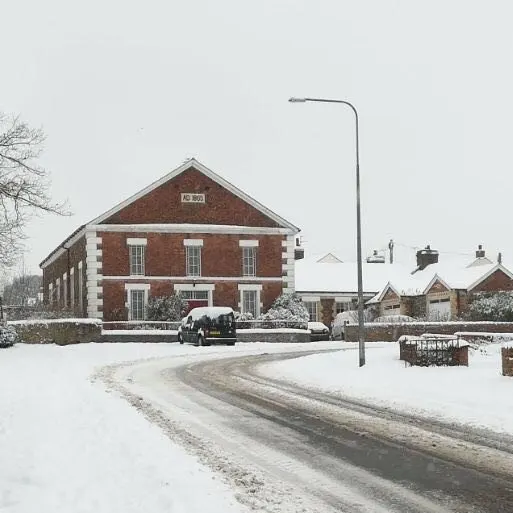
8. Bethel Chapel was very busy with several services held each Sunday plus Sunday School, prayer meetings, band practice and social events. The quality of the singing here was renowned and it is said that when there was a good congregation it could be heard in Bryn Estyn. The last service was held in 1994.
9. The Victorian letterbox was moved here from the old post office in Oak Villas rather than being scrapped. Take the track through Phoenix Park keeping left at the playground down the steps behind the Community Centre.
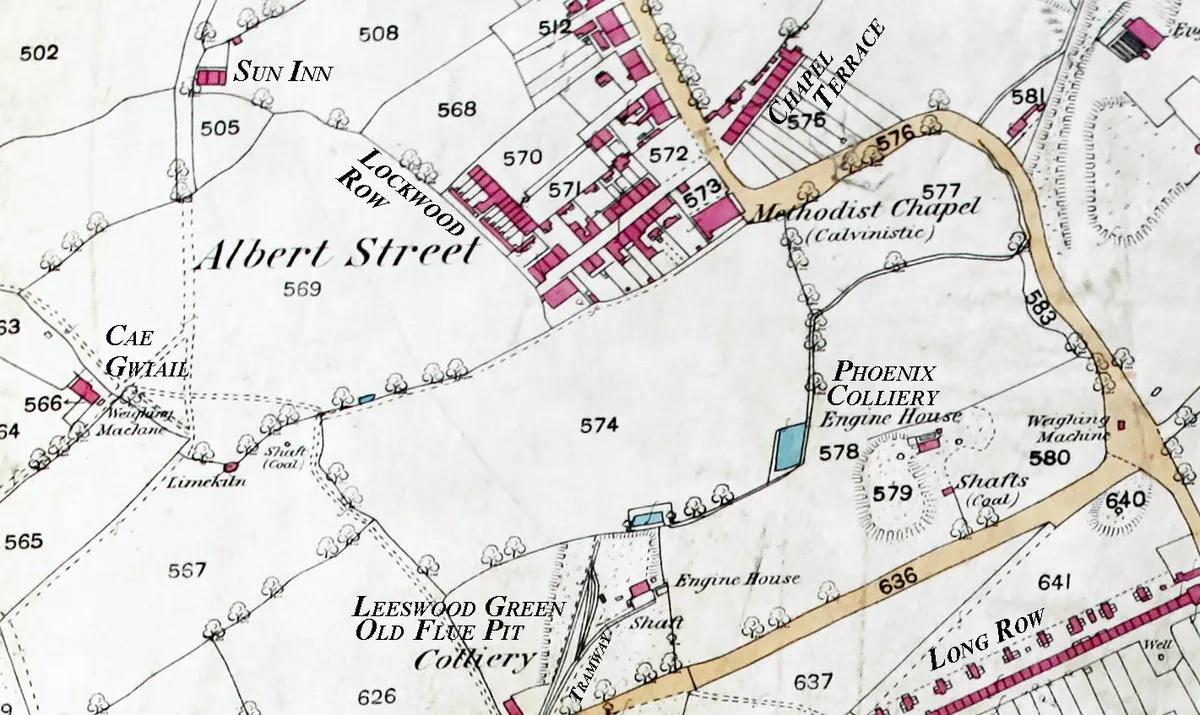
10. Phoenix Park is named after the Phoenix Coal and Cannel Company, formed in 1896 to take over the extensive New North Leeswood Colliery and Brickworks. The mine closed in October 1914 and never reopened. The waste tip was converted into the park in the 1970s.