Exuperius Pickering was a local entrepreneur dealing in coal, limestone, slate and iron bar. He had been petitioning the Llangollen Canal Company to improve the feeder section of the canal and allow him exclusive access to the wharves and bridges since 1814.
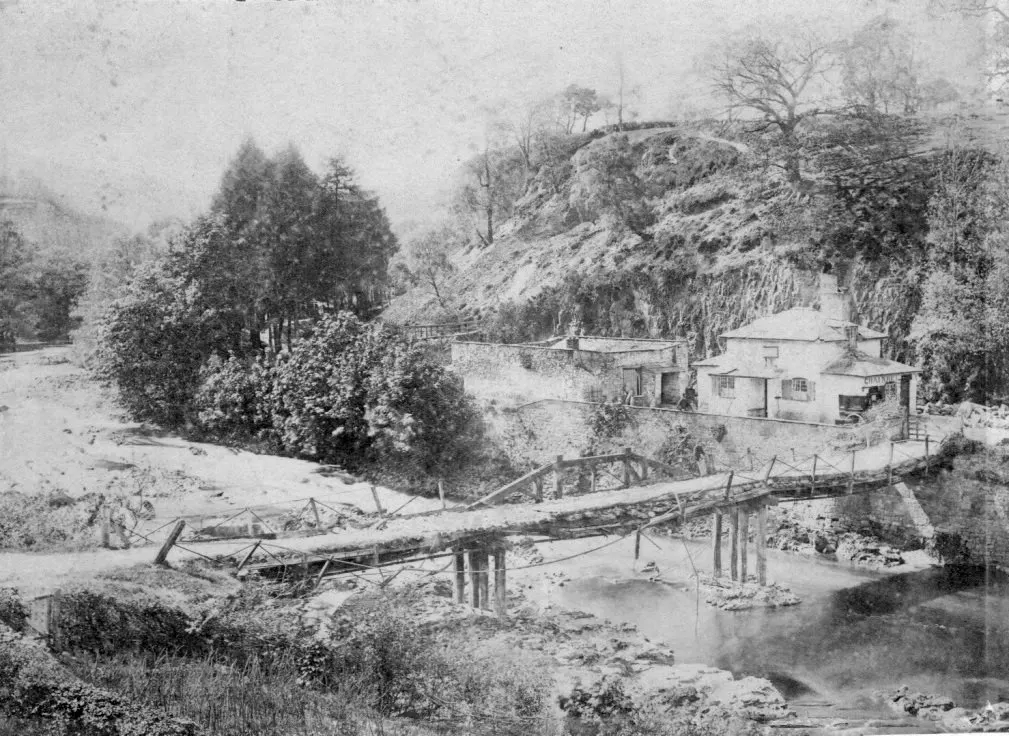
The construction of the Chain Bridge, over the river Dee from Llantysilio to Berwyn, allowed him to monopolise the local coal trade as the bridge gave him access to the new London to Holyhead road (now the A5) built by Telford. It also meant that he avoided the tolls he had to pay to cross the main bridge across the river in Llangollen. Pickering's bridge was constructed with wooden decking, supported by wrought iron chains from below with a surface covering of earth and stone. The bridge was supported from the river bed by oak pillars.
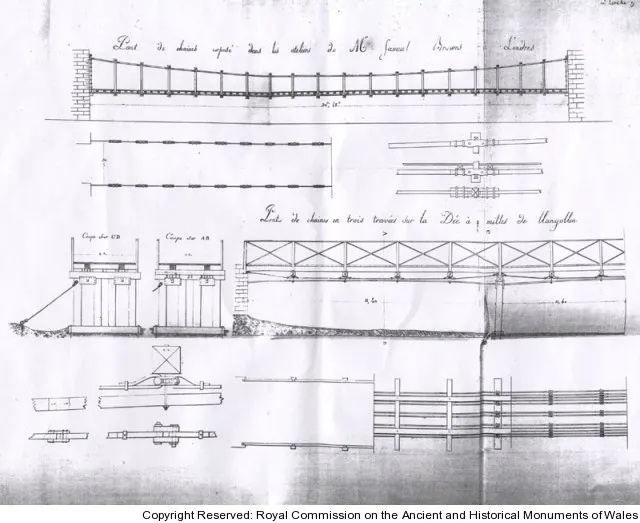
Detailed survey drawings (image above courtesy of RCAHMW) were carried out by the French engineer Joseph-Michel Dutens and published in 'Memoires sur les Travaux Publics d'Angleterre' 1819 with a report that concluded that "One cannot assign a limit to the genius... there exist in London examples of chain bridges but the conception of the Dee is preferable".
The land on which the Hotel stands is recorded in the 1844 tithe survey as “Waste”. However, the building did exist at this time as in 1838 William Davies, publican of the Chainbridge Inn, had his daughter baptised at Llantysilio Church and in the 1841 census he was still listed there. Originally named the Chainbridge Inn, it was most likely constructed around the same time as the first bridge. In keeping with the use of the bridge for transporting coal, John Roberts, the inn keeper in 1861, was doubling as a coal agent!
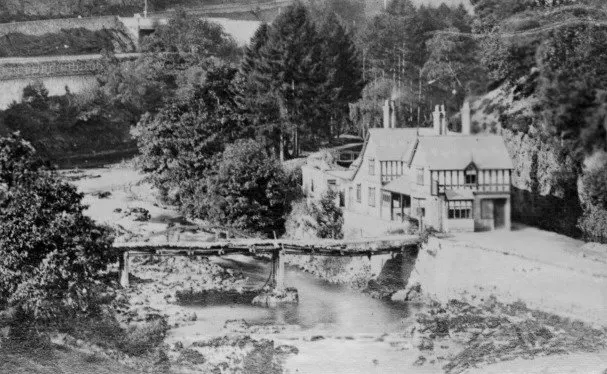
In 1863 Sir Watkin Williams Wynn sold the Chainbridge, the Inn and wharf to John Dickin, who, in turn, put it up for auction 2 months later. The properties were bought by Henry Robertson, who was the engineer in charge of building the new railway. As he was having Berwyn Station built to a design by Pountney Smith, in 1868 he engaged Mr M. Roberts to rebuild the hotel in a similar style.
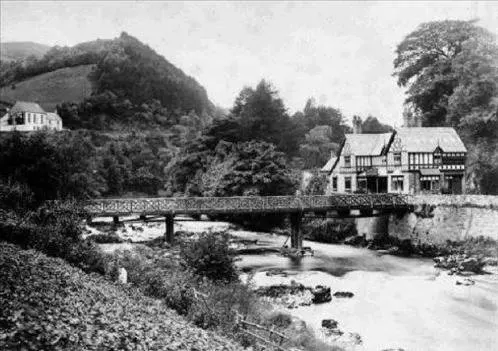
By 1870 the bridge was in a bad condition and considered to be beyond repair. It was replaced in 1876 by Sir Henry Robertson. The design closely followed that of the first structure with the supporting pillars being of iron rather than oak.
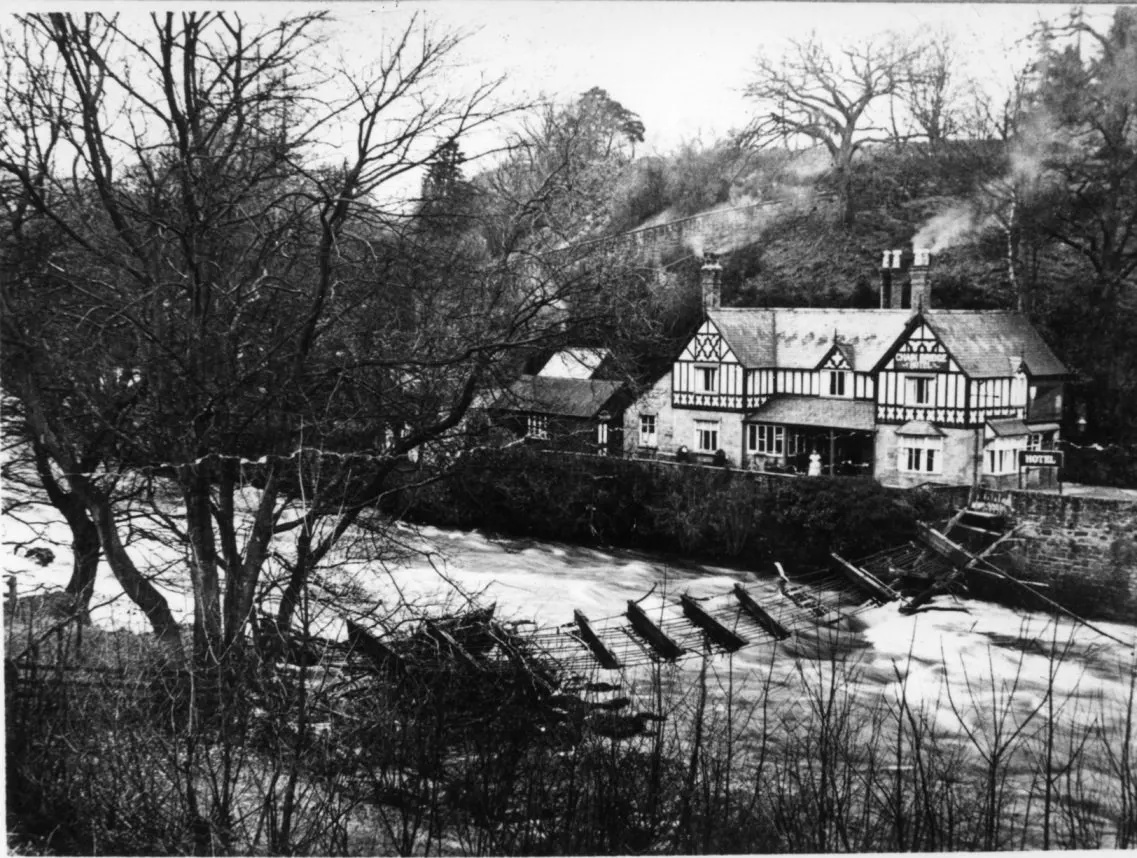
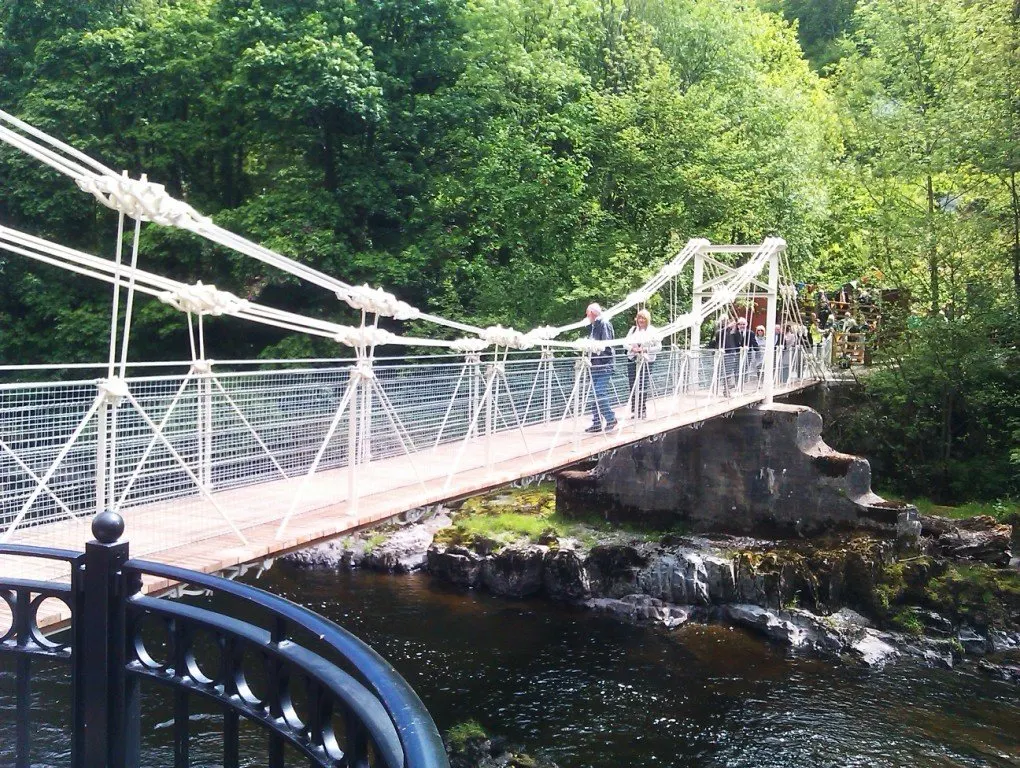
In February 1928, flooding washed away most of the bridge, although the supporting chains held fast. Henry Robertson's son, another Henry Robertson, decided to rebuild it on the lines of the Menai Suspension Bridge and is reported to have reused the chains from the first structure. Research carried out by the RCAHMW has been able to show the design and scale of the chains used in the third structure are so similar that it is highly likely that the chains from the original structure were indeed reused 111years later.
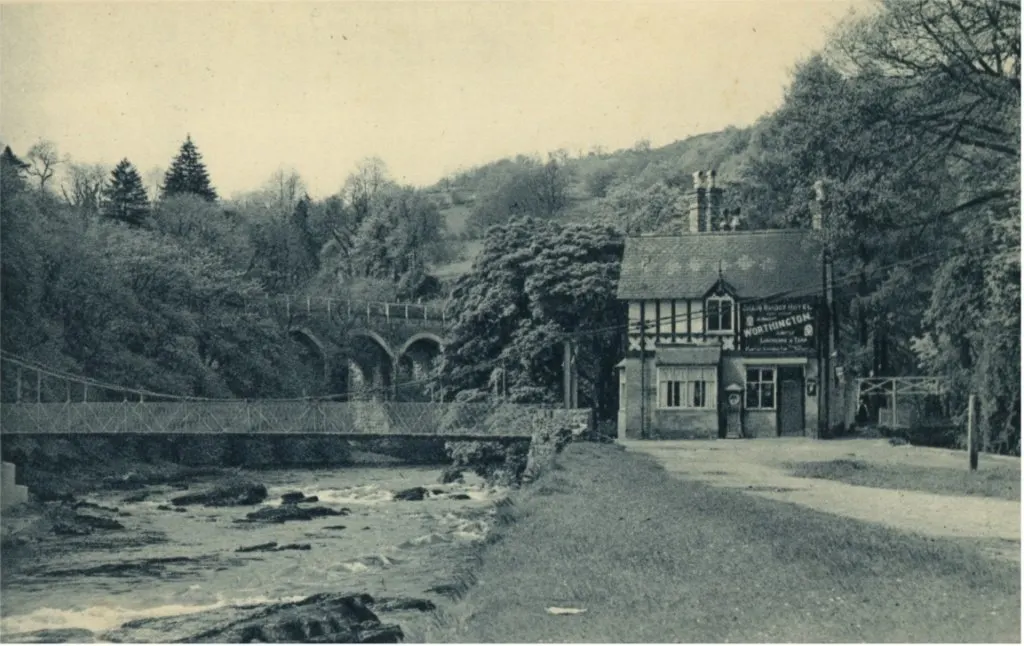
Six of these chains were suspended to support the deck from above while a further two again lay underneath the deck. The new design was a great improvement, being stronger and able to withstand flooding. It cost £303.11.00. The official opening in 1929 was marked with celebrations and its strength confirmed by having 45 of his employees stand on the bridge. The bridge closed again, however, in the mid 1980s due to its dangerous state.
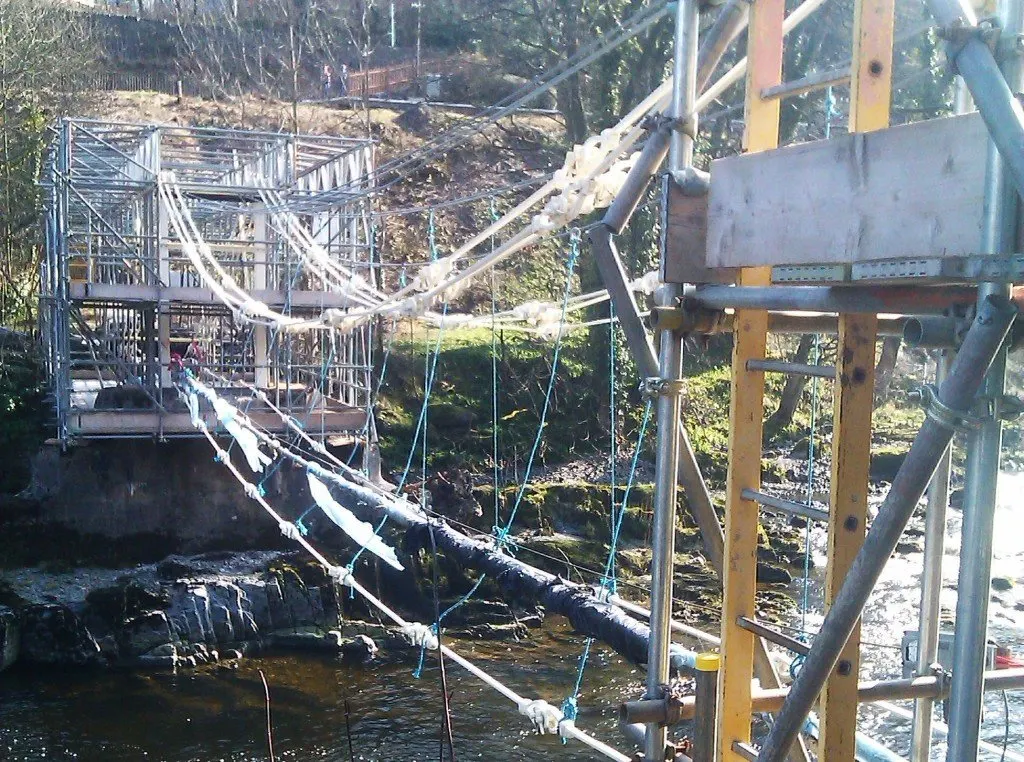
In 2015, following restoration work by Llangollen and Llantysilio Town Councils costing over £300,000, the Chain Bridge re-opened once again and now continues to provide a popular foot crossing over the River Dee.