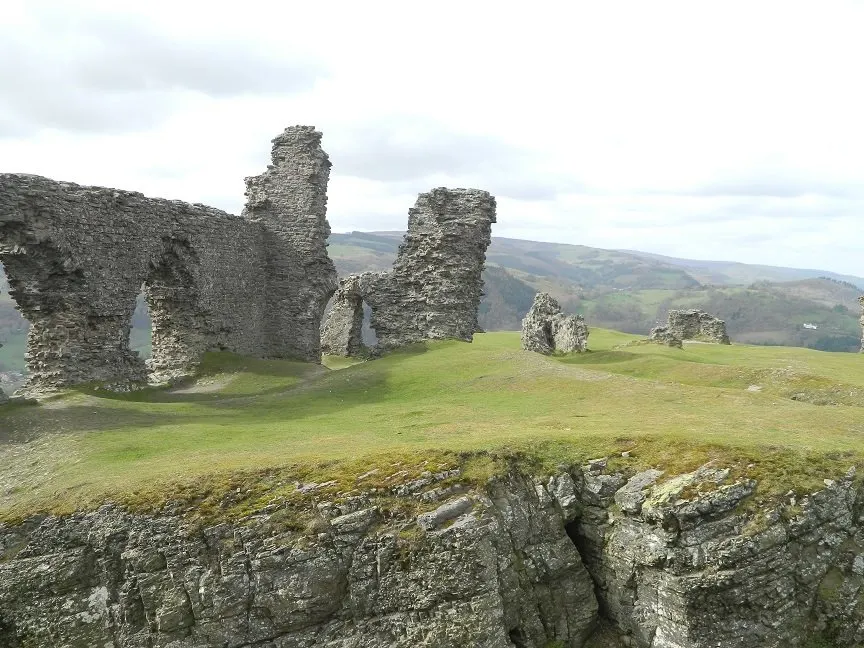
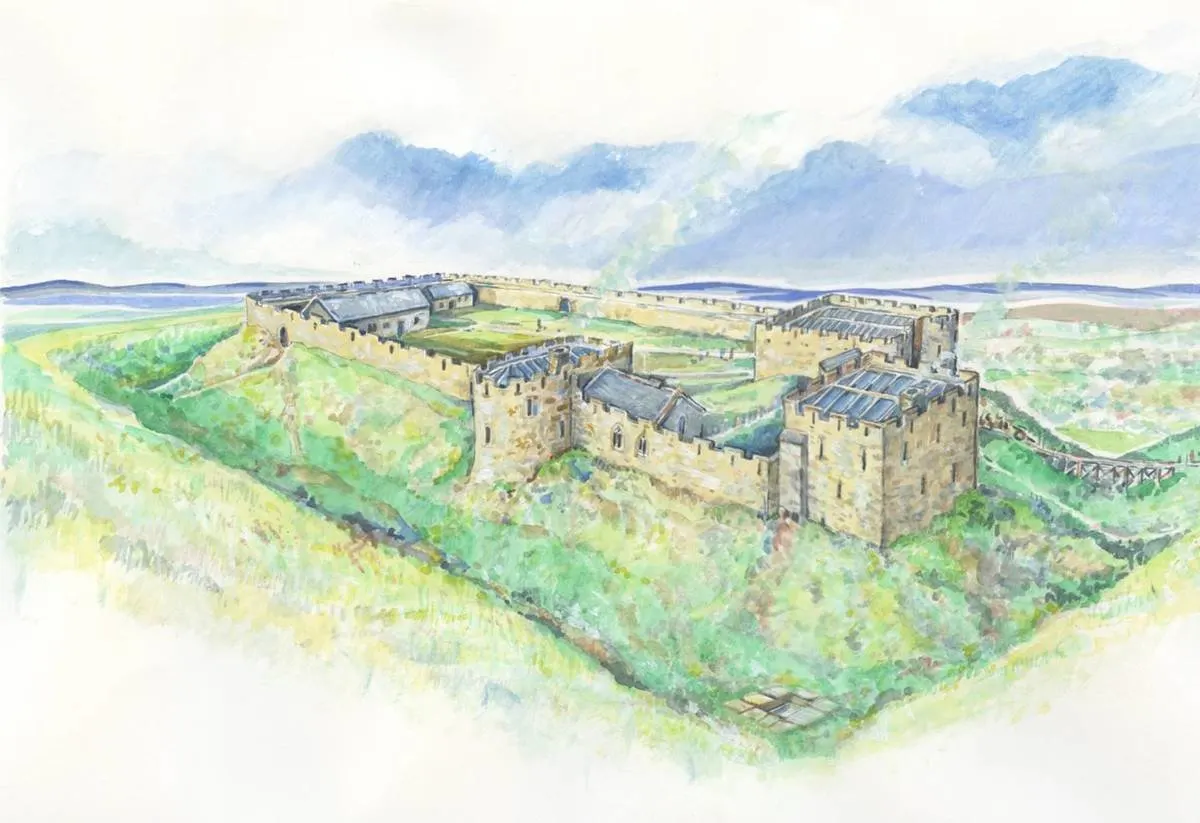
Towering high above Llangollen stands Castell Dinas Brân. Rich in history, the site was originally occupied by one of the many Iron Age hill-forts found in the Dee Valley. Four bronze axe heads have been found on the slopes, indicating possible earlier use of the site. Two thousand years after the Iron Age, the site was chosen for its defensive value and its imposing nature by Gruffydd ap Madog, ruler of Powys Fadog (Northern Powys) between about 1236 and 1270. It is possible that an earlier timber castle existed on the site, maybe even dating back to the Norman conquest of Wales, but there is no evidence for this (Image below courtesy of Denbighshire Countryside Services).
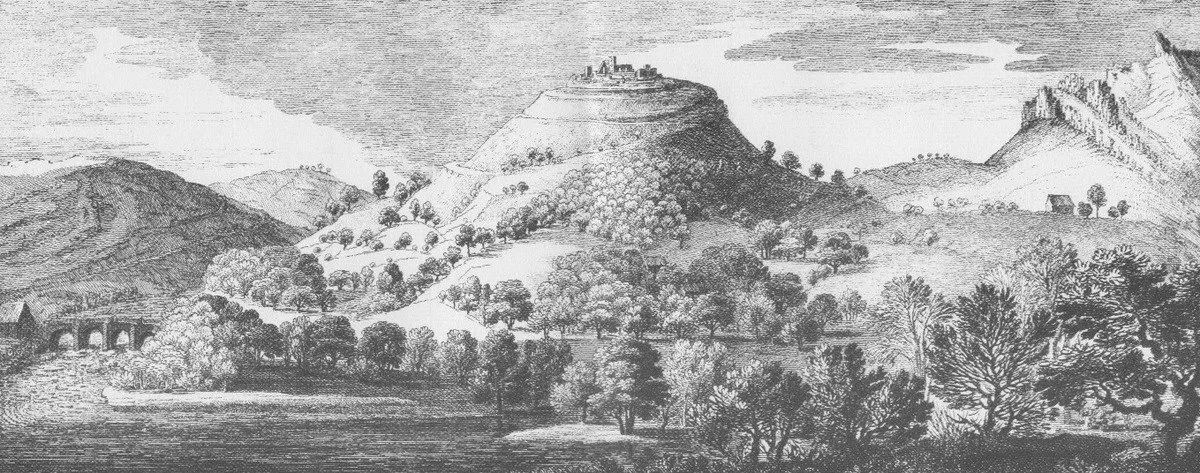
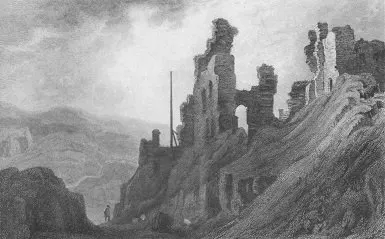
The impressive stone fortress had a very short active life. During the 13th Century there was much dispute between the Welsh Princes and the English Kings, culminating in the conquest by Edward I. When the English commander Henry de Lacy, Earl of Lincoln, led an expedition against Dinas Brân in May 1277, the Welsh defenders deliberately set fire to the castle in order to prevent it falling into English hands (Image below by the Buck brothers, 1742, courtesy of National Library Wales).
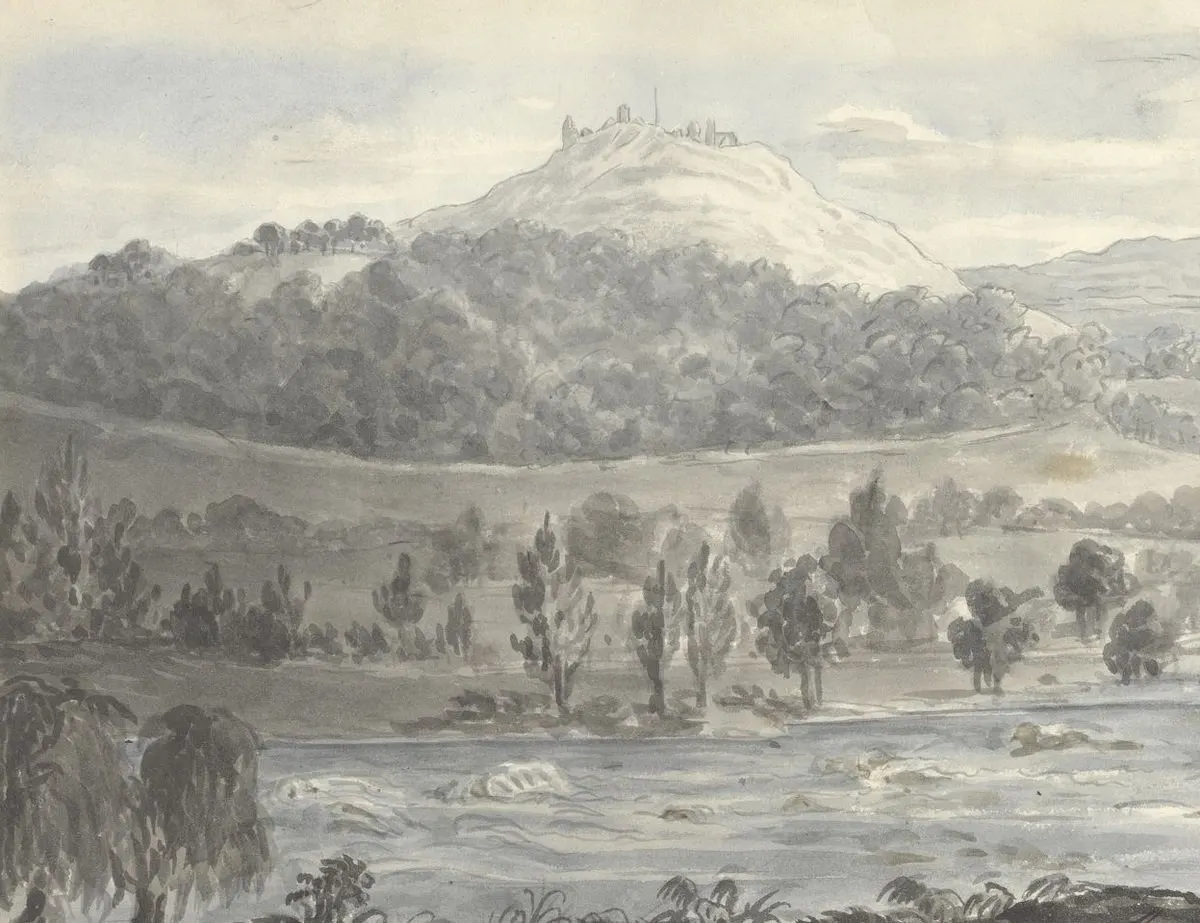
Although the wooden buildings within the castle walls were destroyed the “tower” or keep and all of the stone walls remained intact. In a letter to Edward I Henry de Lacy said that the fortress was “still so good and strong and should be repaired and garrisoned by the English. For there is no stronger castle in all Wales, nor has England a stronger”. Eventually, having defeated the Welsh, Edward presented the castle to his general John de Warenne, Earl of Surrey. However, deciding its location was too inaccessible and too remote, de Warenne abandoned Castell Dinas Brân and went on to build and live in Holt Castle (Image below by Ann Rushout, 1829, Yale Centre for British Art).
During the following centuries the castle had a number of owners, and although occupied for some of the time in the early years, it gradually fell into total disrepair. In 1490 John Leland said: “The castelle of Dinas Brane was never bigge thing, but sette al for strength as in a place half inaccessible for ennemyes. It is now al in ruine: and there in the rok side that the castelle stondith on bredith every yere an egle. And the egle doth sorely assaut hym that distroith the nest.”
Abandoned and left to the elements, the castle weathered away for centuries, with people giving it little attention. However, tourists began to visit the Castle again at the beginning of the 19th century. In 1827 Simpson said "A room has been built within these last few years for the shelter and convenience of visitors to the Castle; the key of which may be obtained at a little white cottage half way up the hill, inhabited by a very civil woman by the name of Parry, who conducts the visitants, and provides them with tea if required." The introduction of the railway to Llangollen in the second half of the nineteenth century, created a greatly increased influx of tourists to the town. The castle, and the climb to it, became one of the main attractions. Seeing potential, the locals created a small business by renting out donkeys to those daunted by the steep climb.
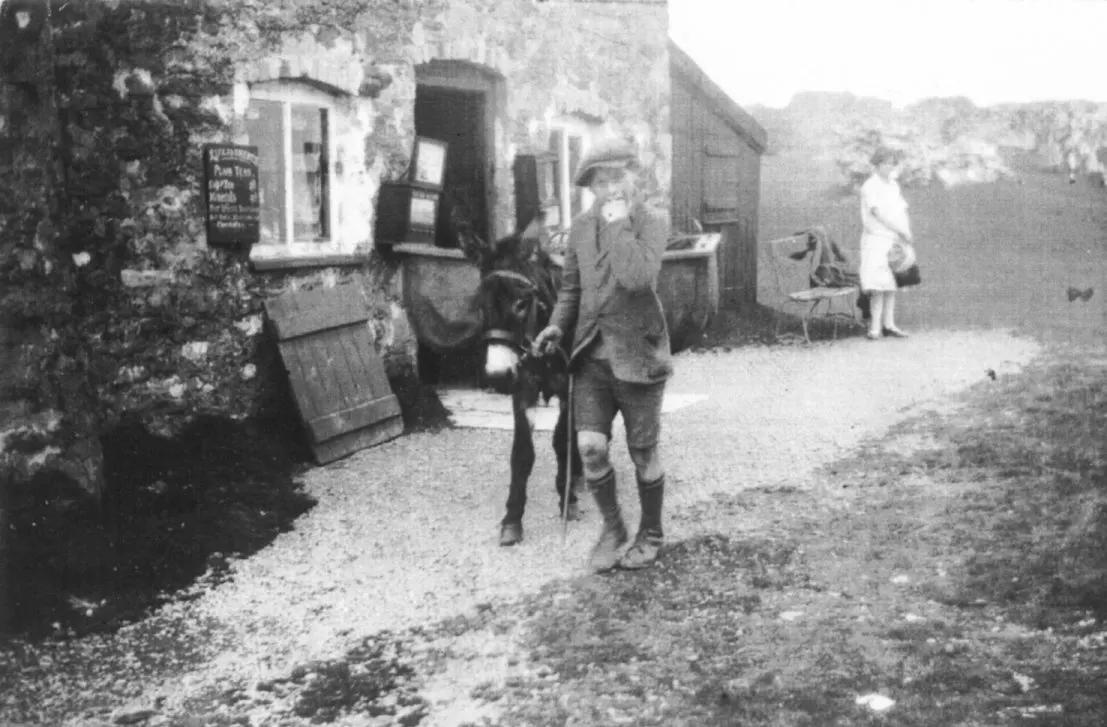
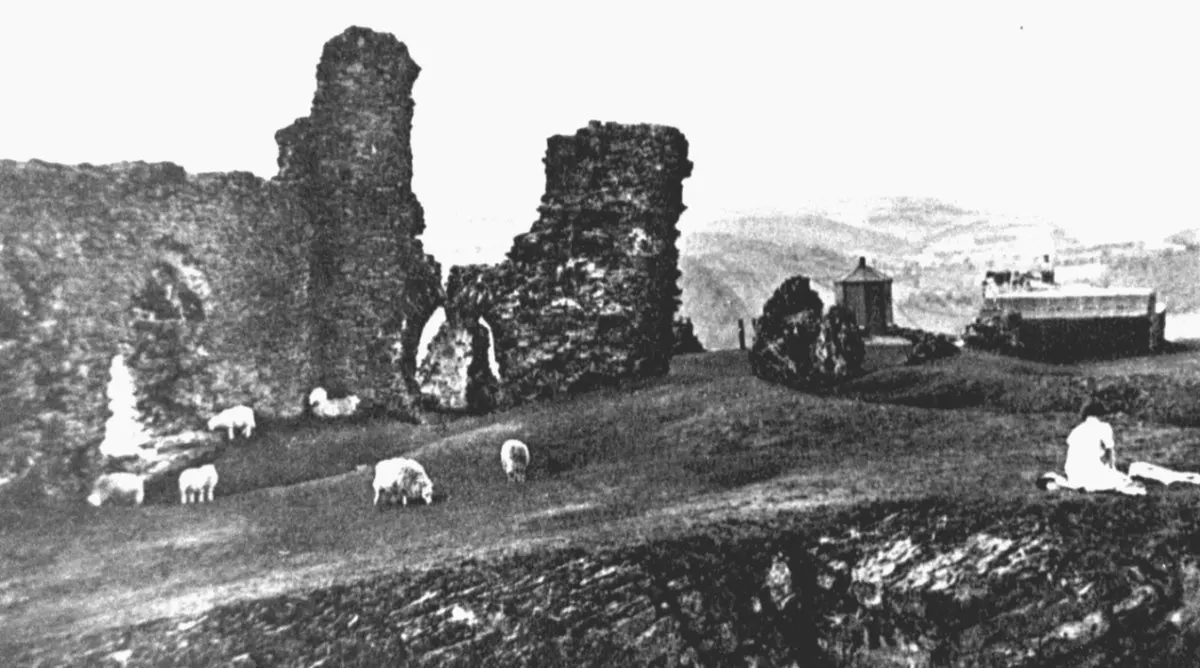
In the 1860s Mr Samuel Jones used the small ‘cottage’ on the top to sell supplies and refreshments to visitors. In 1869 he installed a camera obscura to entice visitors to take advantage of the views of the surrounding valley. The camera obscura opened its doors on the 2nd April 1869, allowing people to marvel at the view for a charge of 2d each.
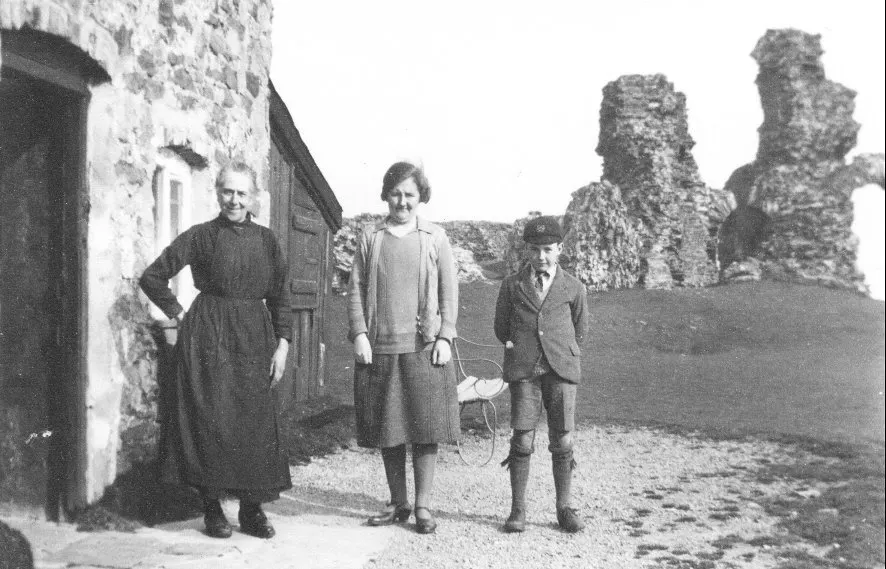
The little shop and camera obscura were taken over in the early 1900s by Miss Elizabeth Roberts, who continued to supply refreshments for visitors until the start of the Second World War. The camera obscura was burnt down during storms in 1910. It was rebuilt and continued to provide views for visitors until it was blown down by high winds in the 1950s.

Today Castell Dinas Brân continues to provide lovely views of the Dee Valley and a fascinating lesson in medieval history for visitors and local people alike.
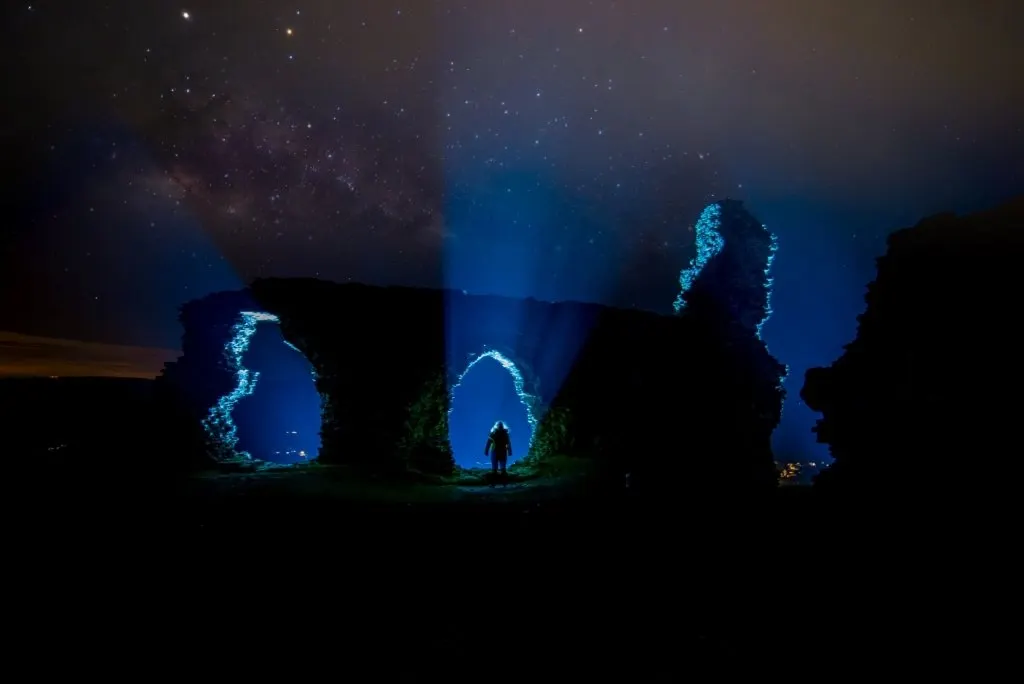
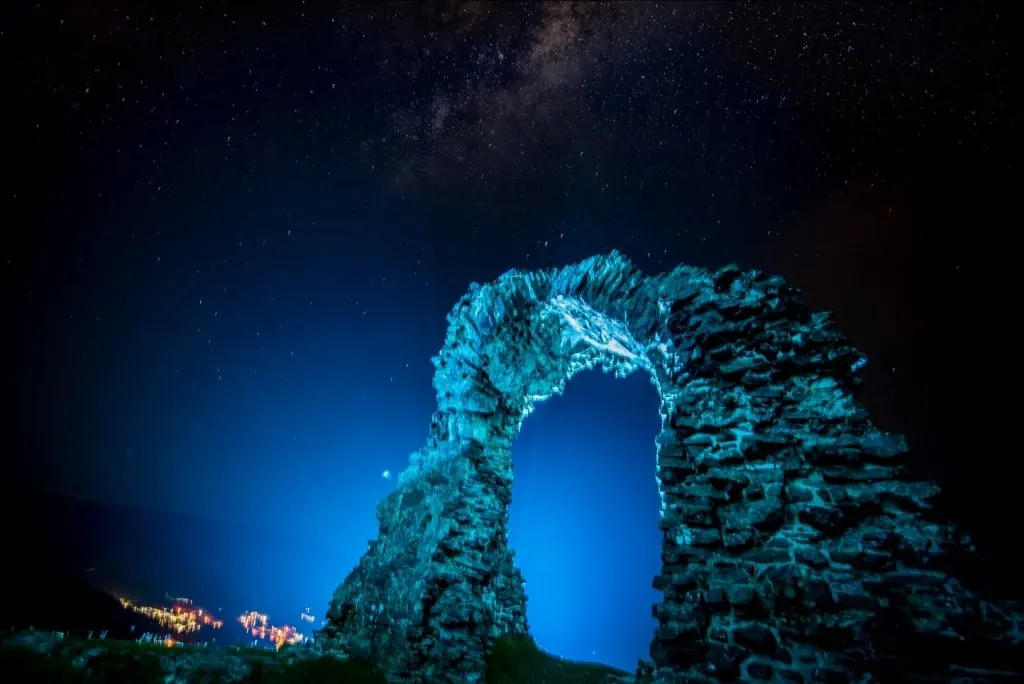
The Castle, along with other heritage landmarks, was illuminated at night for a period of 3 weeks in 2019 as part of the 10th anniversary celebrations of the Pontcysyllte Aqueduct being awarded UNESCO World Heritage Status.