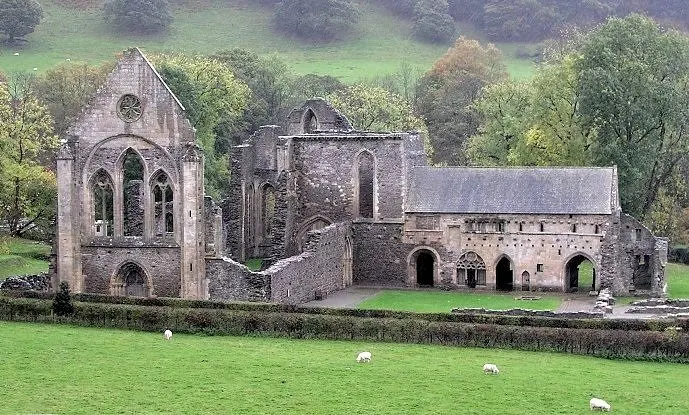
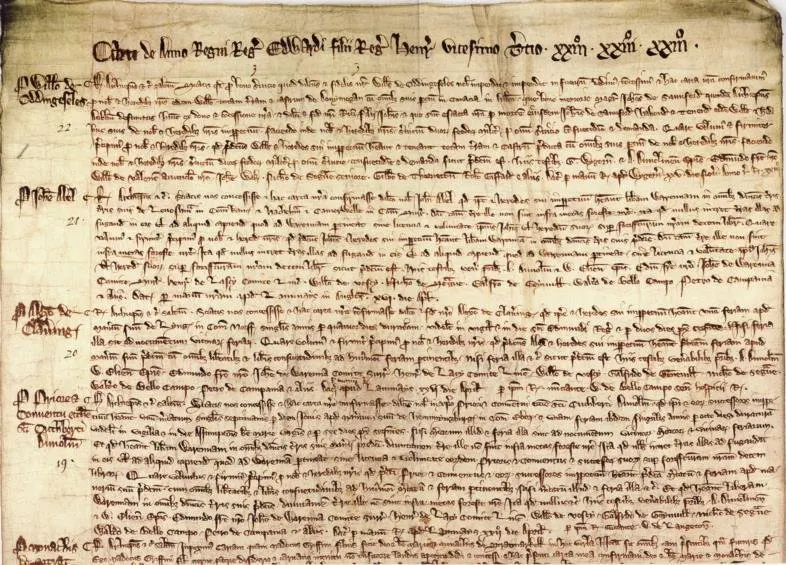
Valle Crucis Abbey was founded in 1200. Madoc ap Gruffydd gave the township of Llynegwestl to the monks of Strata Marcella to build the Abbey. Because the Cistercians preferred isolation the existing inhabitants were re-located to Stansty and Northolt, 10 miles to the north east. The original foundation charter for Valle Crucis has not survived so we have to rely on a later copy in a Charter Roll of 1295, although the actual date is missing from this copy. (Image courtesy of the National Archives - Contains public sector information licensed under the Open Government Licence v3.0).
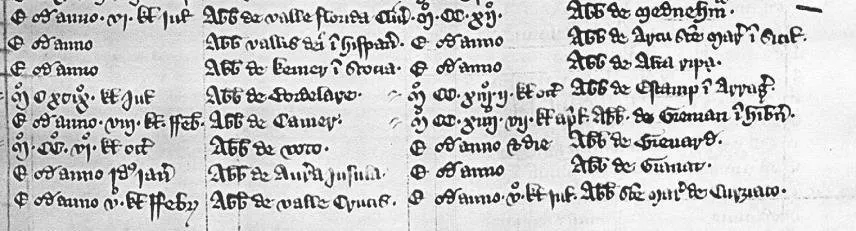
There exist at the British Library two documents that help us to date the foundation of Valle Crucis Abbey more exactly. Both are lists of Cistercian abbeys and are thought to be contemporary, written in the 13th century. The first (MS Cotton Vespasian A vi) is a list of foundation dates and refers to 'de valle crucis in Cambria' under the year 1200. The second (MS Cotton Faustina B vii) is even more specific and gives the date as 'v kal ffeby' - the fifth day before the kalends of February in other words the 28th January 1200 (Image courtesy of the British Library).
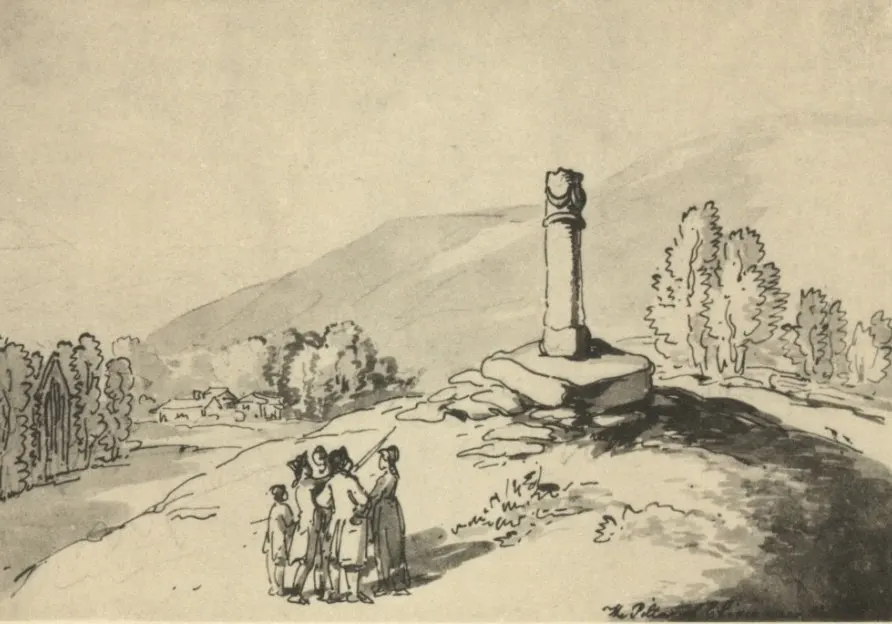
Valle Crucis is Latin for Valley of the Cross. The name derives from the nearby Eliseg’s Pillar, which was erected as a cross in the first half of the 9th century.
Valle Crucis Abbey prospered for 300 years, but by the latter part of the 15th century the monasteries were fast losing their commanding position in society. The story of decline was a long one, but the final fall came suddenly with Henry VIIIs dissolution of the monasteries. Valle Crucis was one of the first to be suppressed in Wales, being dissolved in 1536.
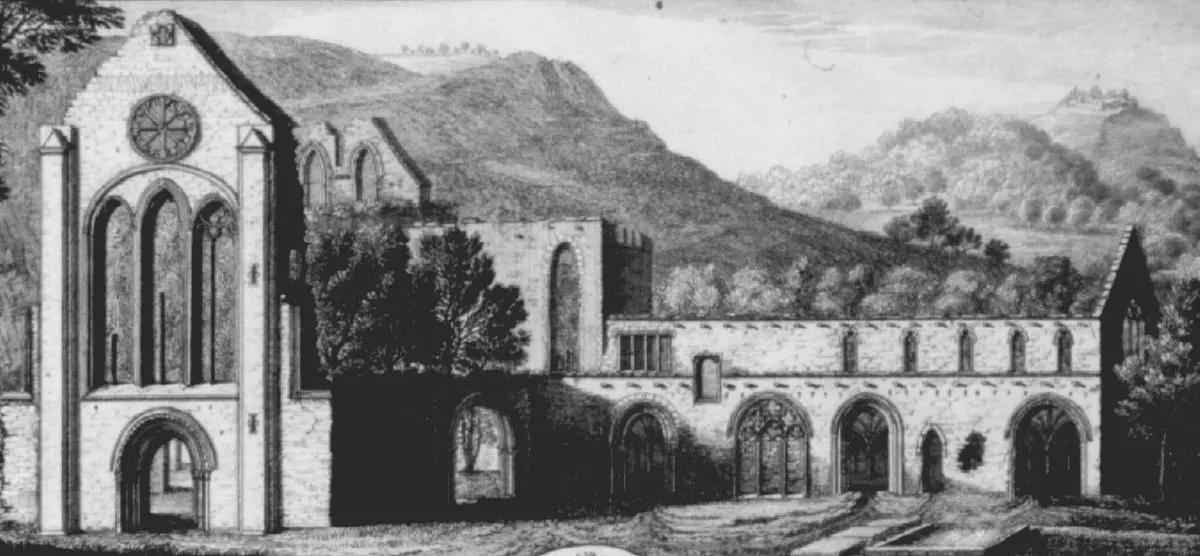
Having passed through several owners and with some of it having fallen into ruin, the Abbey was purchased by John Trevor of Trevor Hall around 1663. It passed down the Trevor family to Mary, his great great granddaughter. She converted the Chapter House into a dwelling. From this time on the Abbey was rented out as a farm.
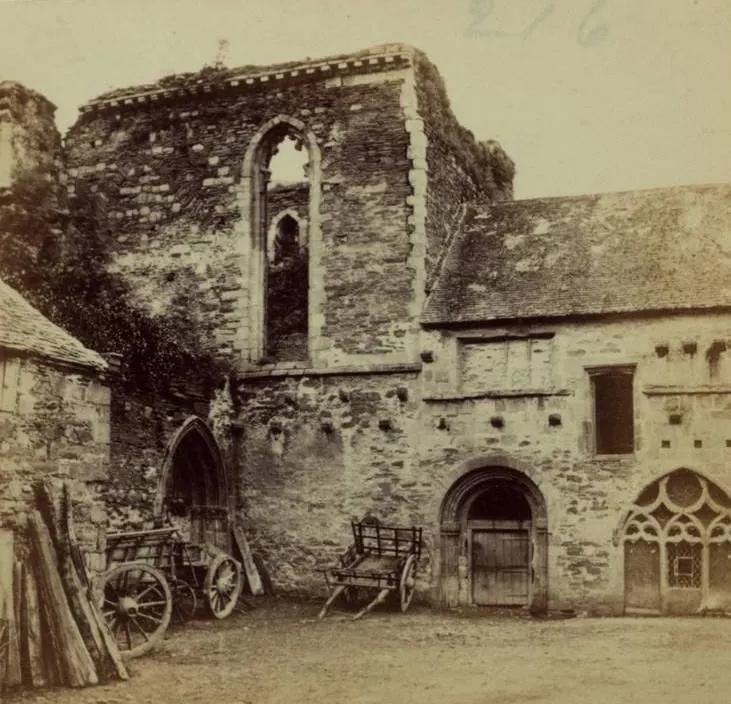
Passed down through the Lloyd family before being sold to Mr Lloyd Jones of London in 1947, it passed into the care of the Ministry of Works in 1951 and is now looked after by Cadw.