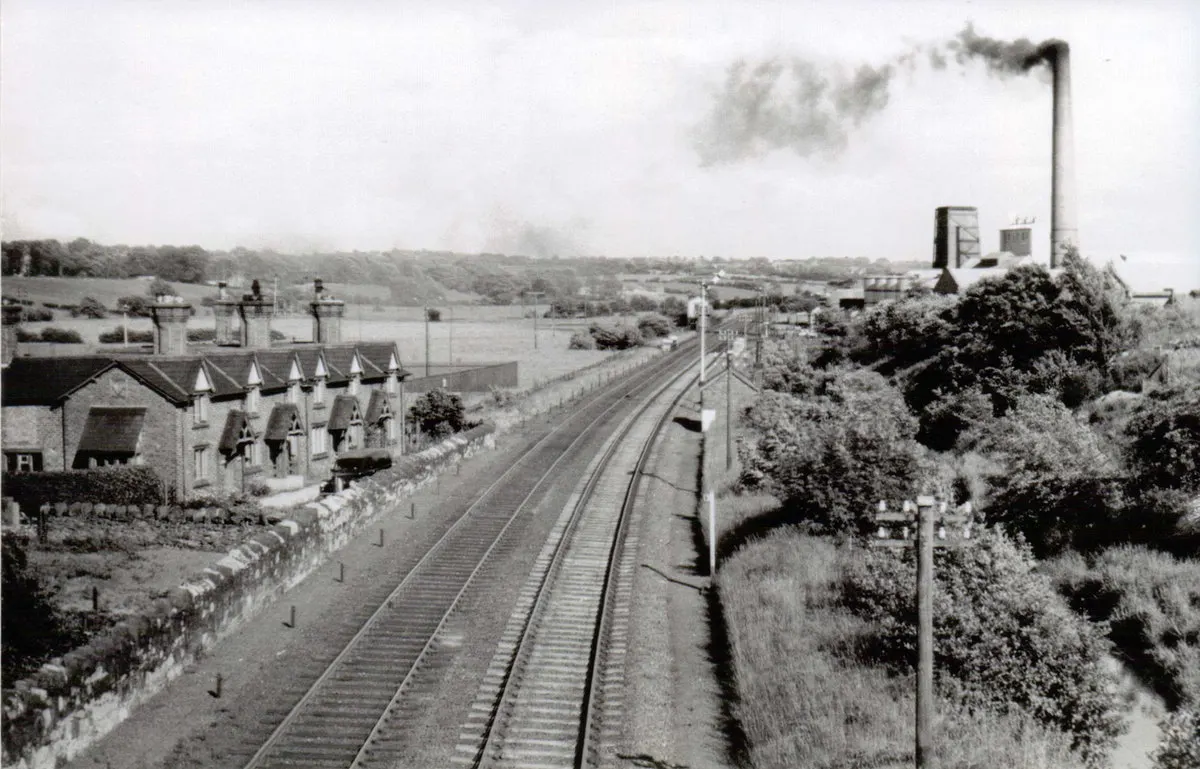
Railway Cottages off Denbigh Rd. Mold with the Synthite plant in the Background 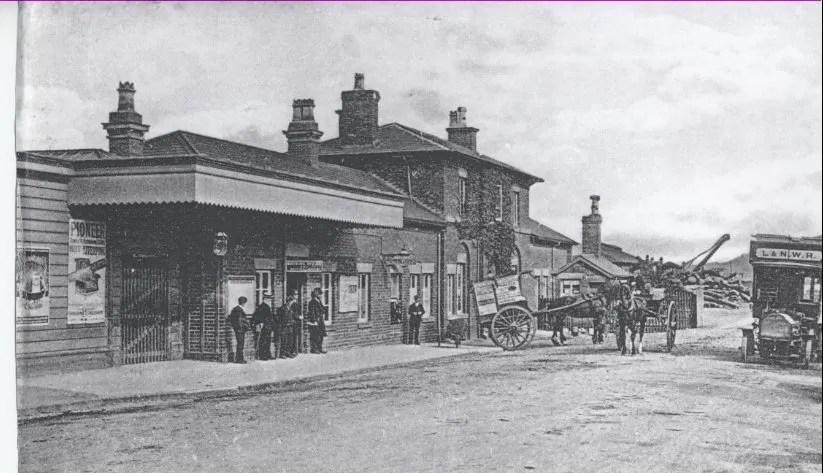
Mold Station. 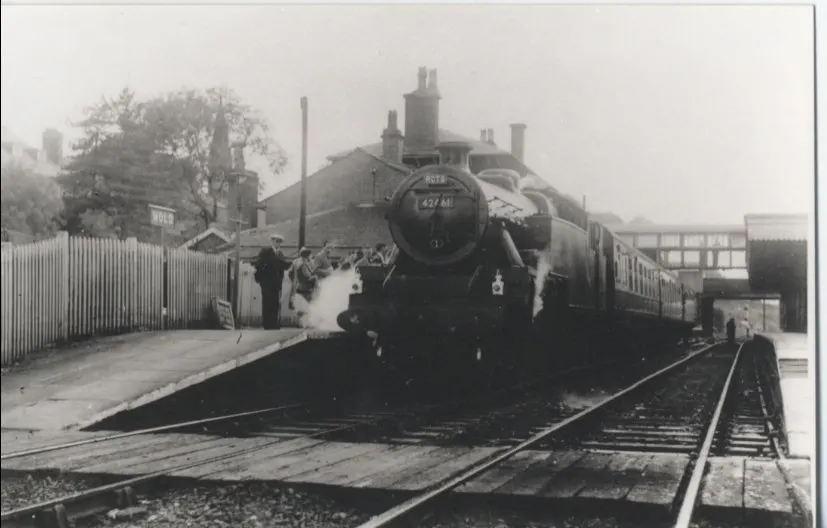
Engine 4261 at Mold Station. 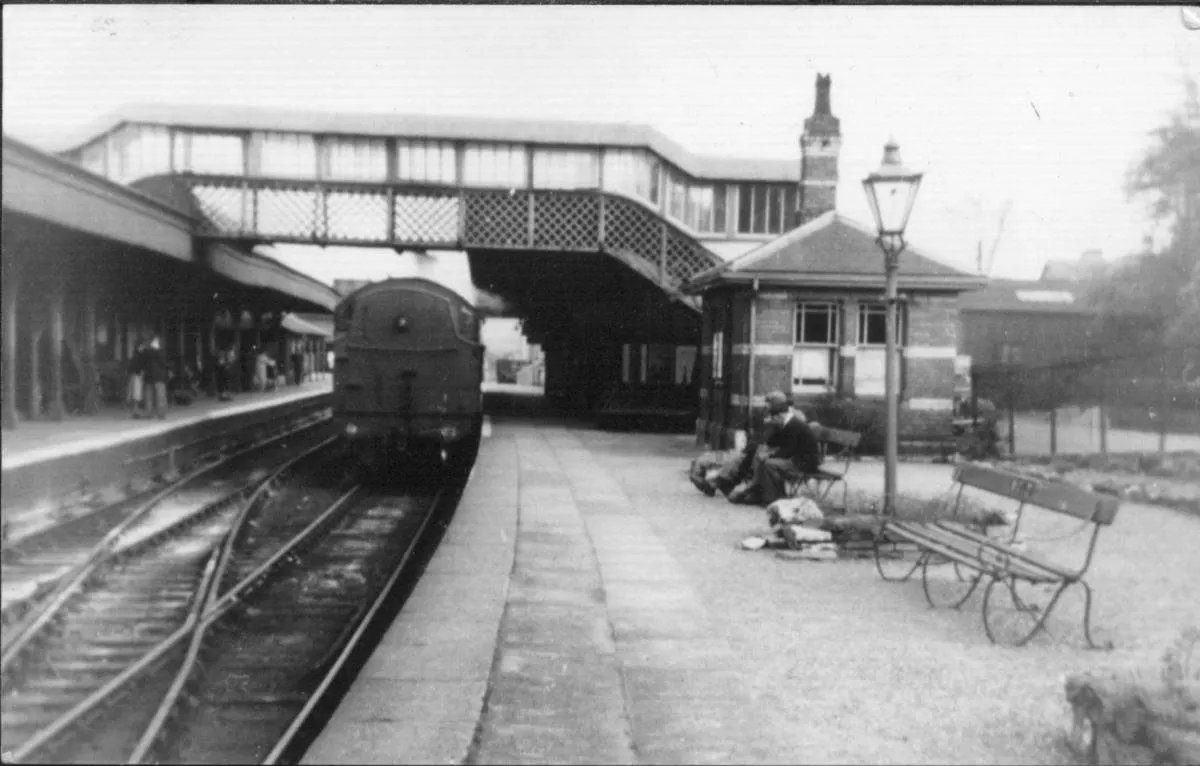
Mold Railway Station about 1950 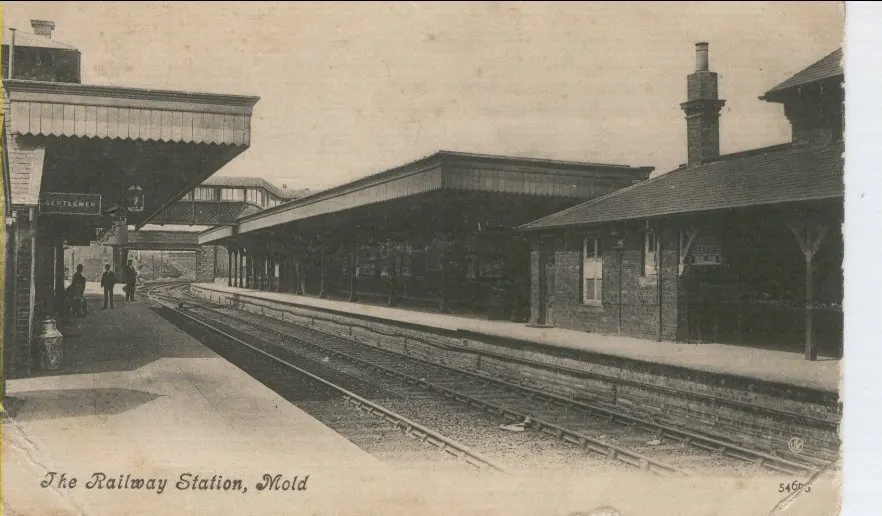
Mold Station. 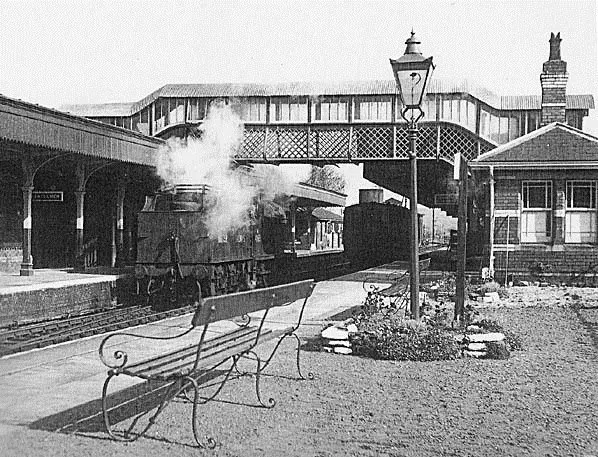
Mold Station in it's heyday. 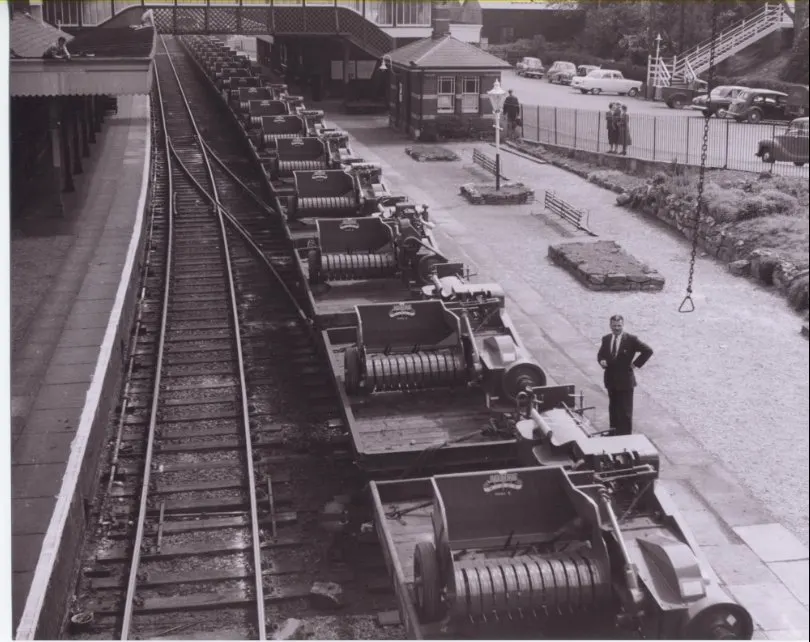
Jones Balers on a train at Mold Station in 1960 on their way to France. 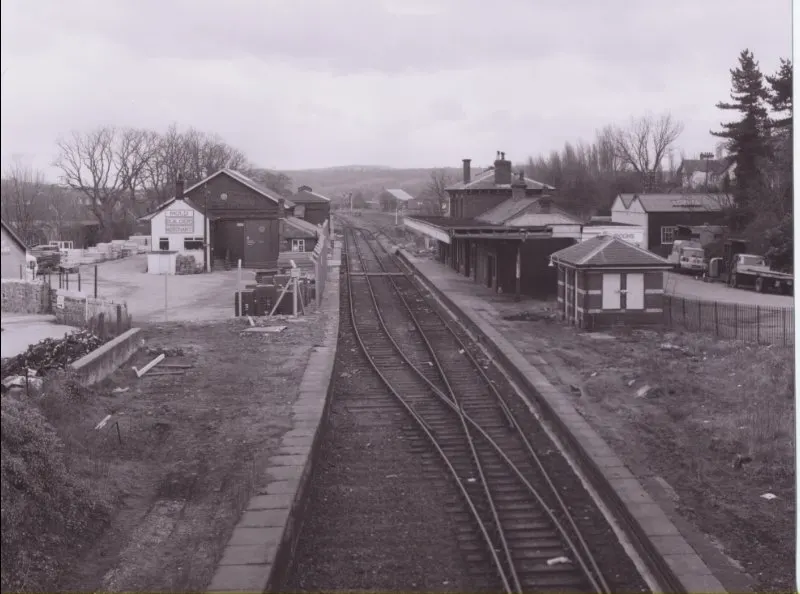
The remains of Mold Station with the builders yard to the left. Tesco Supermarket is there now. 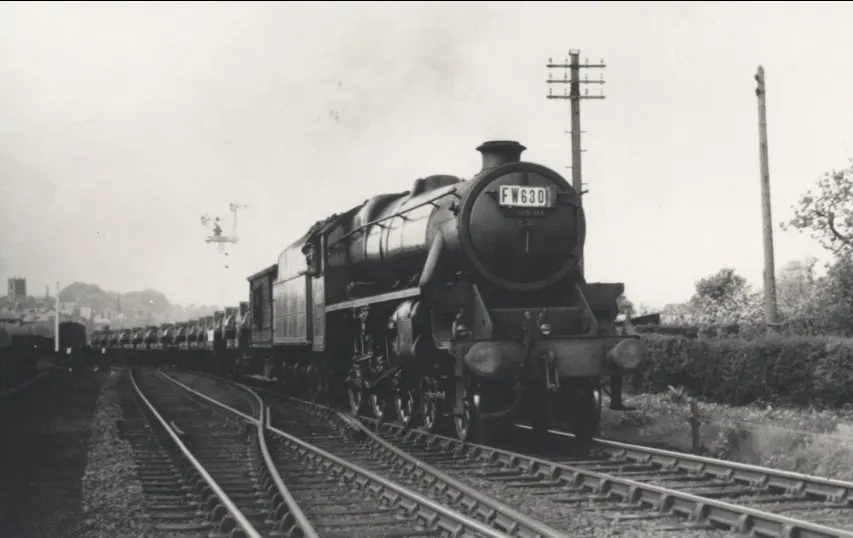
Leaving Mold Station, Engine FW630 loaded with Jones Balers. about 1950.
In Victorian times, all heavy machinery and equipment for the area’s industries came through Mold station. Coal and lead mined locally, and later tinplate was transported along this line to markets throughout the country. The station opened in 1849. It was the last station on a branch line of the Chester and Holyhead Railway. In 1869 the Mold and Denbigh Junction Railway opened a line from Denbigh to Mold, a route that was known as the Chester to Denbigh line. This bridge spanned the railway line and had not long been built before the Mold Riot of May 1869, giving the rioters a very good position from which to throw stones. By the early 1960s passenger numbers were so low that the withdrawal of passenger services was proposed. On 28 April 1962, the last passenger services ran and Mold station closed with effect from 30 April 1962. The stainless-steel sculpture in Chester Street symbolises a steam locomotive wheel and reminds us of the former railway station and line which was located in this area.The station remained open for goods services until 4 May 1964 but the line itself was not lifted until 1985. Tesco supermarket now occupies the former station area.