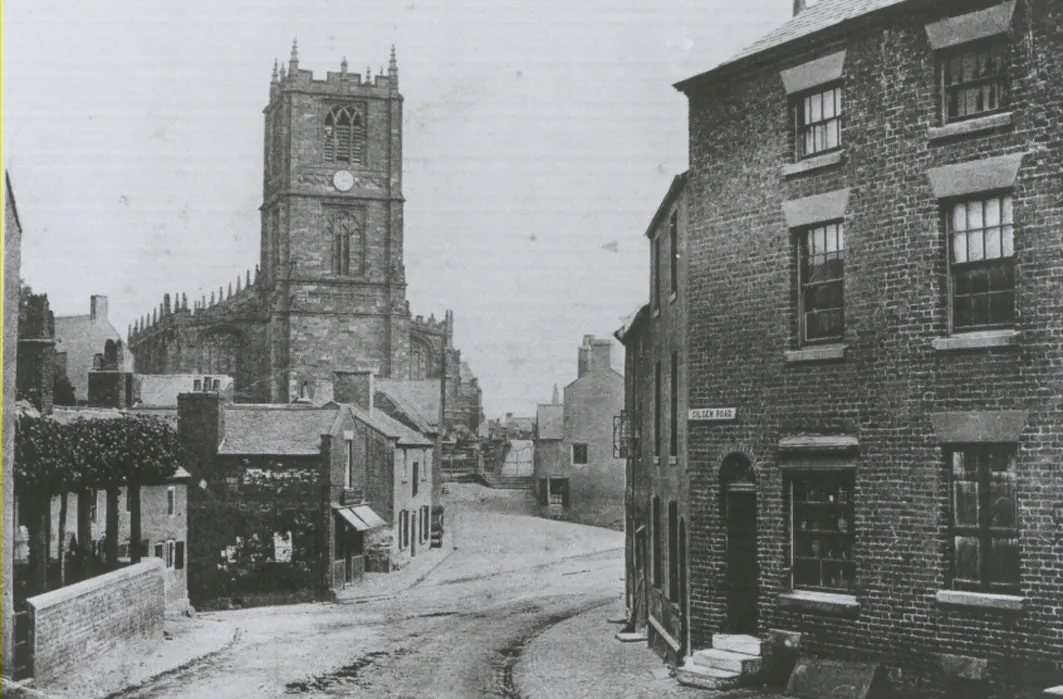
The view from Bailey Hill. The buildings to the right of the Church were demolished in 1958. 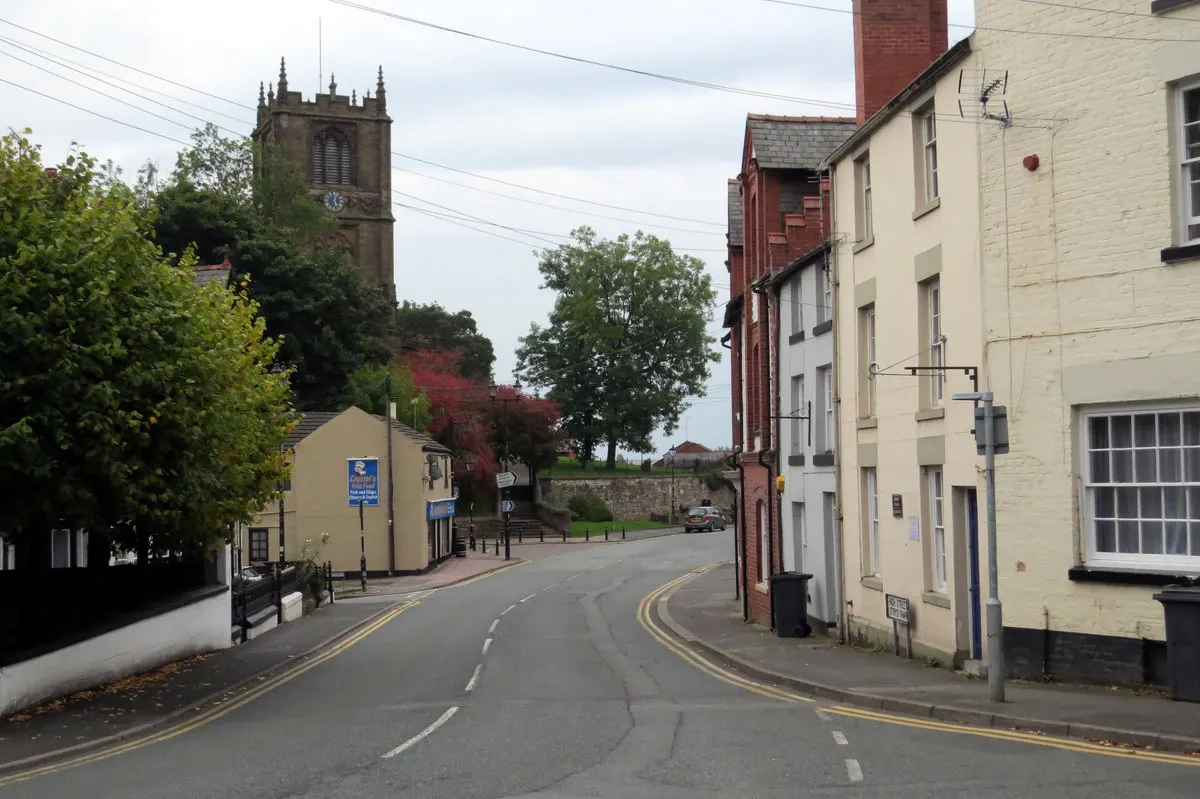
The same view today. 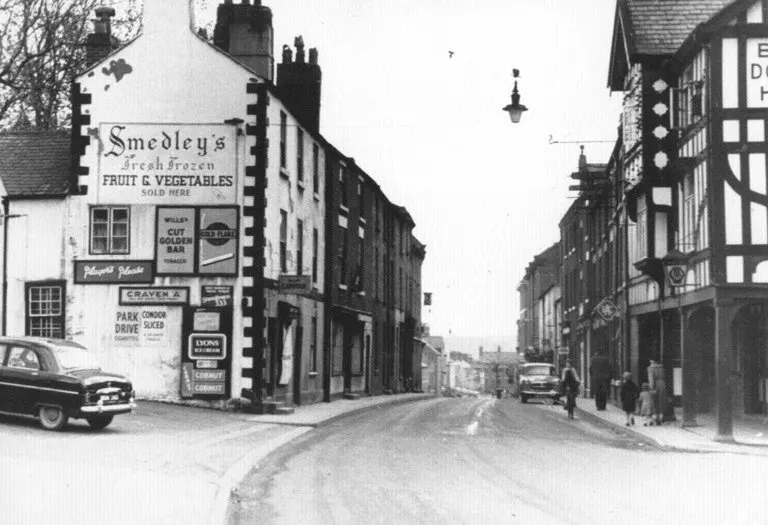
Upper High Street, about 1930. The Dolphin Hotel is on the right. The buildings on the left were demolished in 1958. 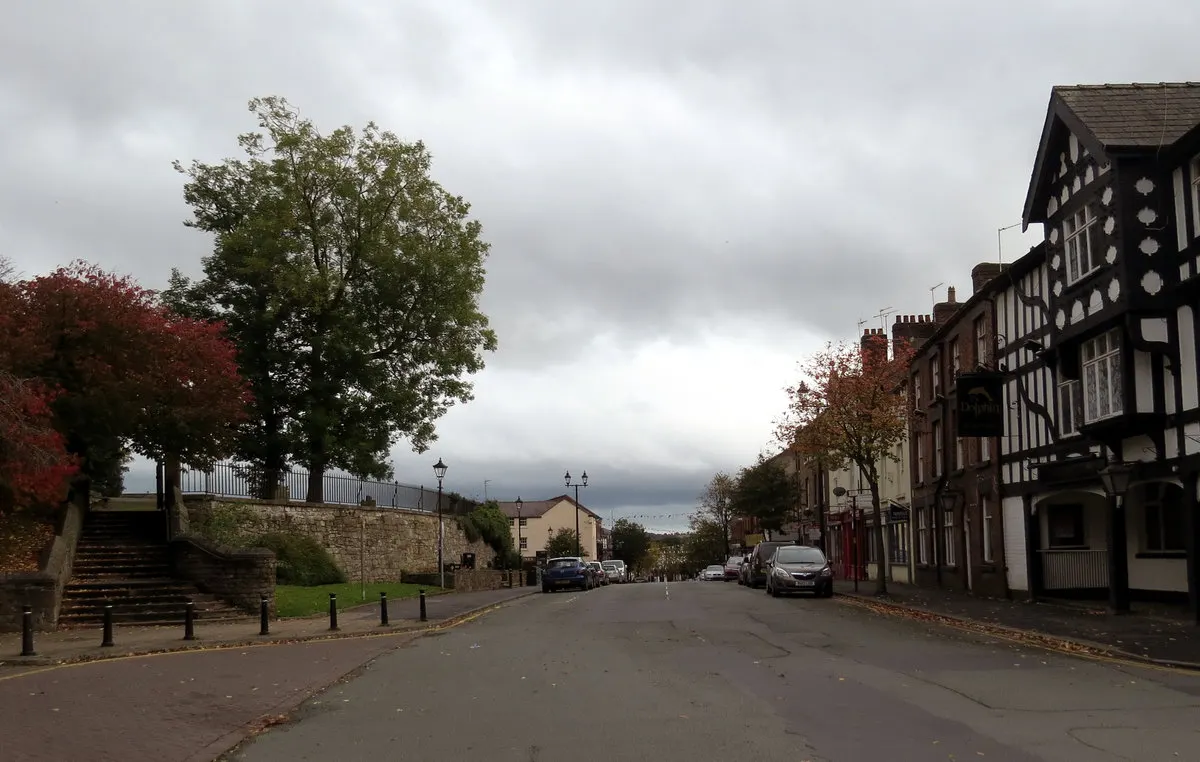
The same view today. 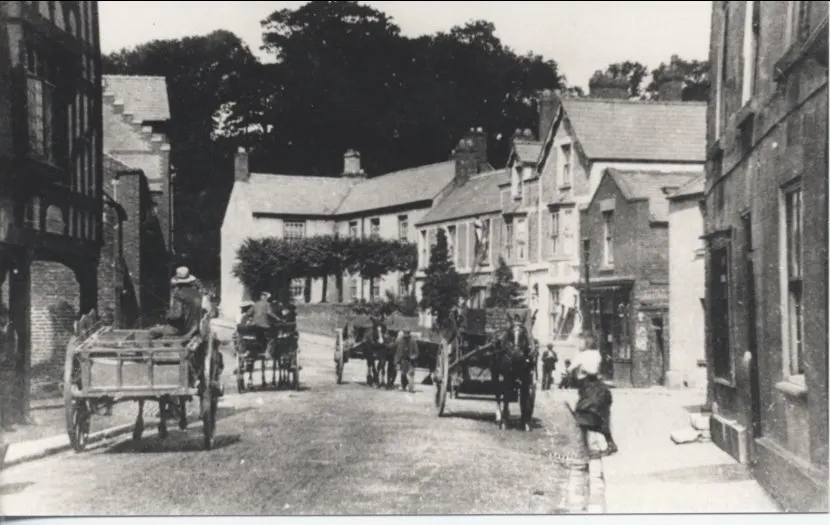
Looking towards Bailey Hill, about 1910. The Dolphin hotel is on the left. 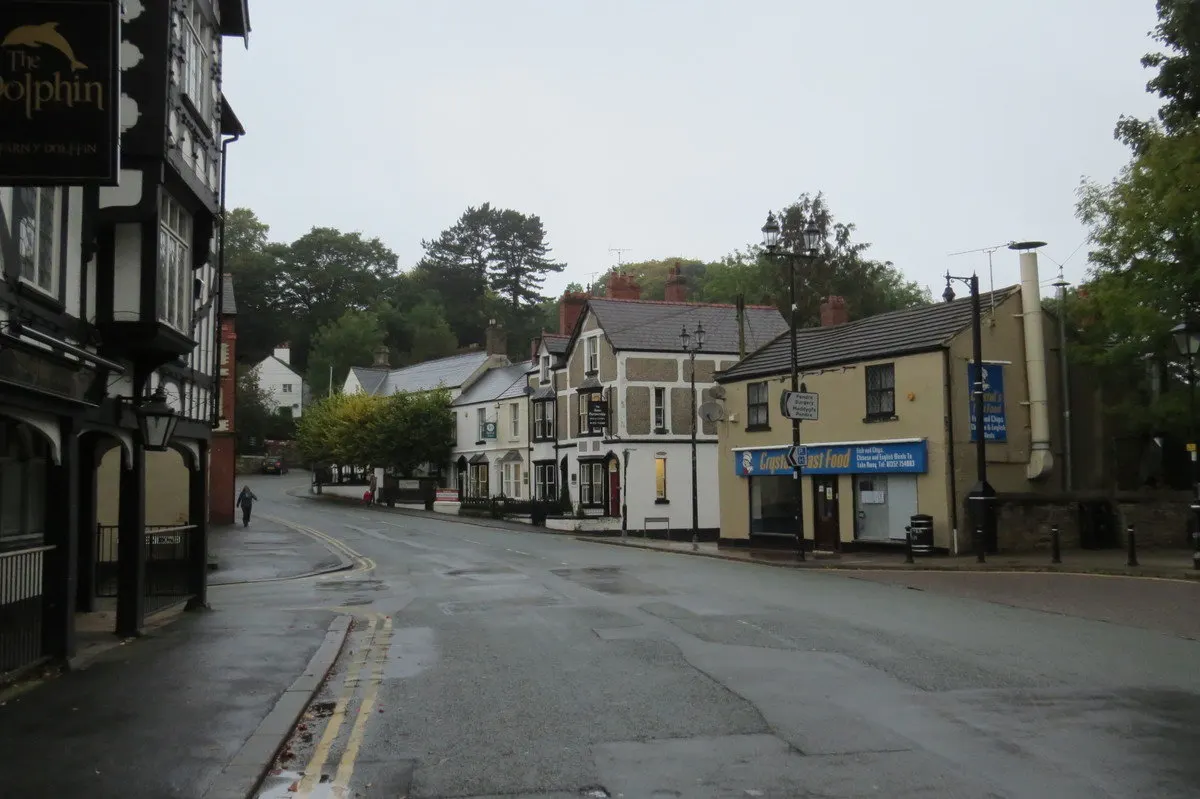
The same view today. 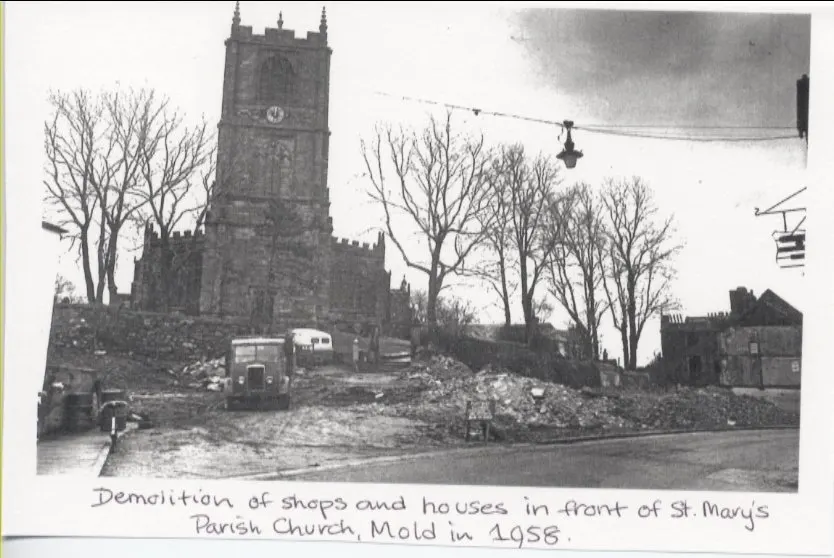
Demolishing the buildings in front of the church, 1958. 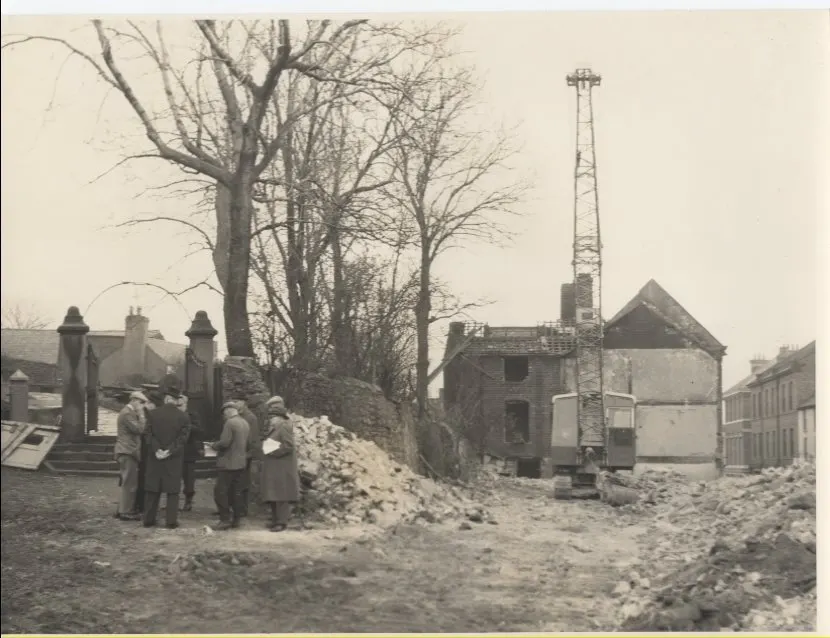
Demolishing the buildings in front of the church, 1958. 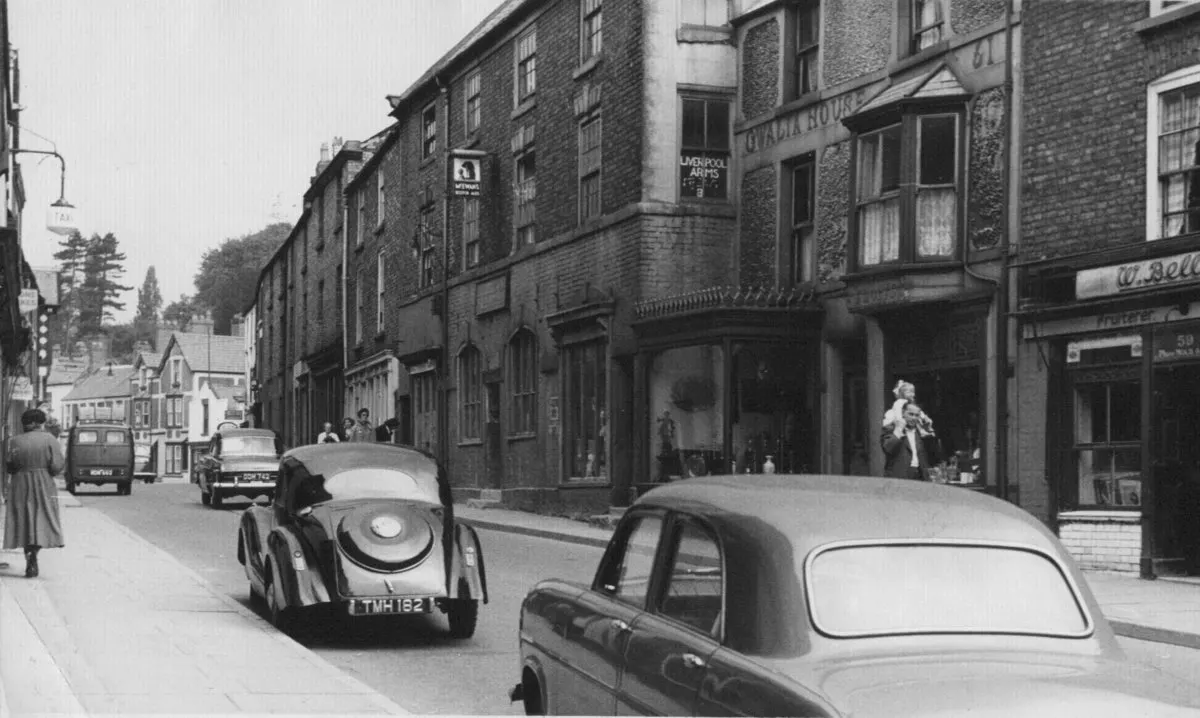
Buildings on the right, including the Liverpool Arms were demolished in 1958. 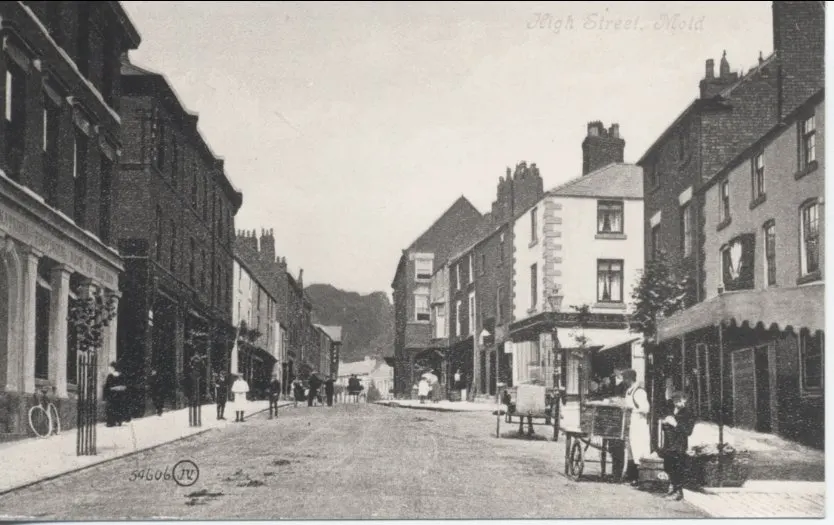
Feathers Inn (now demolished) and stalls in upper High Street. James Summerton's stall nearest, about 1910.
The area around the church was crowded with houses shops and pubs until 1958 when they were cleared away to broaden the high street. In the mid nineteenth century, the town prospered. Offices for the local coal and lead mines were established, shops and markets were built, and farmers came into town to sell their produce. John Ambrose Lloyd (see the People section), a composer and writer of hymns every Welsh chapel congregation would be acquainted with, was born in a house on the right as you look down the street. Earl Road and King Street (right and left down the street) are relatively late additons to the simple street pattern. The Town Hall opened in 1912 and is in Earl Road.