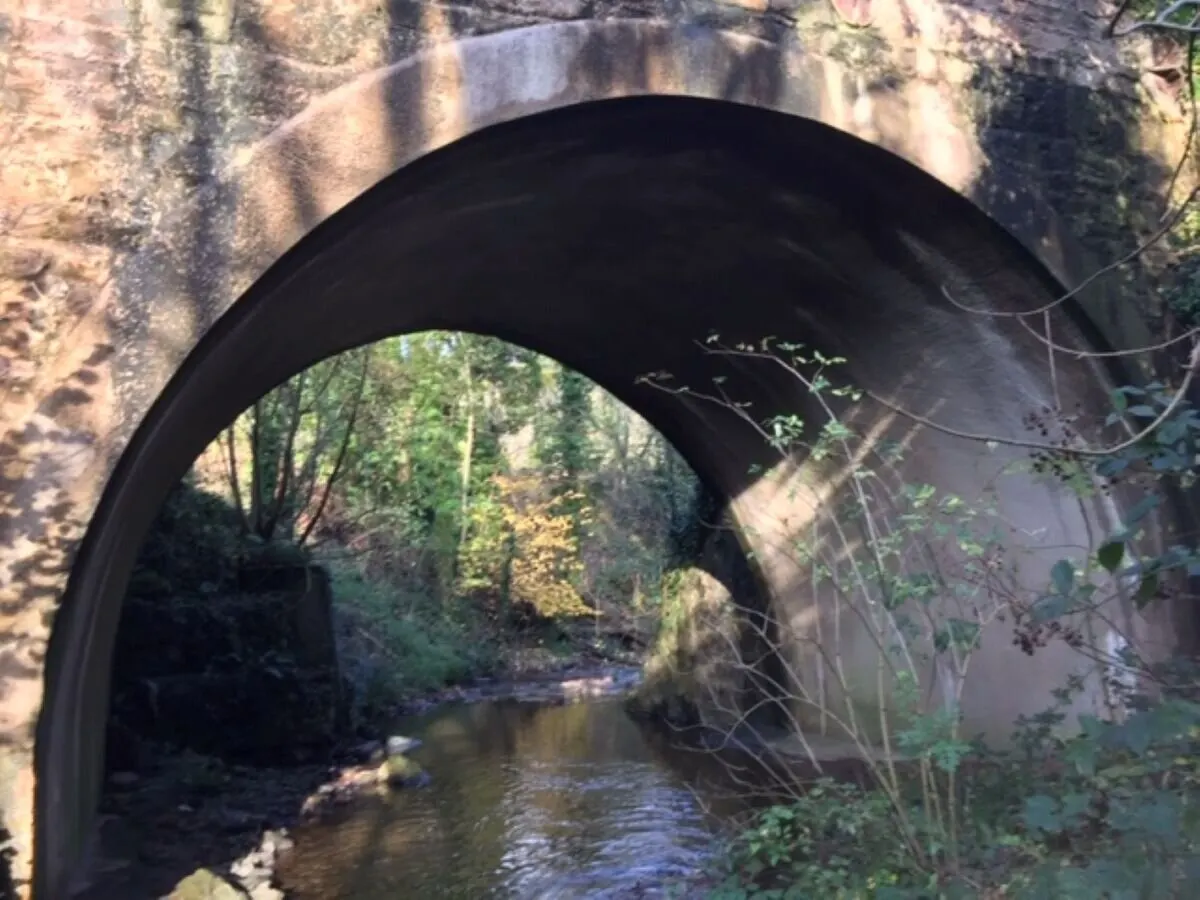
Petre Moch Bridge from Wepre Brook 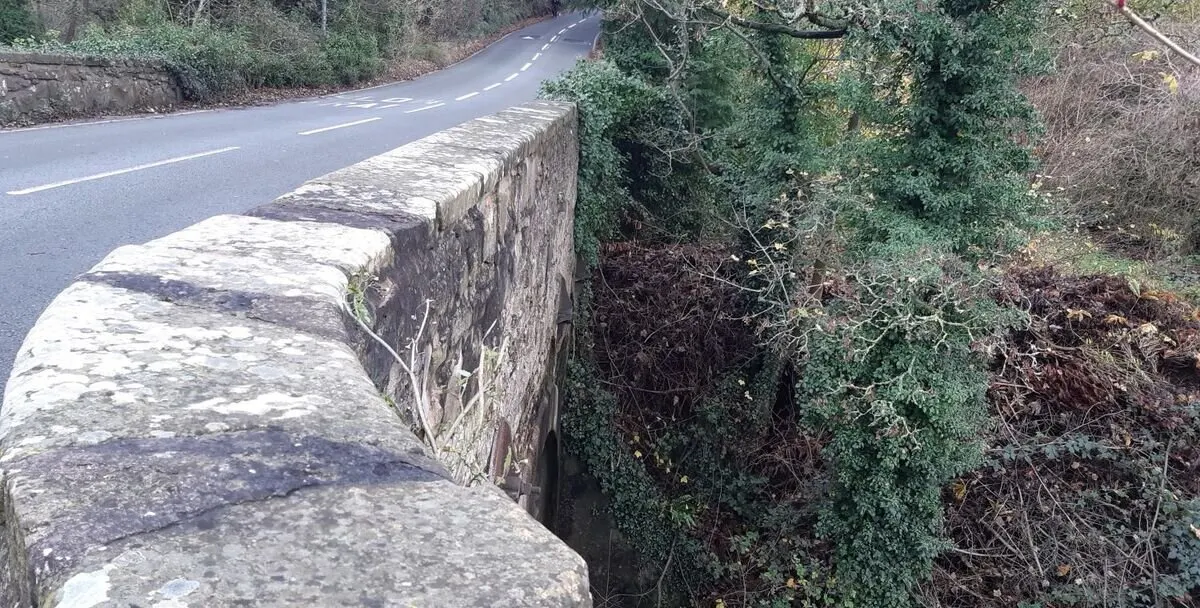
Pentre Moch Bridge 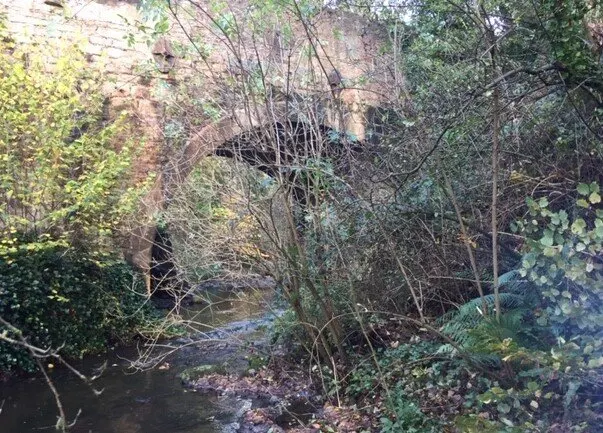
Pentre Moch Bridge from Wepre Brook 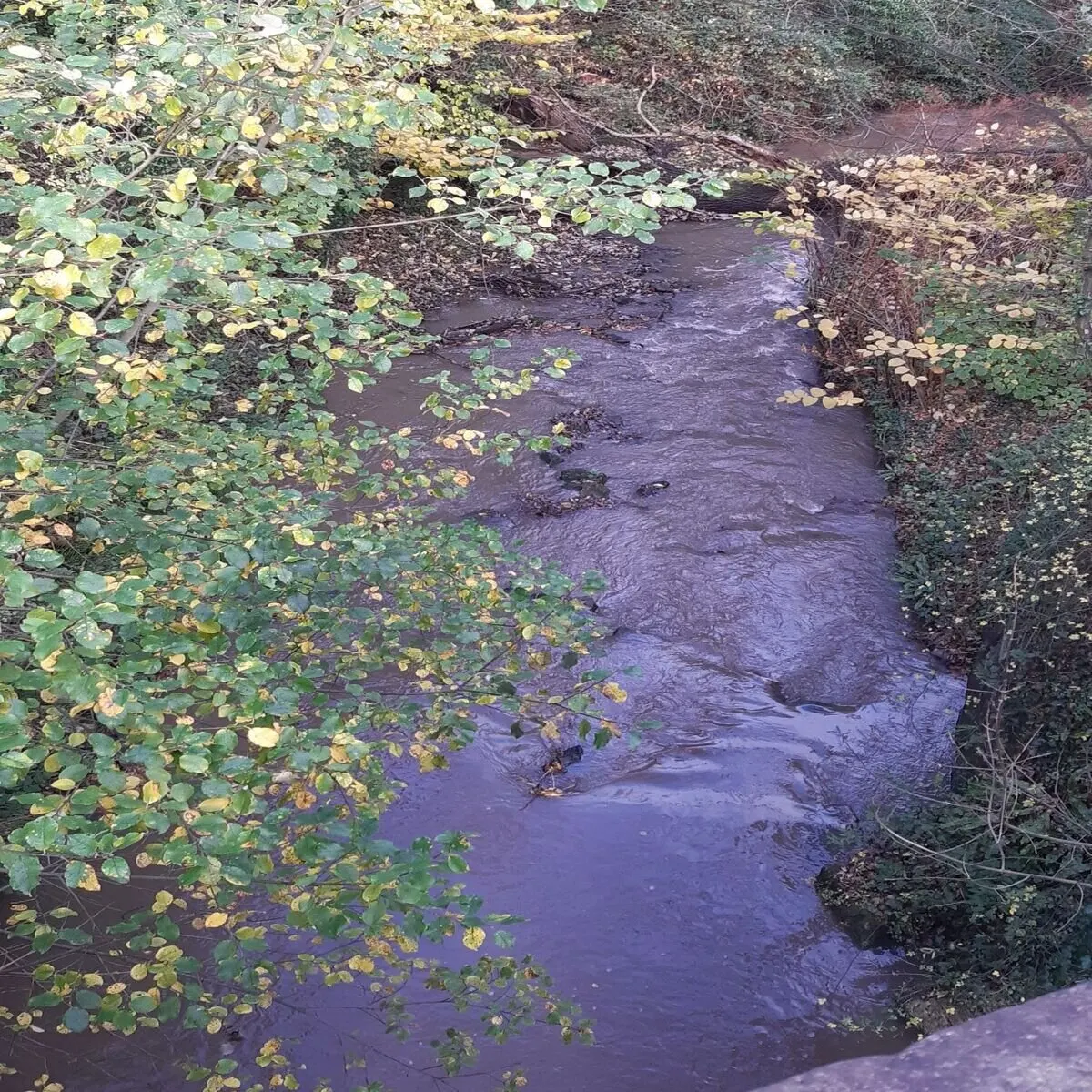
Wepre Brook
Pentre Moch Bridge Is described as being in the Tything of Wepre in the late 17th century in Lloyds Parochialia.
This bridge of one arch, over Wepre Brook was built in 1690 by order of the Magistrates at Quarter Sessions. The bridge was damaged because of flood damage in 1839. It is thought that after crossing Pentre Bridge that the steep hill towards Ewloe “ Vinegar Hill” was so called as an indulgence of Sir John McCartney’s of the Irish Coal Company in celebration of the recent Catholic Irish rebellion of 1798. Here rebels in County Wexford were forced to retreat and were encircled in a place called Vinegar Hill. Wepre Brook flows under Pentre Bridge, through Wepre Woods and into the River Dee at Connah's Quay.
Wepre Brook - It is hard to believe that such momentus historical events took place along Wepre Brook. Wepre was a significant place as far back as 1085, receiving two entries in the Doomsday book where it is described as a rural settlement. Believed to be held in trust for the Abbey of Saint Werburg, this border land had for centuries been fiercely fought over and had frequently changed between Welsh and English rule. In 1157 there was another attempt to regain it for Henry Plantagenet who had gained the Throne in 1154 as Henry II. He had assembled a vast army of English and French troops and had arrived in Chester to put an end to the independence of the Welsh Princes. Owain Gwynedd aware of the threat, was waiting at Coleshill (Flint) Henry and his army marched from Chester.
Henry decided on a tactical manoeuvre, he personally led a contingent of his troops up through the valley of Wepre Brook, while his main army marched along the riverbank. His plan was to outflank and encircle Owain’s army. Owain had heard of the plan and sent two of his sons to lay an ambush in Wepre Woods. Henry II and his troops walked into the trap. Most of Henry’s troops lost their lives. Henry was apparently lucky to escape with his life. In the chaos Henry’s Royal Standard was left behind and was taken to Owain at Coleshill. Owain realizing the size of Henry’s army sued for peace. There was no battle- Owain was to keep Gwynedd and Henry was to regain Tegeingl (East Flintshire).
The Chester Recognisance Rolls of 1311 tells us that Llewelyn ap Gruffydd built a castle in the corner of Ewloe Woods in 1253. The castle and Wepre manor was given into the custody of Ithel ap Bleddyn one of the Captains of Tegeingel with the order to keep the English out. In 1265, Llewellyn destroyed the Castle at Hawarden. Henry was finding many of his own Barons opposing him and on the advice of the Pope, made peace agreeing that Tegeingel (Englefield) should lawfully be granted to Llewelyn and he should be given the title Prince of Wales.
Change was to follow. On the succession to the throne of Edward in 1272, Llewelyn refused to pay allegience to Edward. War was inevitable when a massive army gathered Chester and an English fleet anchored.in the Dee Estuary. Edward decided to build a castle at Coleshill to protect his lines of supply and possibly, in the event of defeat, to enable him to retreat across the Dee to Shotwick. The Castle was described as “Castrum apud Fluentum” - castle upon the river. This quickly evolved into Flynt then Flint. Having secured his Bridgehead Edward’s forces spread inland The Earl of Warwick’s division headed southeastward quickly taking Wepre, Ewloe Castle and Caergwrle. Edward placed a bounty of one shilling per head for every Welsh man found in the area. Twenty-seven were captured and executed on the first day, the rest fled.