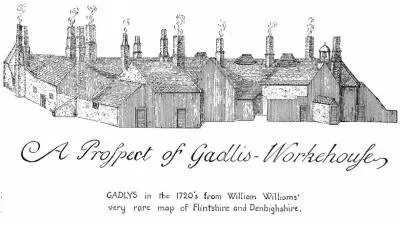
Gadlys Smelting House was built in 1704.
In 1700 the London Lead Company, or Quaker Company as it was known, obtained the leases for some profitable lead mines near Rhes-y-cae on Halkyn. The company developed a revolutionary technique for smelting lead using coal and built Gadlys Smelting house, close to coal mines and the River Dee that was essential for transport. The smelters worked hard from 6 in the morning until 6 at night.
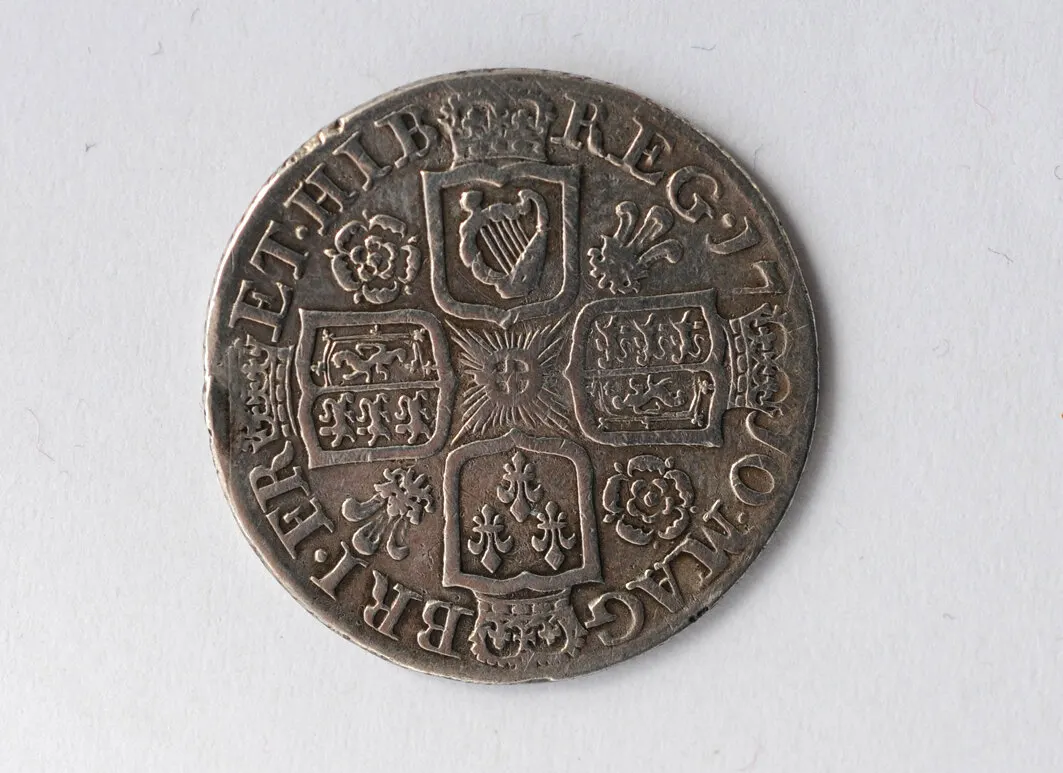
The company also improved silver refining techniques, making it economically viable to refine lead ore with a much lower silver content. Silver from here was sold to the Royal Mint and the coins decorated with the Welsh plume of feathers became known as Quaker shillings.
Gadlys Lead Works was demolished in 1786 but other smelting mills continued to prosper, producing lead, silver and zinc. In 1833, 300 employees working in three leadworks in Bagillt produced 100,000 tons of lead a year.
Demand for zinc increased as galvanised iron became more popular and a new zinc works was built at Bagillt in the 1840s.