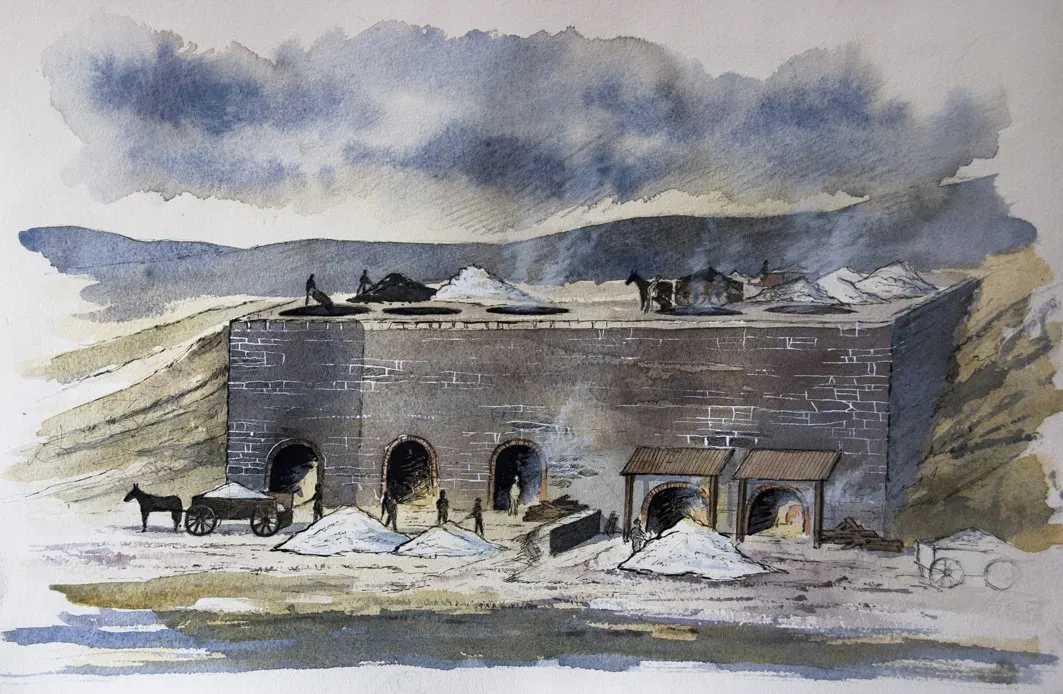
This block of five large commercial kilns at Waen y Brodlas were designed for high output.
The quarry behind these kilns was the main supplier of ‘Aberdo’ limestone in Flintshire. This rock produces hydraulic lime that sets underwater, an essential construction material for lighthouses, bridges and docks. Hydraulic lime from these kilns was probably used to build some of Liverpool and Birkenhead docks as well as the bridges at Menai and Runcorn.
These kilns were built in the mid 19th century in three phases. The oldest kilns are on the left. Additional kilns meant greater efficiency, keeping the men busy all the time. Originally carts took the lime to wharfs on the River Dee at Bagillt, Flint or Holywell and return laden with coal. Later the Chester to Holyhead Railway was used.
The kilns were designed so it was easy to load the raw materials - coal and limestone - into the top of the kiln and unload the lime from the bottom. The outer shell of the kilns was local stone but lined with fire-bricks to withstand the intense heat as these kilns could burn for several months.
Lime production ended in 1914 and the kilns fell into disrepair. They were restored in 2013 with funding from the Aggregates Levy and Cadwyn Clwyd.