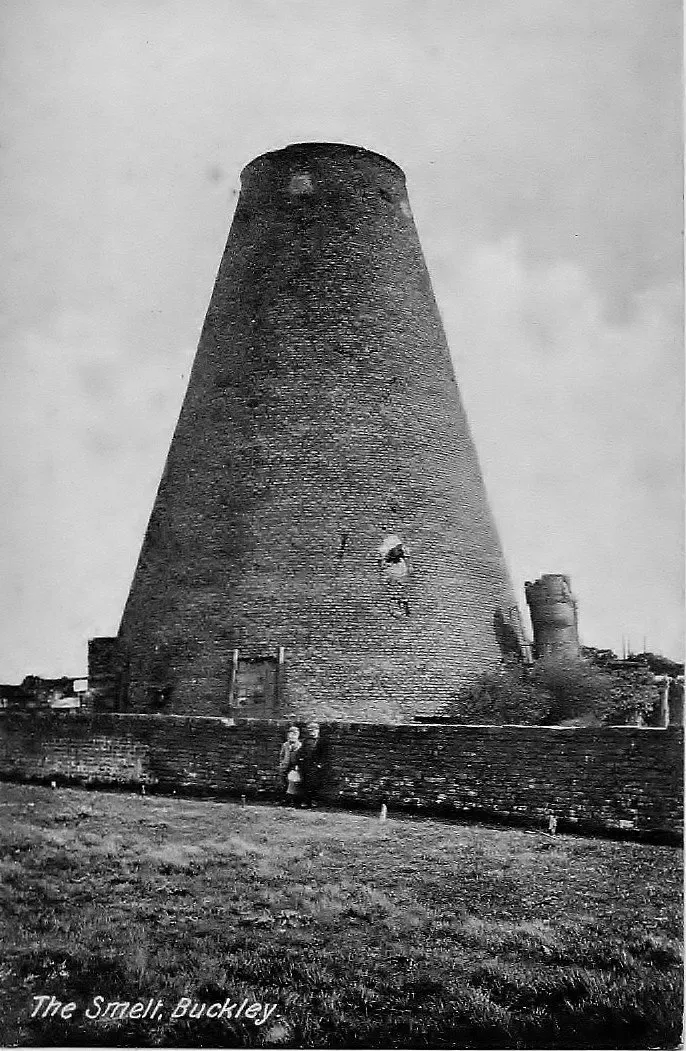
A postcard of the 'Old Smelt Buckley' 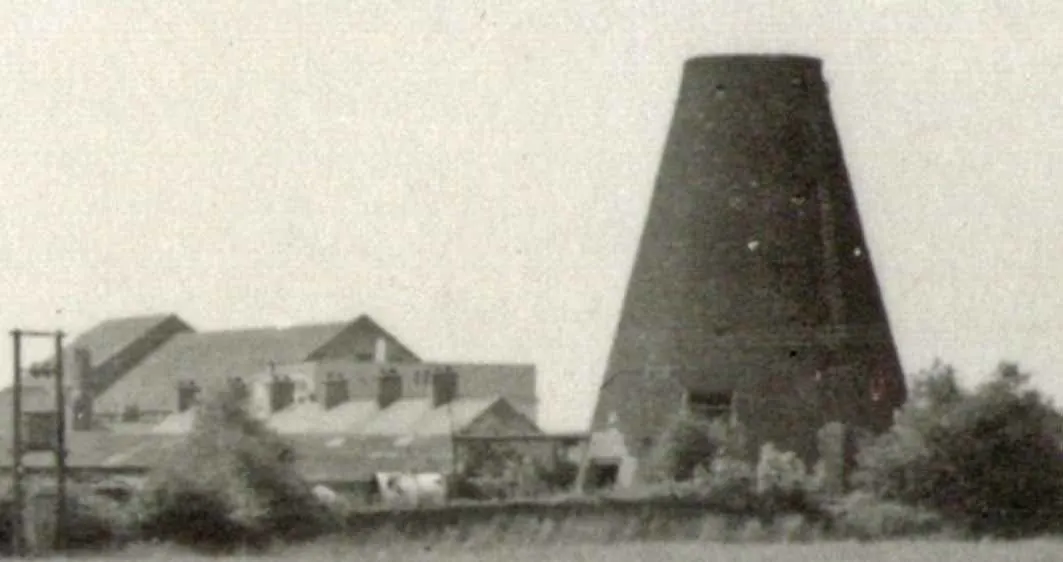
Old smelt due for demolition in 1966; the Tivoli is the large building to the left 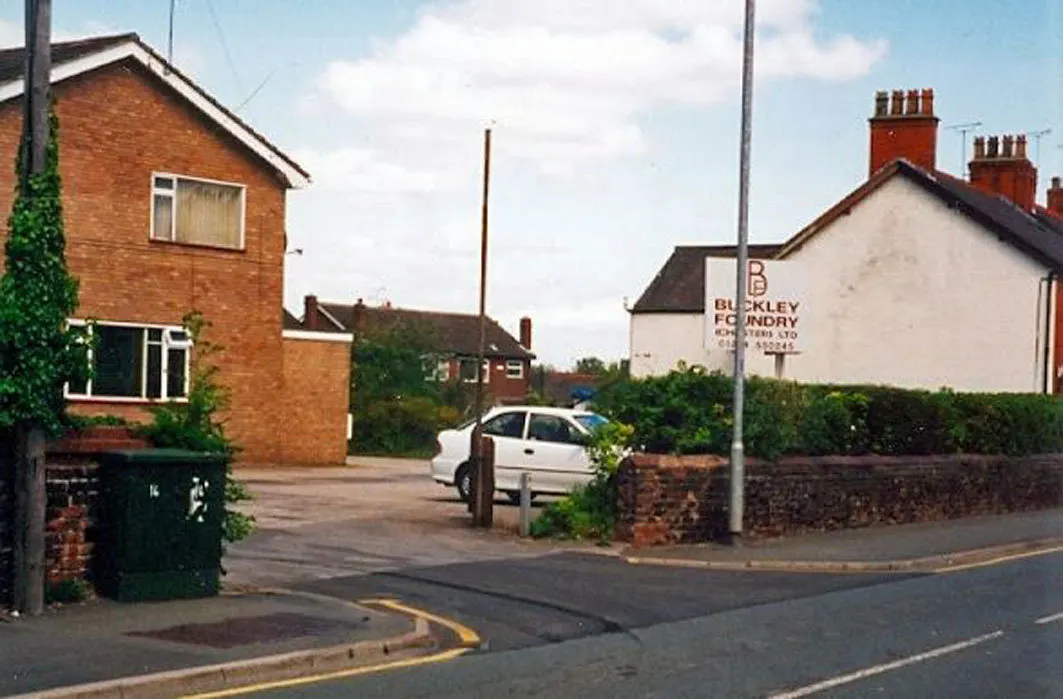
Foundry entrance 2002 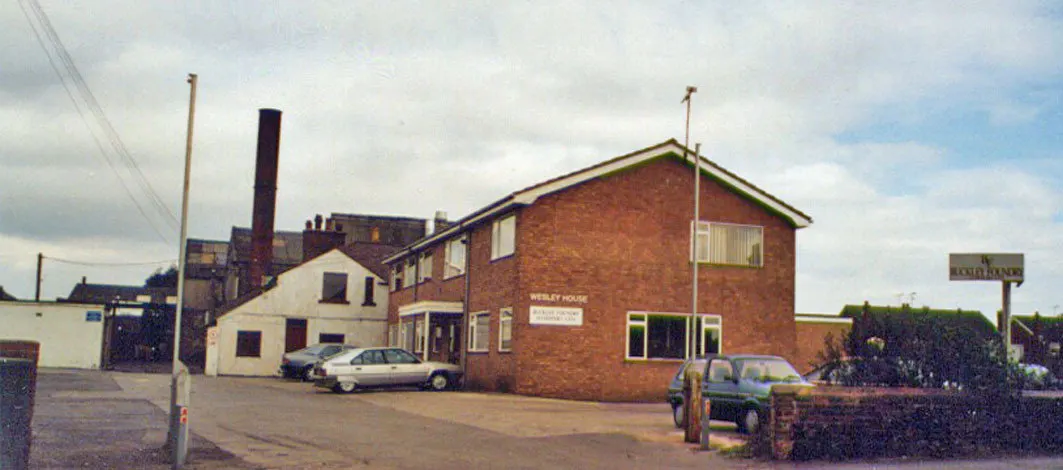
Foundry, Brunswick Road where Wilkinson Court now stands 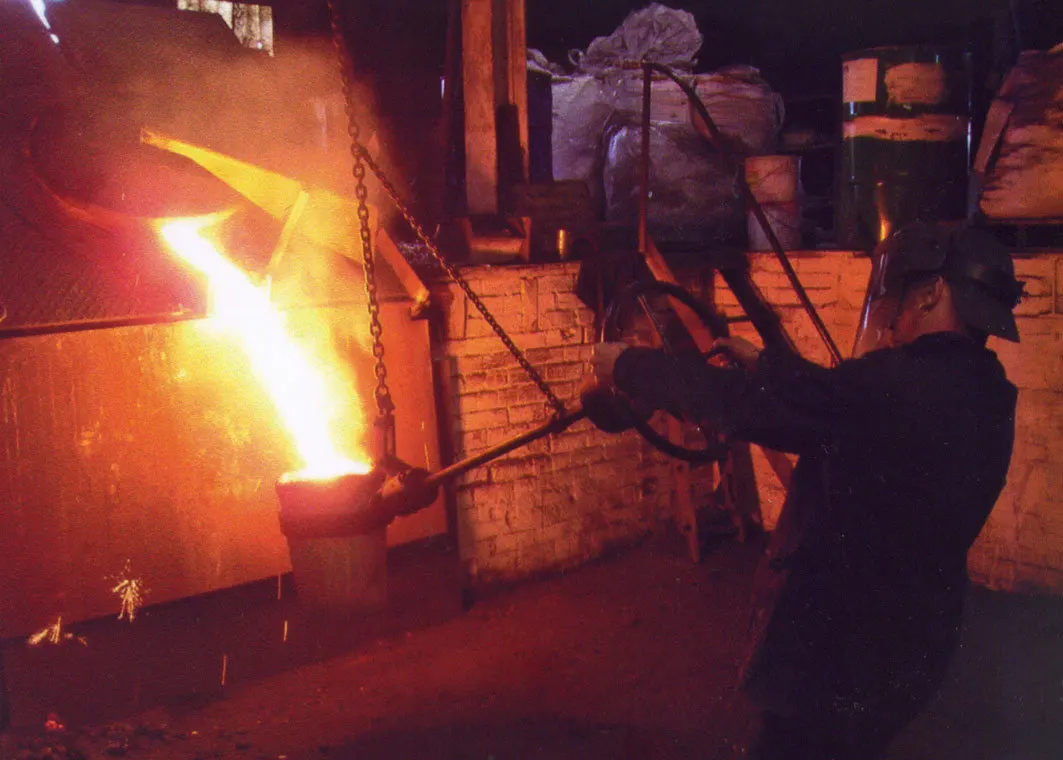
Buckley Foundry in operation 2006 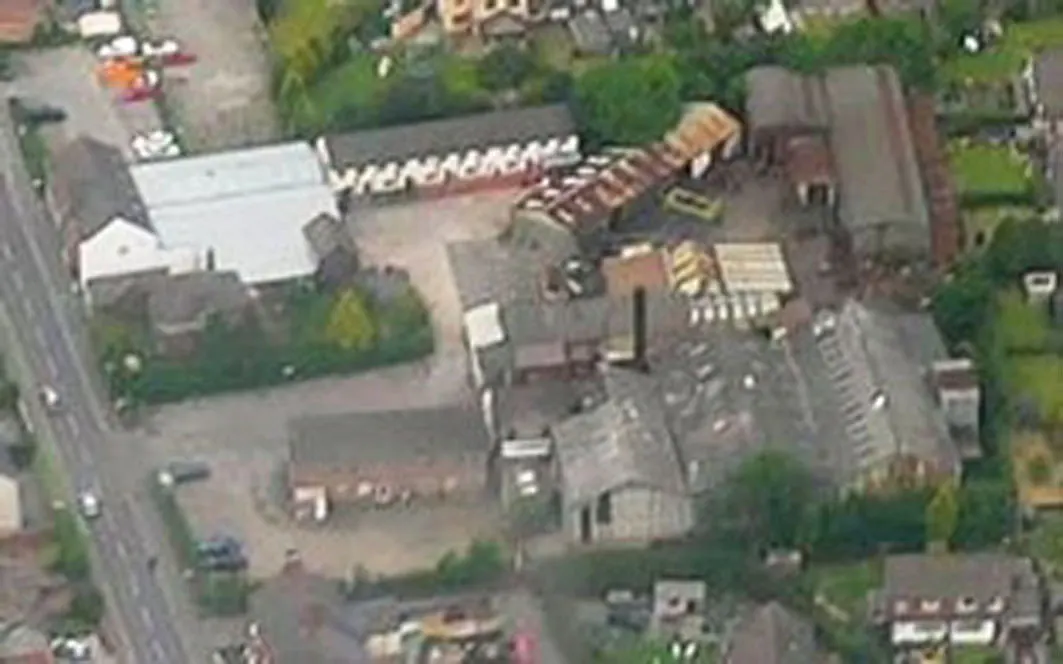
The Foundry 1972
Built by the industrialist John “Iron Mad” Wilkinson in 1792 to process the lead ore from his Llyn-y-Pandy mines near Mold, the smelt was an 18 metres-high cone-shaped structure made from some 130,00 hand-made Buckley bricks. It dominated the Buckley landscape and passed through various ownerships before being demolished in 1966.
Cannon balls and lead shot were manufactured here as seen in one of the above photos. The smaller is 1 3/4” diameter and weighs 15 oz.: the larger is 2” in diameter and weighs 1 lb. 4 oz. – formidable weapons indeed.
In 1933 the smelt site became Buckley Foundry Ltd., who constructed more modern factories and offices. In its latter years it produced high-quality small castings. The foundry closed in 2006 and Wilkinson Court was built on the site.
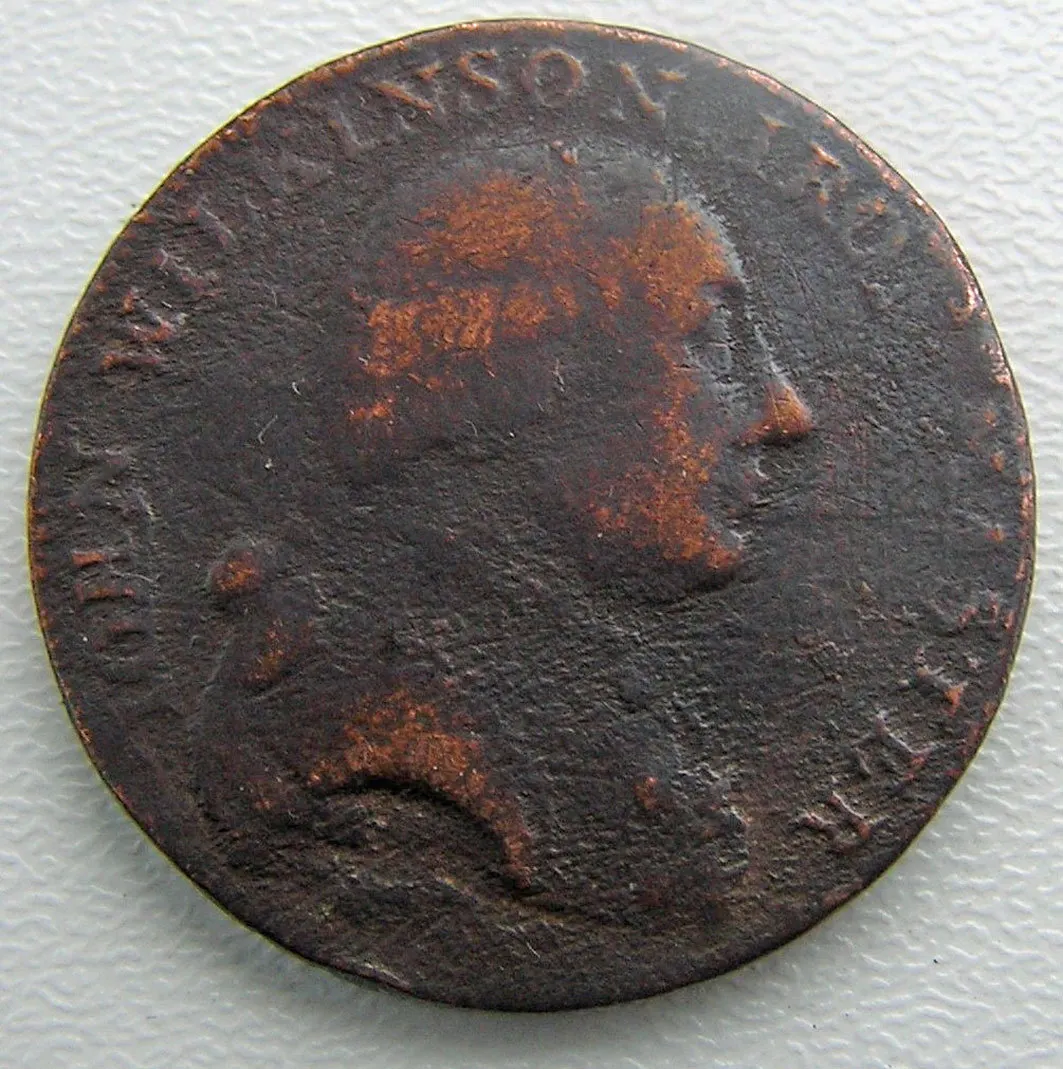
1787 John Wilkinson Token found in Nant Mawr 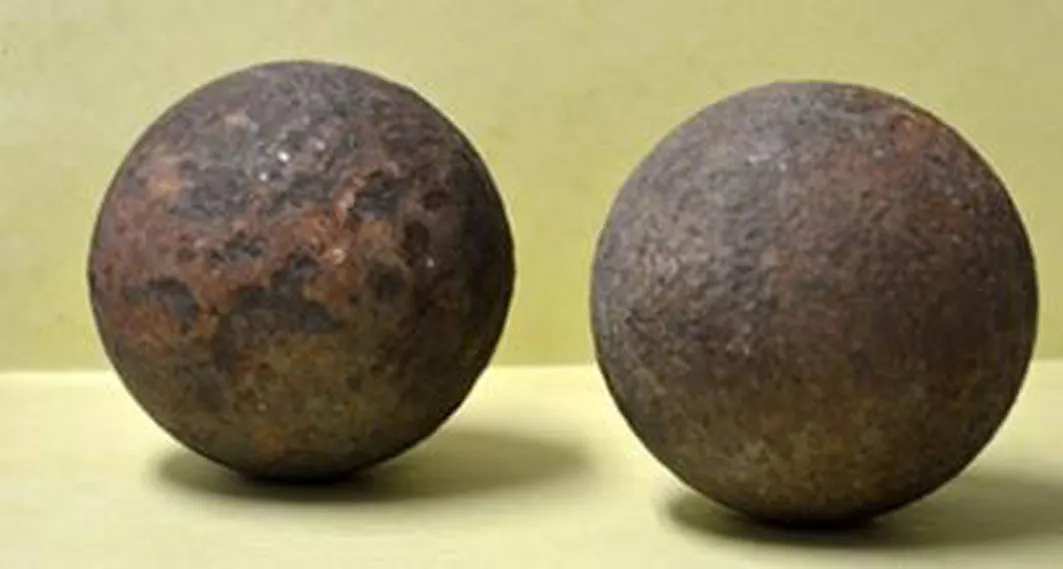
Cannonballs found near the Smelt, believed to have been manufactured there
John "Iron-Mad" Wilkinson (1728 – 1808) was an English industrialist, prolific inventor and shaper of history, who pioneered the manufacture of cast iron and the use of cast-iron goods during the Industrial Revolution. He is more well-known for his ownership of Bersham Iron Works.
The trade token featured is dated 1787 and was used in part to pay his workers, who then had to spend them in his premises. It was found in the 1940s in a garden in Nant Mawr. There were six mintings of the tokens between 1787 and 1795, so this is from the first.
Below is a verse published in the New London Magazine in the same year as the token was minted.
“In Greece and Rome your men of parts,
Renowned in arms, or, formed in arts,
On splendid coins and medals shone
To make their deeds and persons known.
So, Wilkinson, from this example
Gives of himself a matchless sample.
And bids the ‘Iron Monarch’ pass
Like his own metal wrapt in brass !
Which shows his modesty and sense
And how and where he made his pence !
As Iron when ‘tis brought in traction
Collects the copper by attraction
So, thus in him ‘twas very proper
To stamp his brazen face .... on copper.”
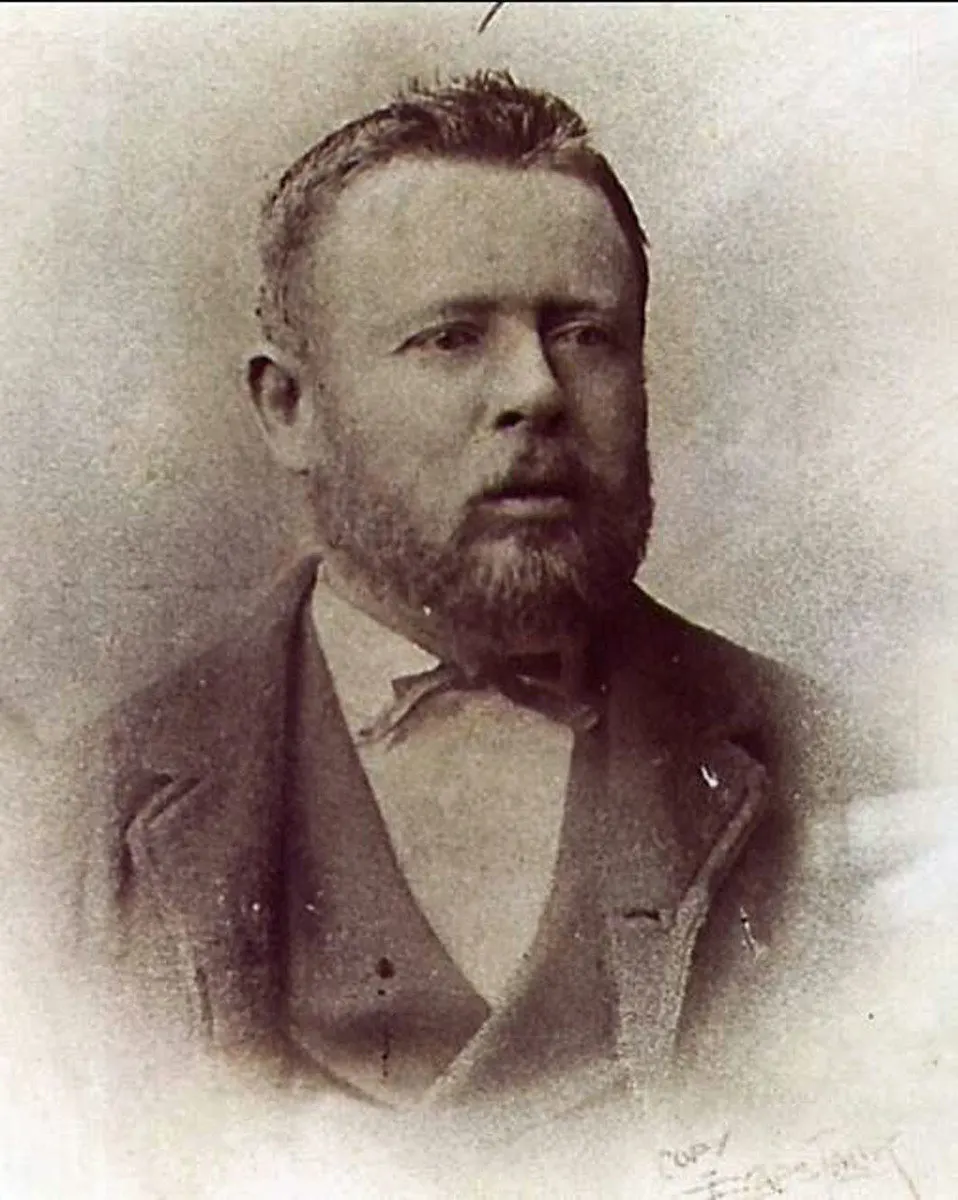
Jonathan Rowlands 1848 - 1917
John Wilkinson was not the only innovative engineer to own the smelt. Jonathan Rowlands was an engineer and pioneer of the Buckley Iron and Brass Foundry (around 1868/70) where he designed and made machinery to order for various concerns, including some overseas. He was known as the Buckley Pioneer because of this. He designed and made the first brick-making machine for Buckley clay which succeeded where outside manufacturers had failed. There was one in use at Lane End Brickworks until it closed.