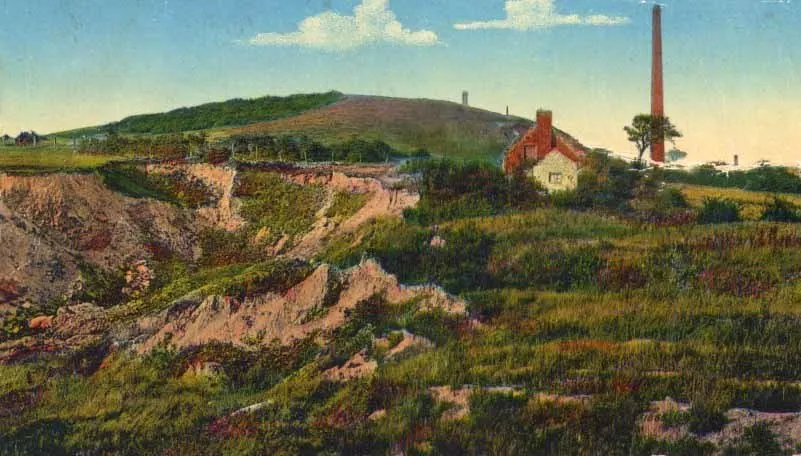
Knowl Hill with cottage and sugar stick chimney at the former Knowl Lane Brickworks 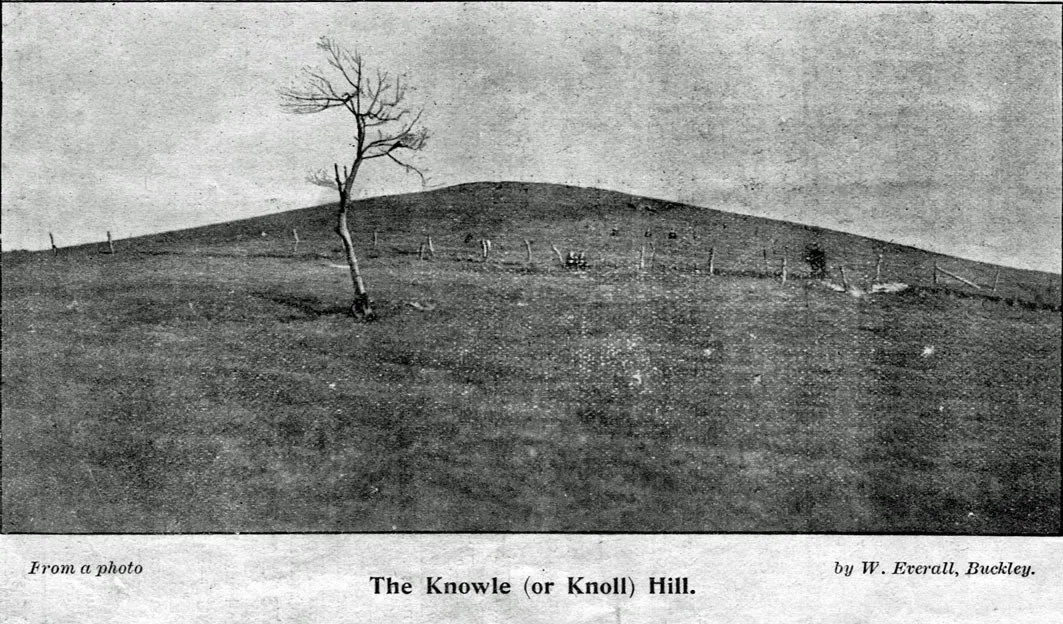
1902 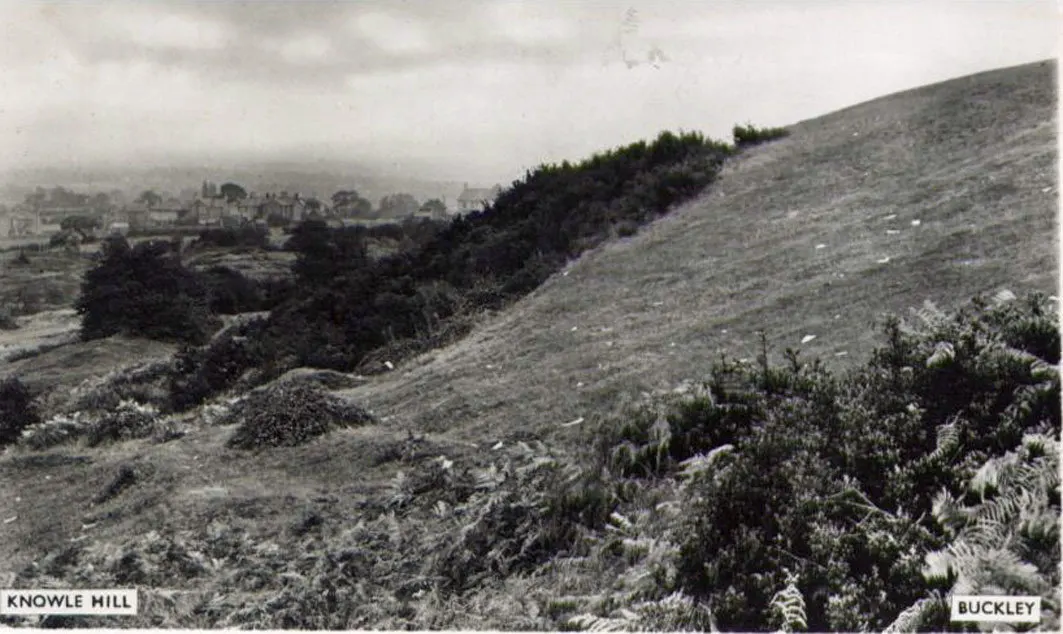
Looking towards Lane End c.1940 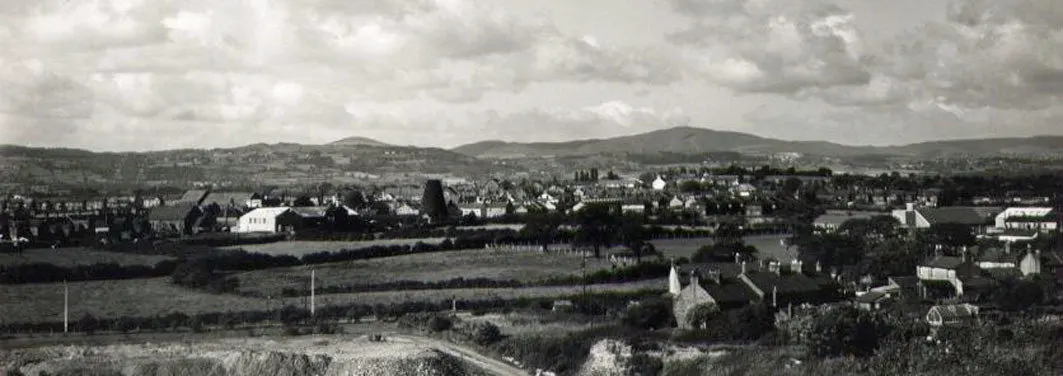
Buckley from Knowl Hill c. 1963 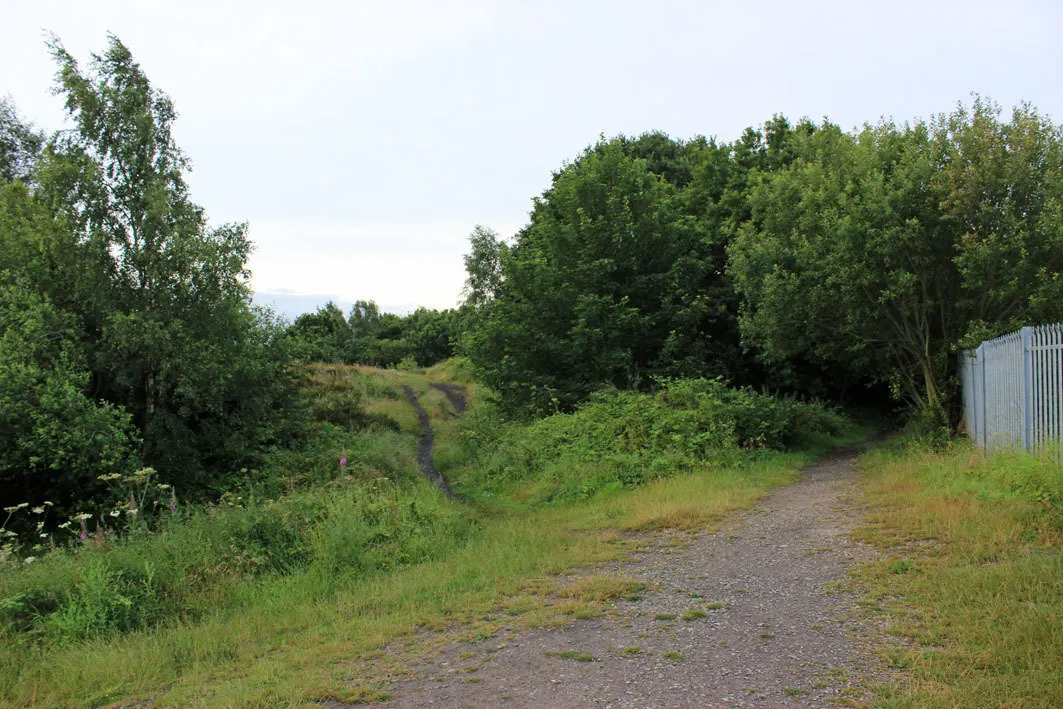
Pathway to the Knowl Hill from Army Lane, Lane End 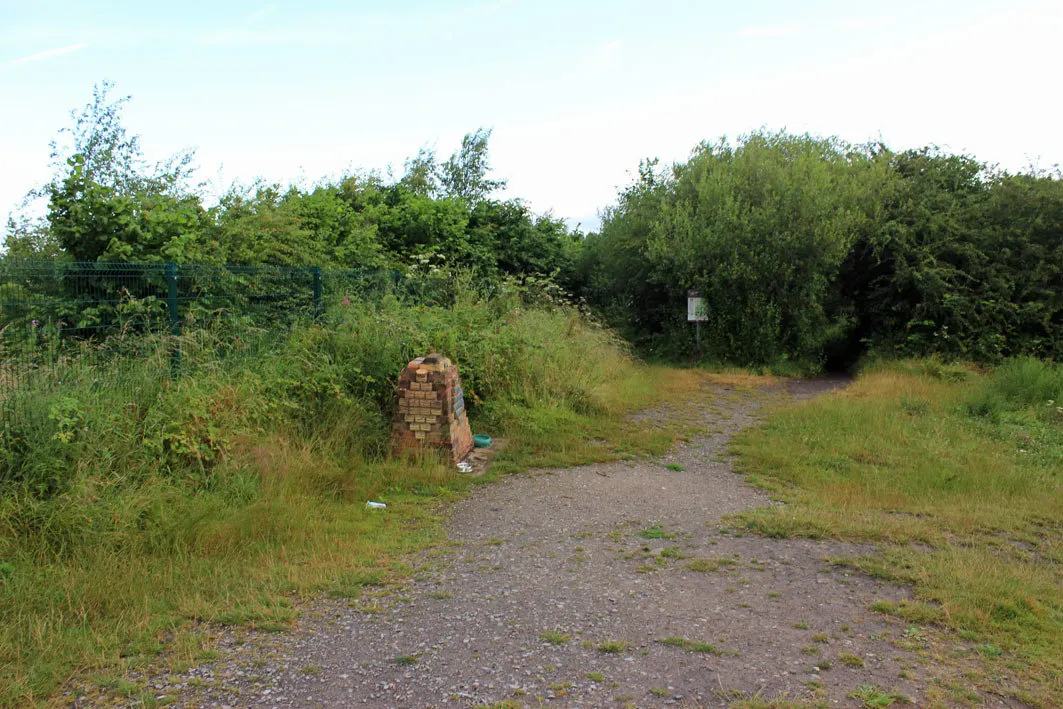
Heritage Trail Sculpture - artist Teena Gould 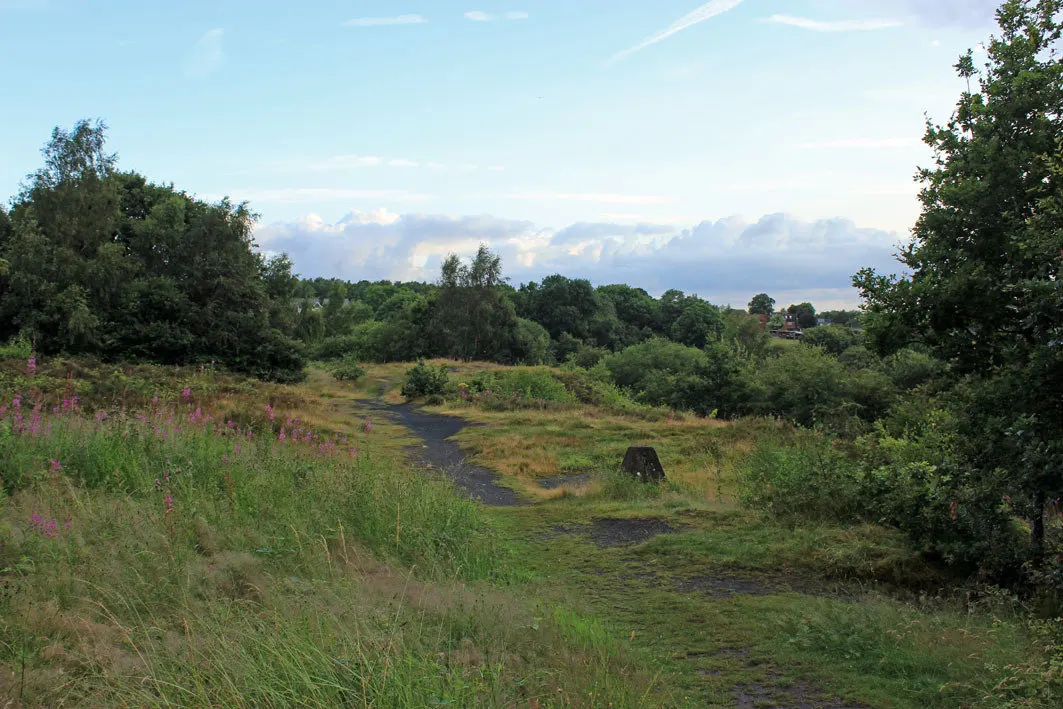
The peak at Knowl Hill 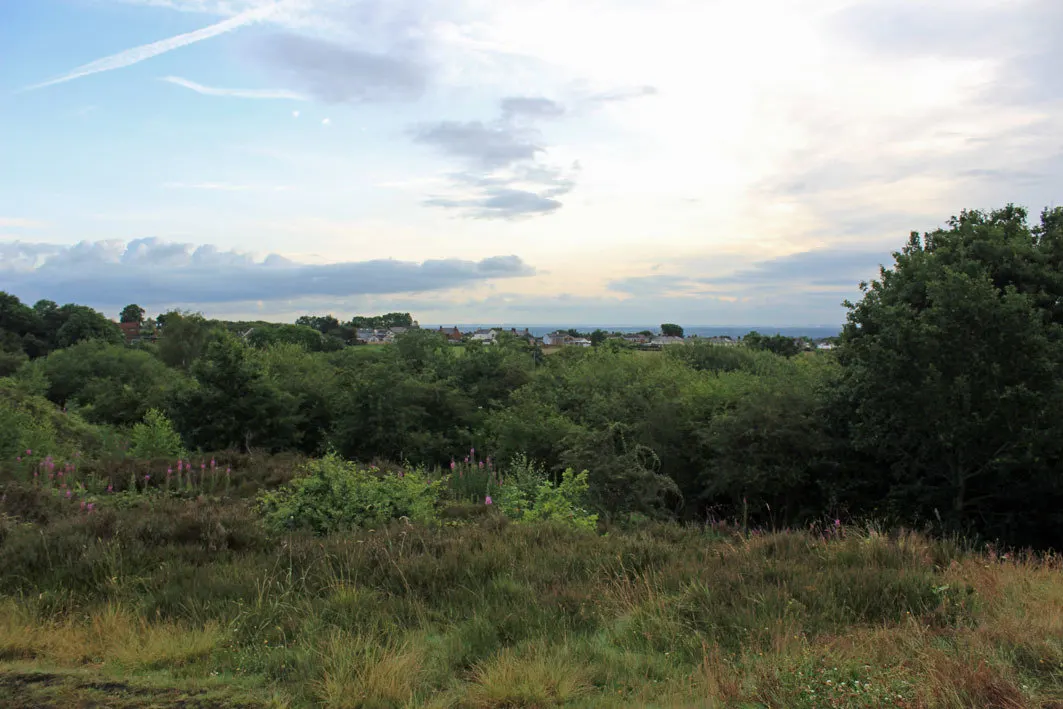
Looking towards Drury village 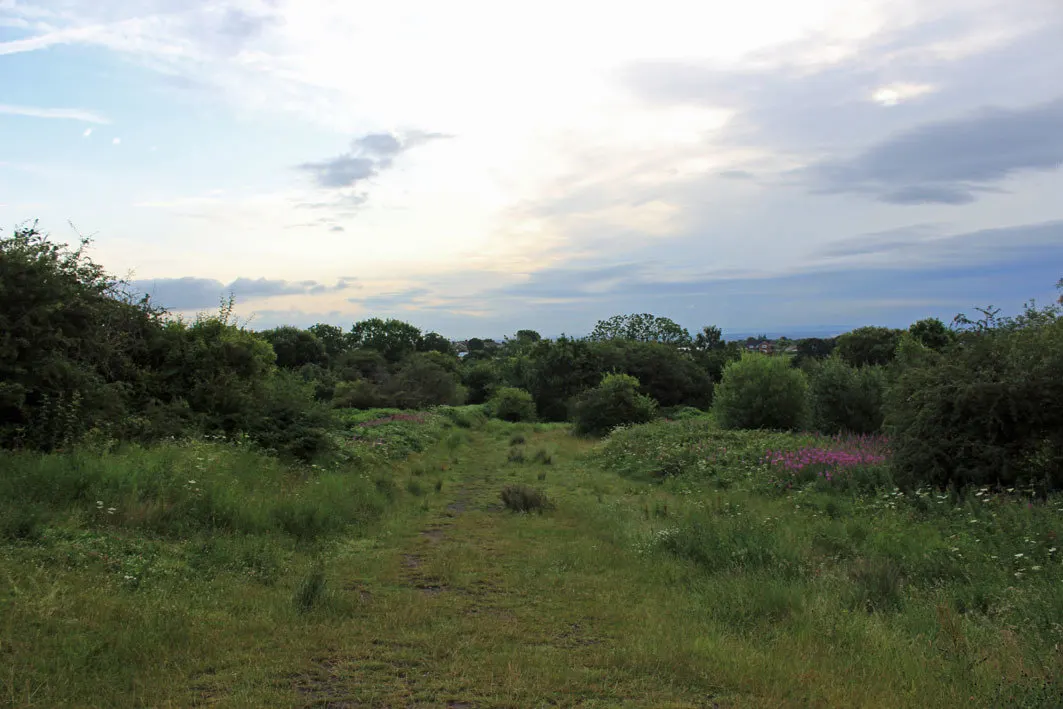
Knowl Hill at the location cleared in recent years to provide drainage infrastructure for the housing estate in Church Road 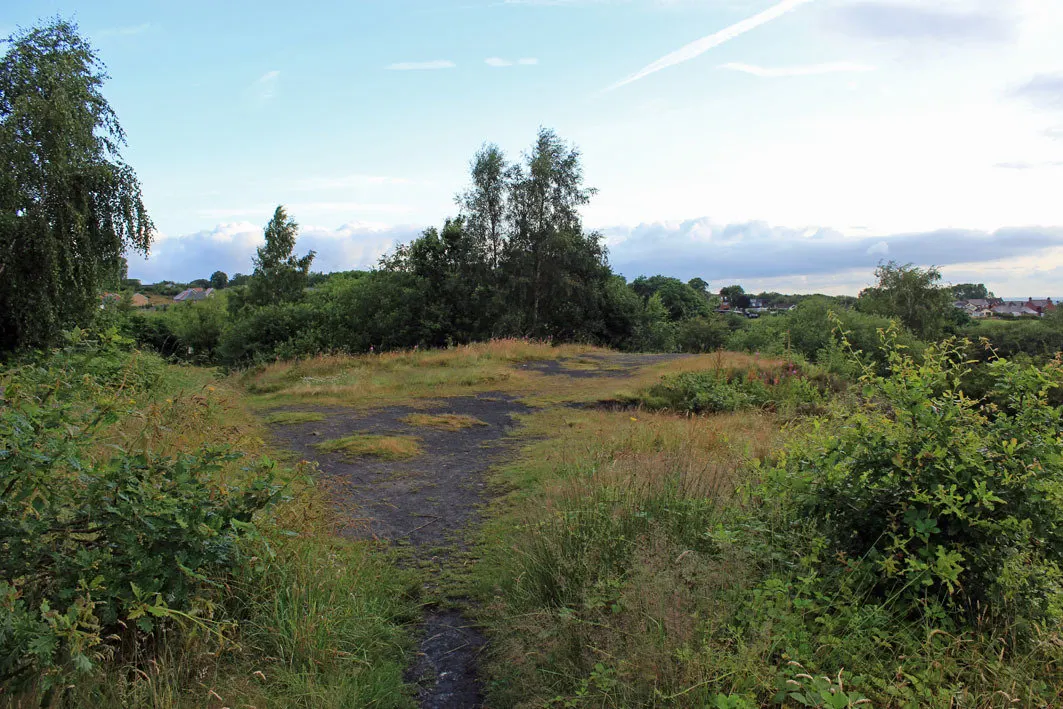
One of the many pathways 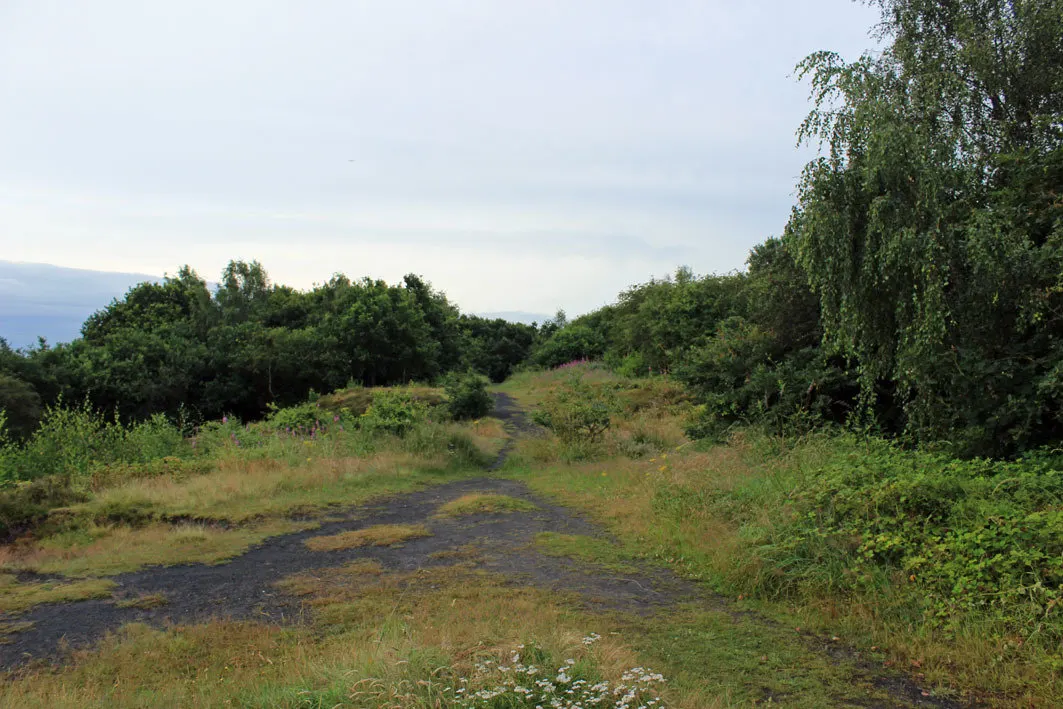
You can approach Knowl Hill from Army Lane and walk straight through to Drury Lane passing the houses and wildlife mitigation areas on your left. A series of paths now criss-cross the area, today overgrown with trees and scrub.
Not much remains of what was a substantial, heather-covered hill since the nearby brickworks expanded its clay hole; as you can see from a couple of the images above, the views were extensive from its peak. Post-industry, it provided the Buckleyites with a favourite space for leisure activities – kite-flying, walking, sketching etc.
Its busiest time was, however, during the heyday of Hancock’s brickworks with a tramway running from the main line to the brickworks via a loop line which ran through a tunnel. The tunnel and tram way had become overgrown when it fell into disuse, but some enthusiastic amateur archaeologists, lead by James Bentley, excavated much of the area, including the tracks into the tunnel.
The tunnel had three ventilation shafts in its roof: a favourite pastime for boys was the hurling of missiles into the shafts onto the workmen beneath – until they got caught and severely punished for their trouble!
In the 1980s and 90s, James Bentley went to great efforts to install informal information boards, describing the history of the site but they had to be abandoned due to vandalism.
The area has once again become overgrown but tantalising traces can be found of the thriving industry that once dominated this landscape.