Travellers have always stopped in Corwen
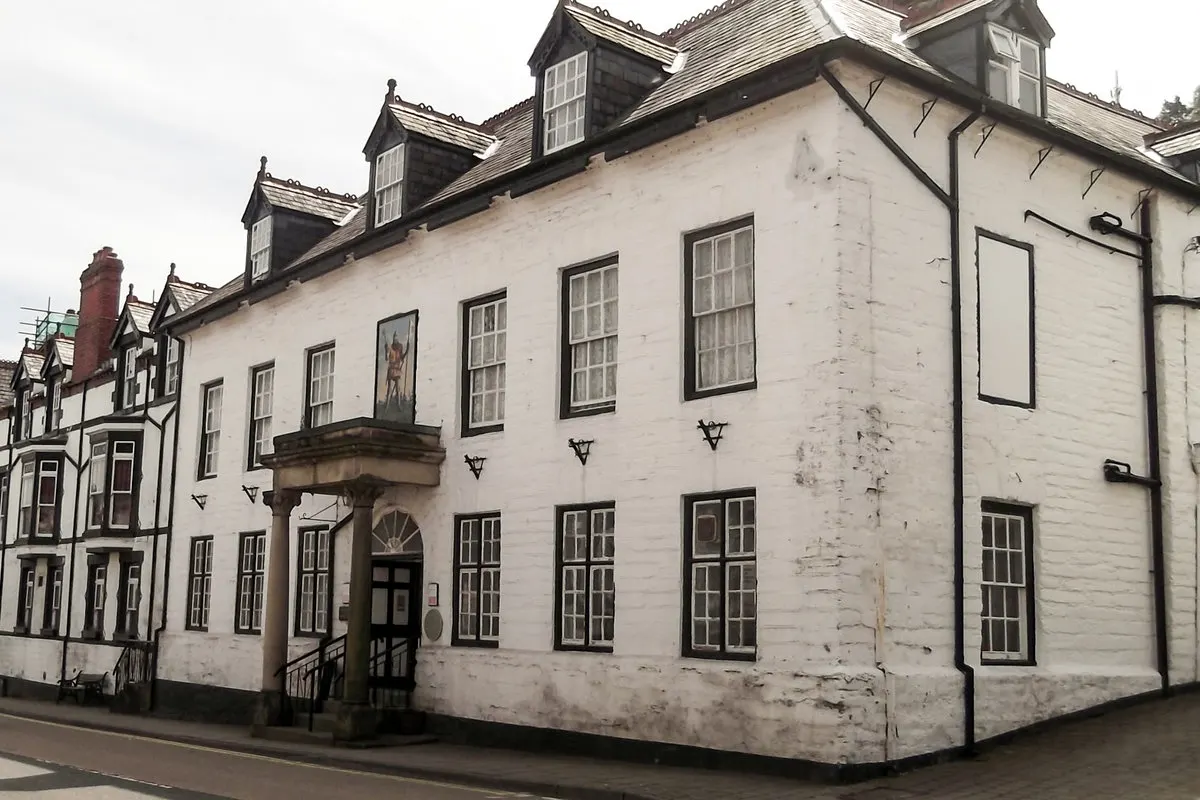
The Owain Glyndŵr Hotel building is a Grade 2 Listed Inn in Corwen.
The original building is believed to be dated 1329 and was a monastery in the grounds of the nearby church. It was rebuilt or replaced in 1740 but has retained elements of the earlier building. It was the site of the first public Welsh Eisteddfod in 1789. The hotel building was enlarged with an extra wing and reroofed about 1890.
The inn was called the New Inn during the time when it was a staging post for the mail coach and stagecoaches.
The inn is said to be haunted by the ghost of a young woman who had an affair with a local clergyman which outraged the locals.
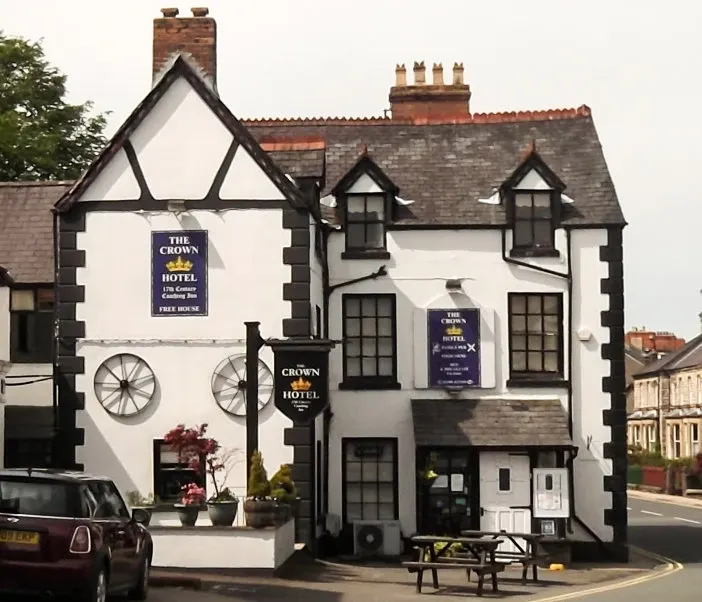
The Crown Hotel
This former coaching inn mostly dates from the early 19th century, reputedly incorporating parts of a building from 1628. The long room at the back was once the passage for horses and coaches to reach the stables behind the hotel. The outbuilding facing the road with “Crown Hotel Garage” written across the front was previously shops. It was converted into garages as cars became more common in the early 20th century. In 1919 the Corwen Coach-building Co. was established at the Crown Hotel. In the same year the garage was used to sell refreshments to people attending the National Eisteddfod.
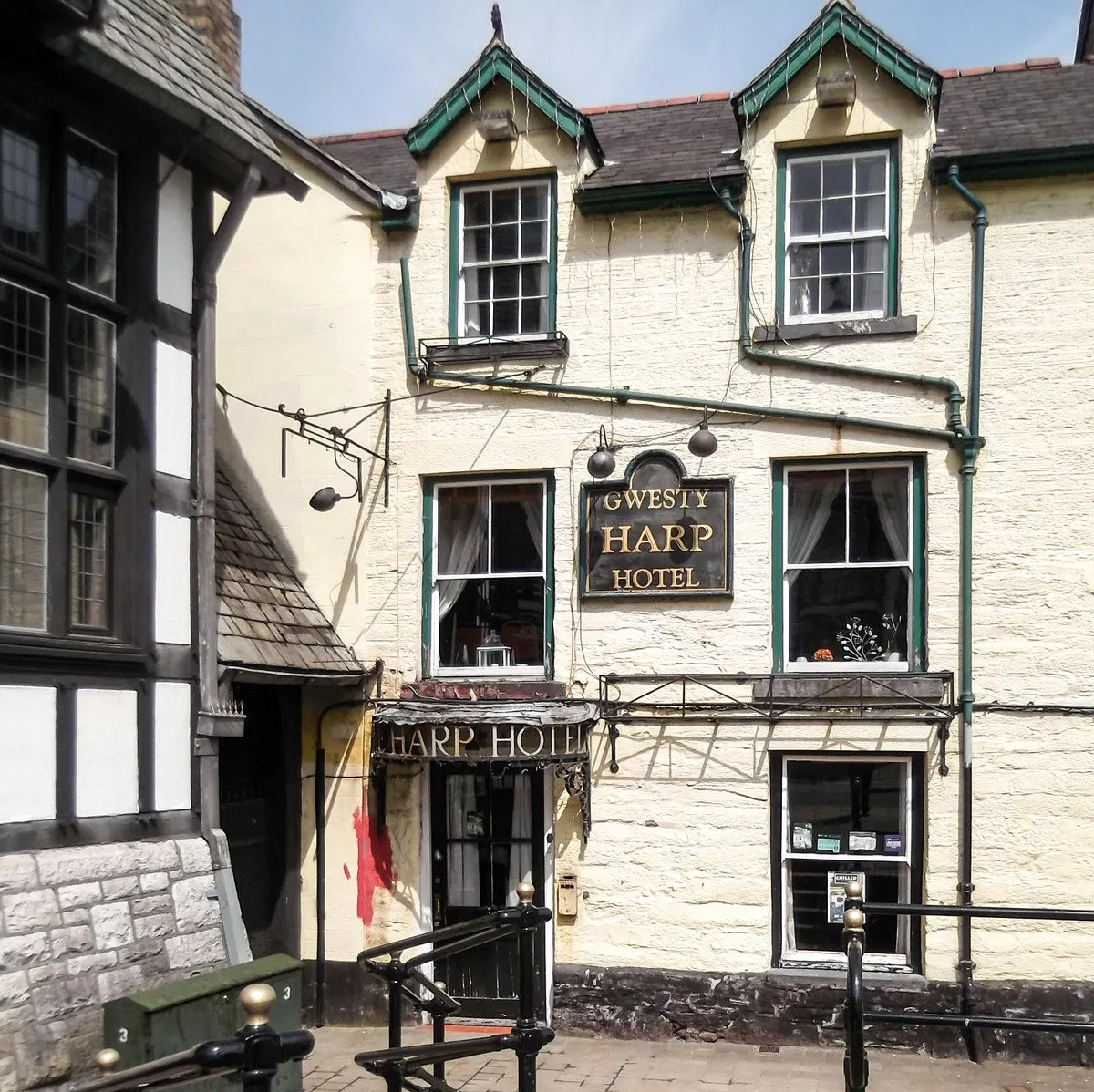
The Harp Hotel is a Grade 2 listed inn in Corwen
The oldest parts of this inn, once known as Werglodd, may date from the early 17th century, or earlier. The earliest records of it date from 1629. At the time Werglodd was a collection of buildings and was part of the estate of ardent royalist William Salisbury. Drovers would drink here while moving livestock from Welsh pastures to English markets. In 1896 a pig drover called Samuel Davies, called at the Harp for dinner on fair day. He choked on a piece of meat and was dead within minutes. Doctors couldn’t revive him.
The Harp, with its stabling and yard, was sold to a Mr J Roberts for £1,300 in 1895. In the early 20th century it was acquired by the Ind Coope brewery. In 1914 the local council paid the landlord £1 10s rent for storage of the local water cart.