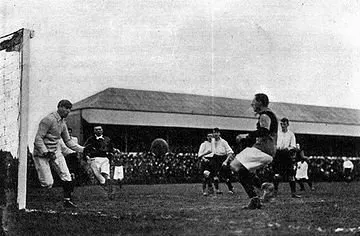
Leigh in goal for Wales 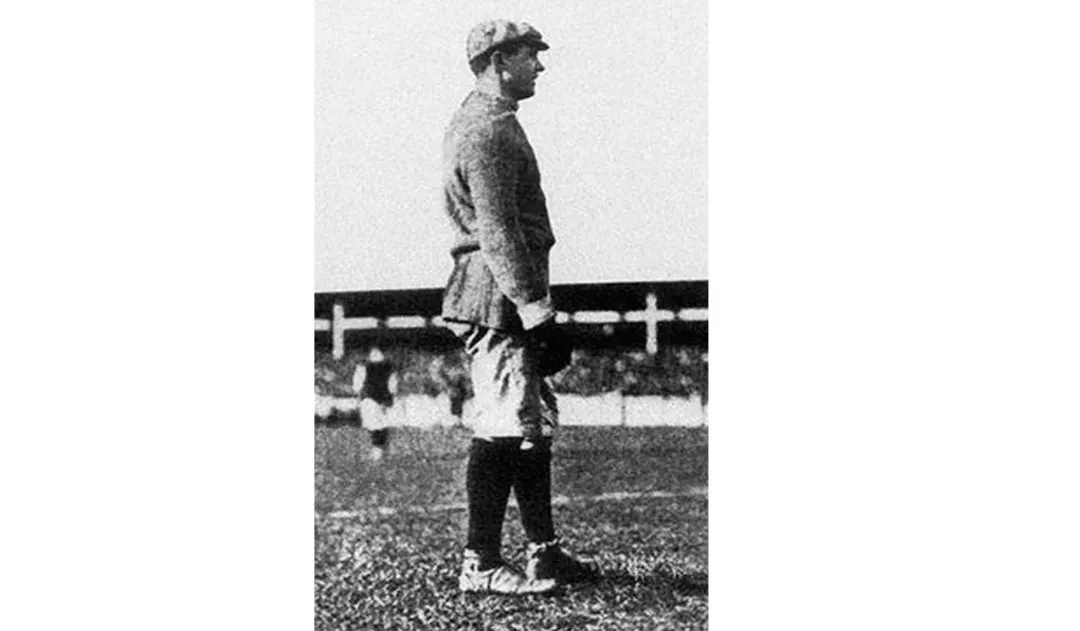
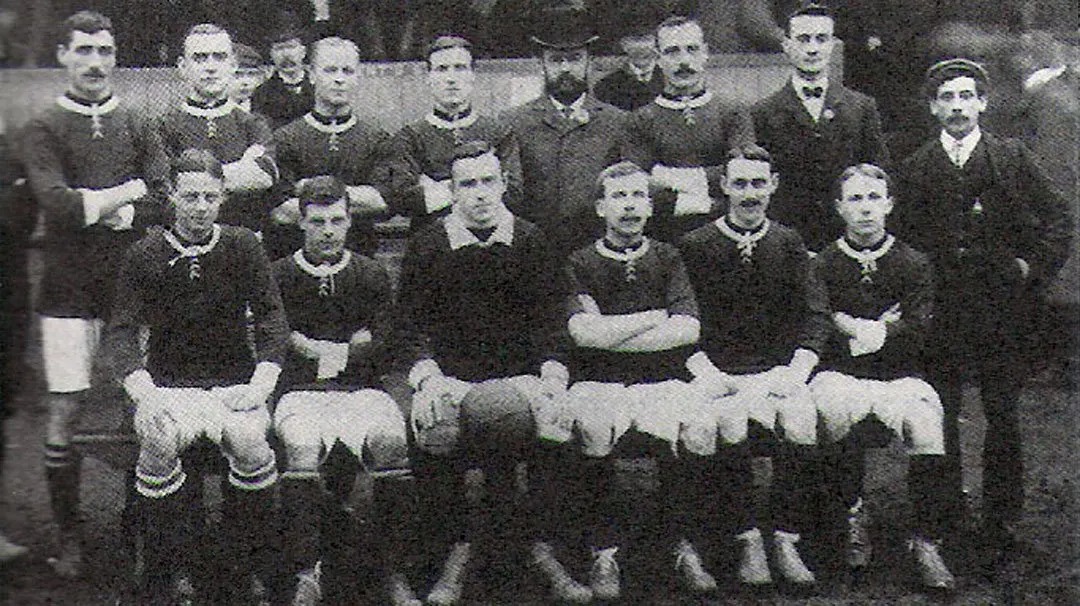
Wales v Scotland 1907, the year Wales won the Home Championship. Leigh with ball. 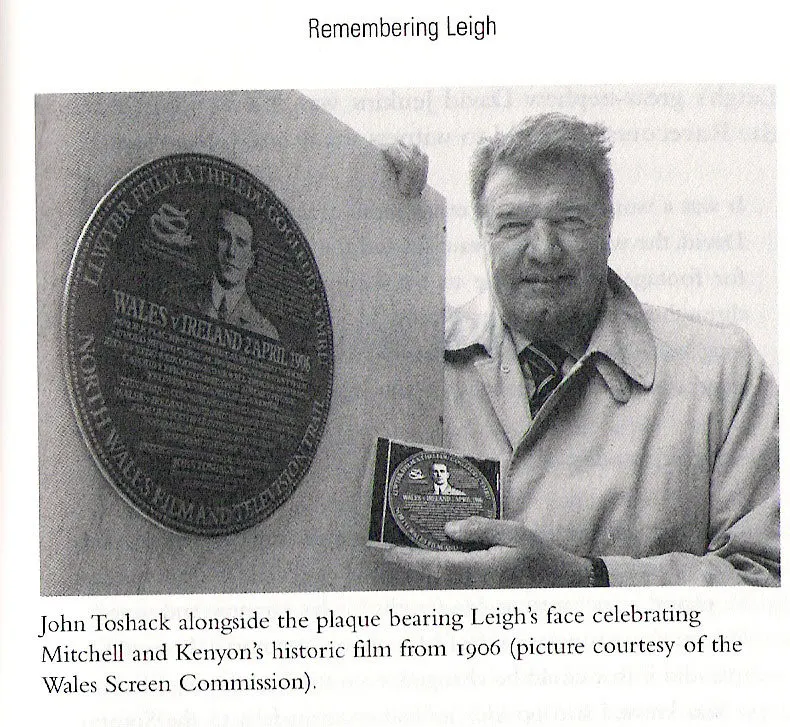
Tap for detail
A son of Holt who found footballing fame before his death at the Somme in 1916
Leigh Roose 1877-1916
Born in Holt, a brave and innovative goalkeeper who played for Wales between 1900 and 1912: football’s first playboy and showman; a bachelor who escorted Marie Lloyd, music hall entertainer, amongst many others.
Source: Lost in France by Spencer Vignes ISBN 978-0-7524-4338-6
‘He really was a prince amongst goalkeepers.’ – Billy Meredith, Welsh international footballer
Before you go to sea, say a prayer.
Before going to war, say two prayers.
Before marrying say three prayers.
Before deciding to be a goalkeeper say four prayers.’ – Leigh Roose
He was born on 26 November, 1877 at the Presbyterian Manse, Castle Street, Holt, as the fourth son of the new minister, Richmond Leigh Roose and his wife, Eliza. He attended Holt Academy in 1882, and became one of 80 students. Football was popular in the school and village: Holt Nomads travelled as much as 200 miles to play friendlies. He studied Medicine at Aberystwyth.
He was killed at the battle of the Somme, 7 Oct 1916. His name appears on Holt Presbyterian Church Roll of Honour but not on the village War Memorial.
## It was added July 2015
Leigh’s football prowess
6 foot tall, powerful, he left Holt to study Medicine at Aberystwyth at the age of 17. He played football for the University Team, honing his skills and developing a different style of goalkeeping.
He would not be a victim to goalkeeper ‘rushing’ by opposition forwards as was prevalent at the time: instead he would leave the goalmouth to break up attacks and bounce the ball to the half-way line to launch attacks on the opposition goal. To prevent this, the rules had to be changed, in 1912, to restrict handling to the penalty area.
At 21 – with his exams passed, he decided to stay on for a year to play for Aberystwyth Town team. He got noticed by major teams as his team travelled over the country.
In 1900 he gained the first of 24 caps for Wales together with Billy Meredith. He then went to enrol at Kings College Hospital, London, but found all the places taken that year.
However, Stoke City club was prepared to pay generous expenses for him to continue living in London [working at the hospital as an assistant], if he joined them as an amateur goalkeeper. He frequently arrived at the last minute by Hansom Cab from the station.
In 1902, the Daily Mail acclaimed him as the Prince of goalkeepers.
In 1904 he left Stoke for Everton; in 1907 he was a member of Wales' first Home International Championship winning team; and switched to Sunderland in 1908; he made guest appearances for Celtic, Port Vale etc.
In 1911 after breaking his arm he left for Arsenal and retired in 1912.
On the outbreak of war he joined RAMC [Medical Corps] in 1914, and was sent to Gallipoli 1915. He was reported missing presumed dead after Gallipoli. His family assumed he died at Gallipoli until, in 1919, a sports columnist, who knew him well, said he had played cricket with him in Egypt AFTER Gallipoli! Also a friend George Holley had been communicating by letter till Sep 16. Another reported him as being with Royal Fusiliers in N France in 1916.
His sister Helena followed up these leads, yet the Army reported that “they had never had anyone of the name ‘Roose’ in the Fusiliers. It took 80 years before his nephew, Dick Jenkins, discovered the clerical error in his name at enlistment with the Fusiliers – ‘Rouse’, not ‘Roose’. As Leigh ‘Rouse’, the mis-spelt name on his grave in Northern France, he gained the Military Medal before he was killed at the Somme in October 1916.
A plaque at Wrexham football club commemorates the centenary of Mitchell and Kenyon’s footage of the Welsh Home International Championship win in Wrexham in 1907 – 7 minutes of footage, which included Leigh Roose. It depicts his likeness and was unveiled by John Toshack.