The conservation of our wall paintings has now been completed and it’s great to see the church clear of scaffolding! We are delighted with the results of the painstaking work by Dr Andrea Kirkham. Andrea identified up to 3 layers of texts and decoration, the top and most visible layer dating from around 1630. The layer beneath is also from the early 1600s and is identified particularly from the deep red arcs of paint. The Friends group will be developing more information about the project and the paintings but in the meantime here is a brief summary.
East end texts (towards front of church)
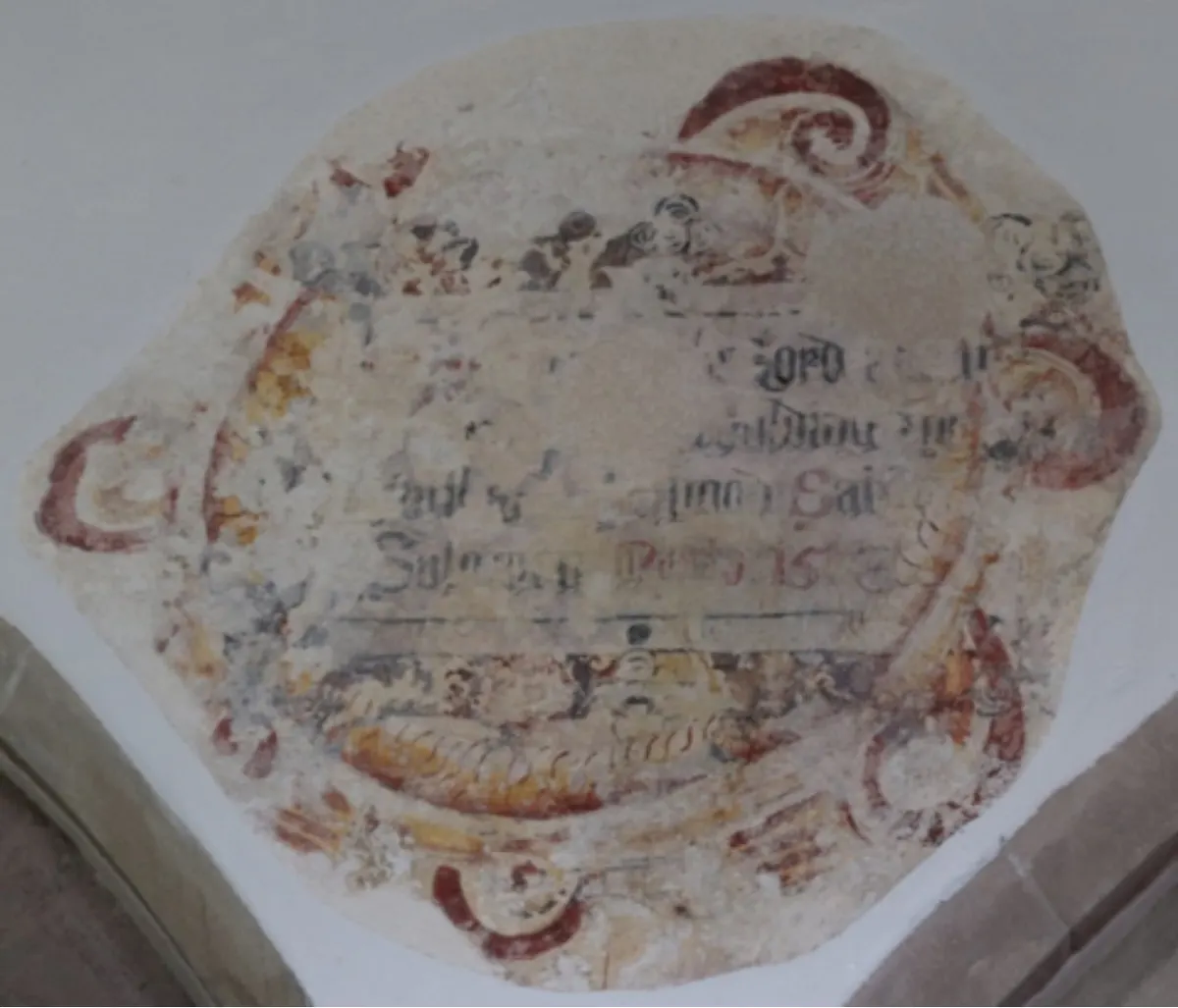
The picture above shows what we can see now and we can compare it with the “before” picture on the left. The rather ugly repairs have disappeared and although a lot of the words are missing those that remain gave us early clues about the text referred to. The word “Solomon” and the number “15” led us to the book of Proverbs, chapter 15 verse 3. (Chapter 10 onwards is headed “the proverbs of Solomon” in the Authorised Translation. We are now sure that the original text would have read:
“The eyes of the Lord are in every place, beholding the evil and the good saith Solomon”
West end texts
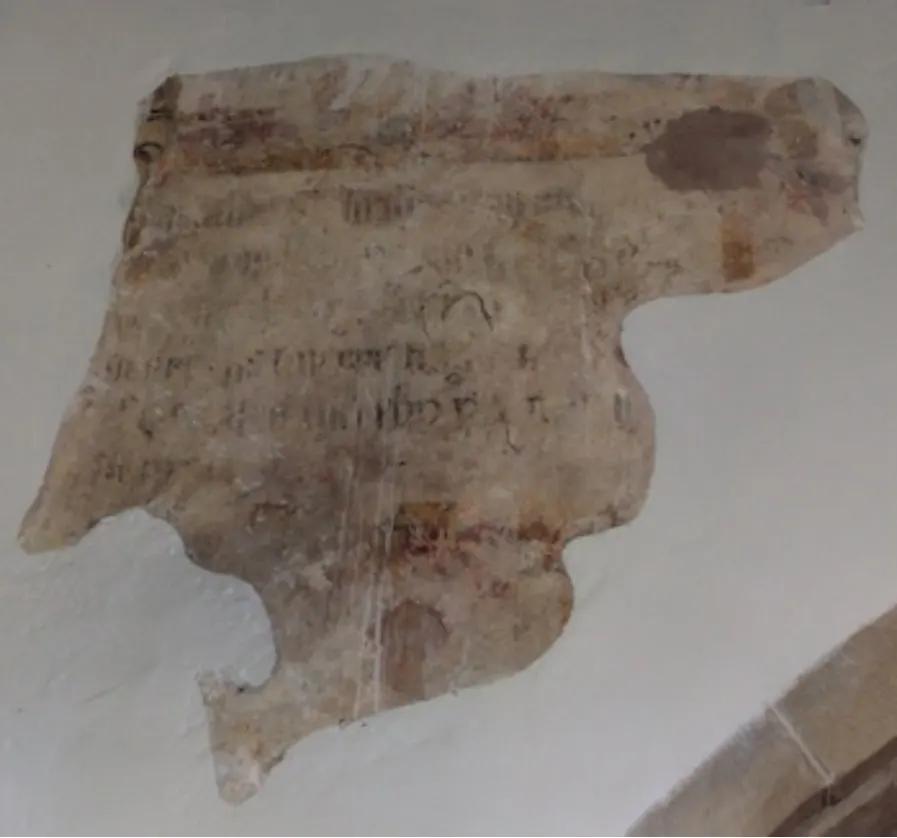
Here we can see a lot more letters but interpreting them is rather challenging. We can also see some parts of letters from the previous layer which was covered by a thin whitewash which makes interpretation more difficult. Although we could see the word “milk” we couldn’t find a relevant text until Kirsty and Nigel Blain did some detailed checking.
We believe the text is taken from 1Peter chapter 2, verses 1&2:
Wherefore laying aside all malice, and all guile, and hypocrisies, and envies, and all evil speakings, as newborn babes, desire the sincere milk of the word, that ye may grow thereby.
The fragments (on the wall of the children’s corner)
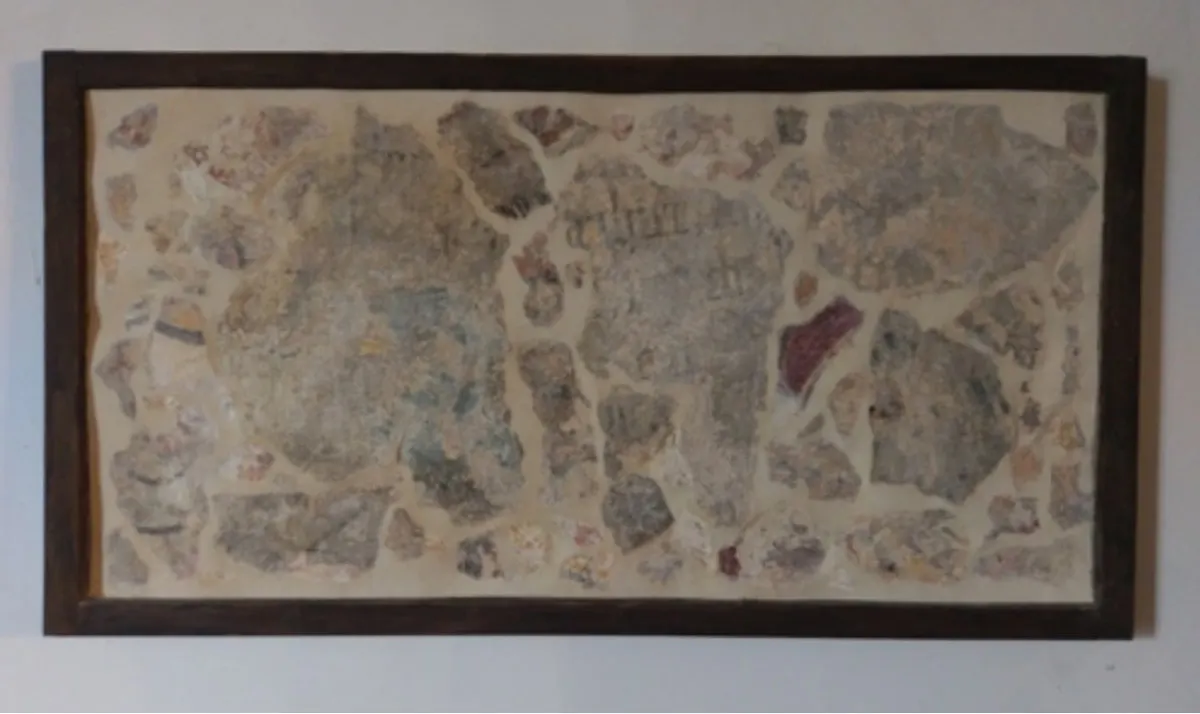
The wooden frame opposite the vestry door has been completely indecipherable since fragments of wall paintings from other parts of the church were placed together many years ago and we did not hold out much hope for making much sense of them. However they proved to be a real bonus!
We can now see scraps of text and decoration which tie in with the material in the two main texts, and thanks to Andrea’s work, enhanced by improvements to the frame by Edwin Jones, it’s possible to imagine that the church once contained large stretches of wall paintings.