This is the entrance to the Church
The steps up into the church from the West Door were laid in 1884 when the floor of the nave was raised. At the top of the steps you can see the pattern in the tiles which show where the font stood until the restoration in 2000 when it was moved to a less traditional but safer location in the south aisle. If you look up you will see the chandelier which now, thanks to efficient LED lights, we are able to leave on each day as a welcome to visitors. The base of the chandelier contains the following inscription: “This chandelier was given by his sisters in memory of Austin Ellis Lloyd Jones MC 1884 – 1967, Judge of the High Court & son of Rector T E Jones”.
18th Century Benefaction Board
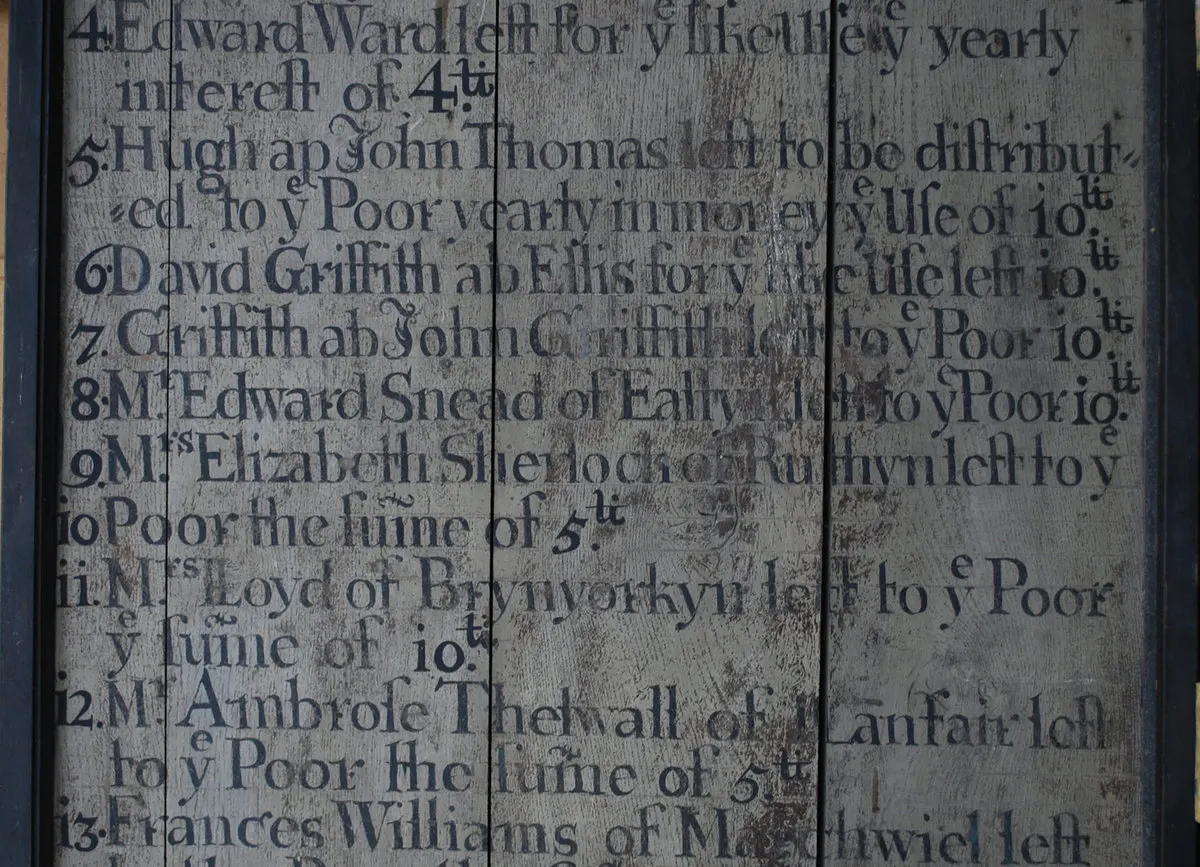
At the top of the steps on your right you will find a large wooden board: this is an 18th Century Benefaction Board. In August 2016 we began the project to conserve the 18th Century Benefaction Board which hangs in the west entrance to the church. The entries, the last of which is dated 1720, list the gifts made by benefactors; most detail money or food to be distributed to the poor but there is also an entry showing a silver “flagon and salver” to be given to the church.
The writing on the board was becoming difficult to see and there was a danger that the historical record might be lost; in addition there was some anxiety that the wooden structure might be deteriorating so in 2016 the Friends of Hope Church carried out a project to conserve the Board. It was carefully removed and taken to conservators near Oswestry, and then re-installed. You may well find similar boards in other churches and they all appear to date from the period.
Coat of Arms Painting
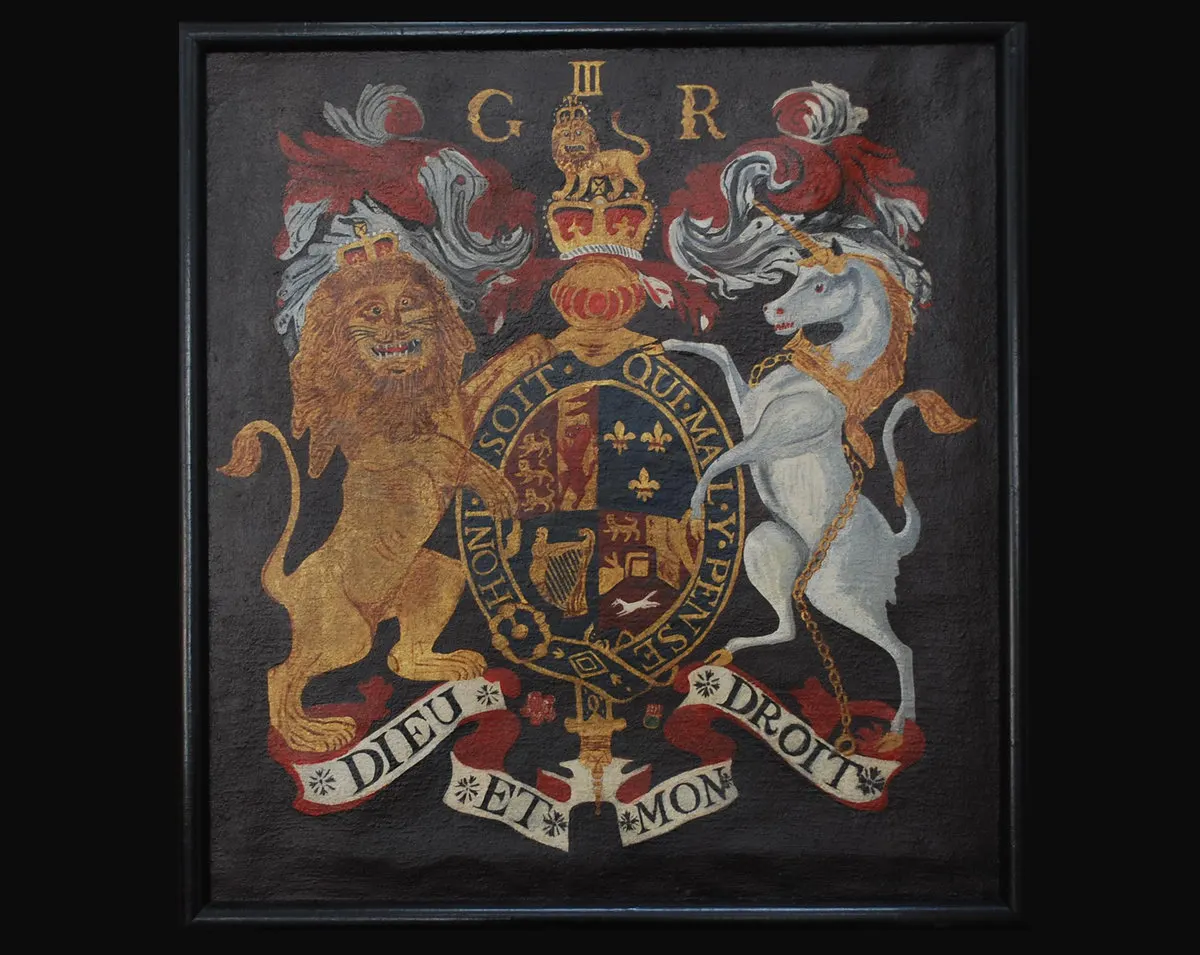
To the right of the Benefaction Board is a small painting of a George III Coat of Arms; it is painted on wood and writing on the back, discovered when it was conserved in 2016, indicates a date of 1792.
The old clock weights
At the bottom of the steps on the left hand side you will see large weights tucked into the corner behind the railings; an automatic winding mechanism has recently been installed so the weights are now redundant – but not unloved!
An Interesting Collection
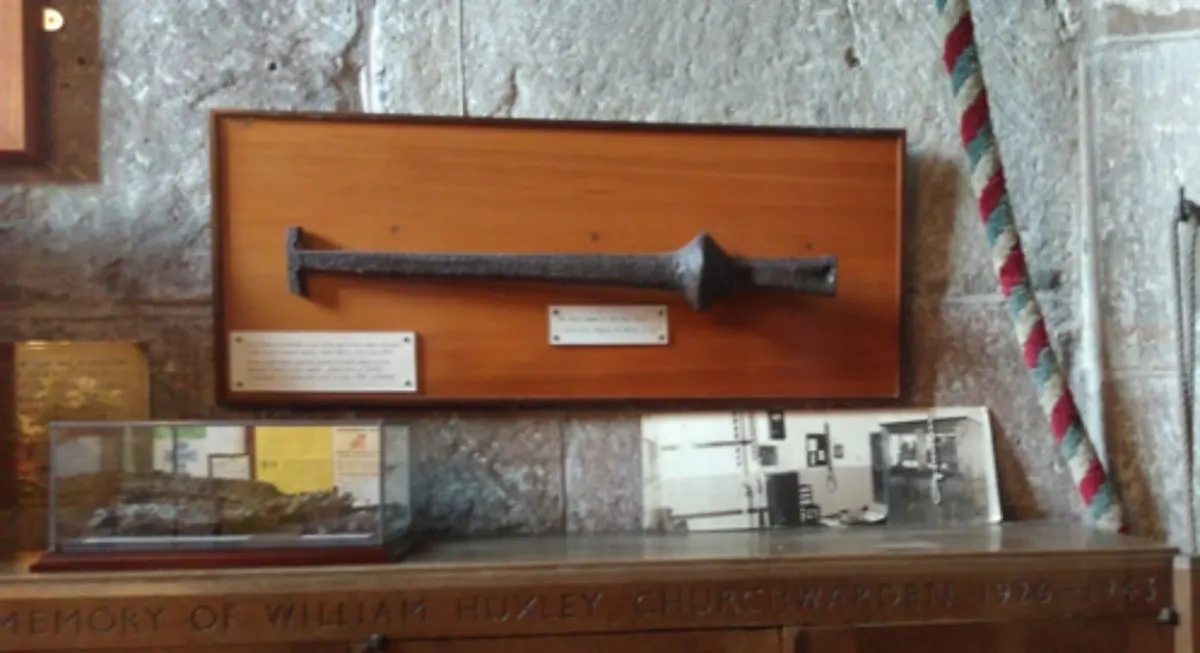
To the left, above the oak cupboard, is a collection varied items. The Perspex case contains 12th century oak remove from the roof trusses, replaced in 2000. And to the left is the Priests Bell which is now used to inform the bell ringers when a bride has arrived and when the marriage service is coming to an end. Above all these is a small black wooden board detailing fees: it is not dated – but is certainly not up-to-date!
The Brass War Memorials
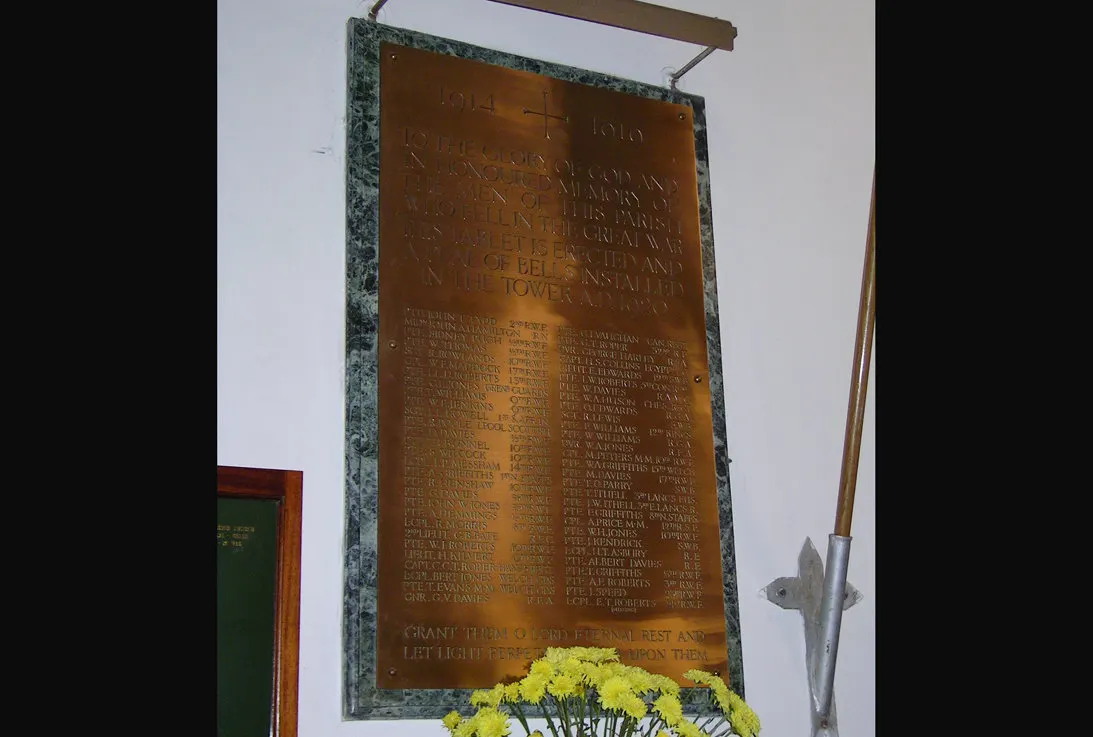
On your left, on either side of the large vestry door, are memorials to the fallen of World War I and World War II. The Brass plates are mounted on Connemara stone.
Above the list of names on the WWI memorial is the following inscription:
“To the glory of God and in honoured memory of the men of this parish who fell in the Great War this tablet is erected and a Peal of Bells installed in the Tower AD 1920”
Above the list of names on the WWII memorial is the inscription:
“To the glory of God and in grateful remembrance of those from this parish who made the supreme sacrifice in the Second World War”