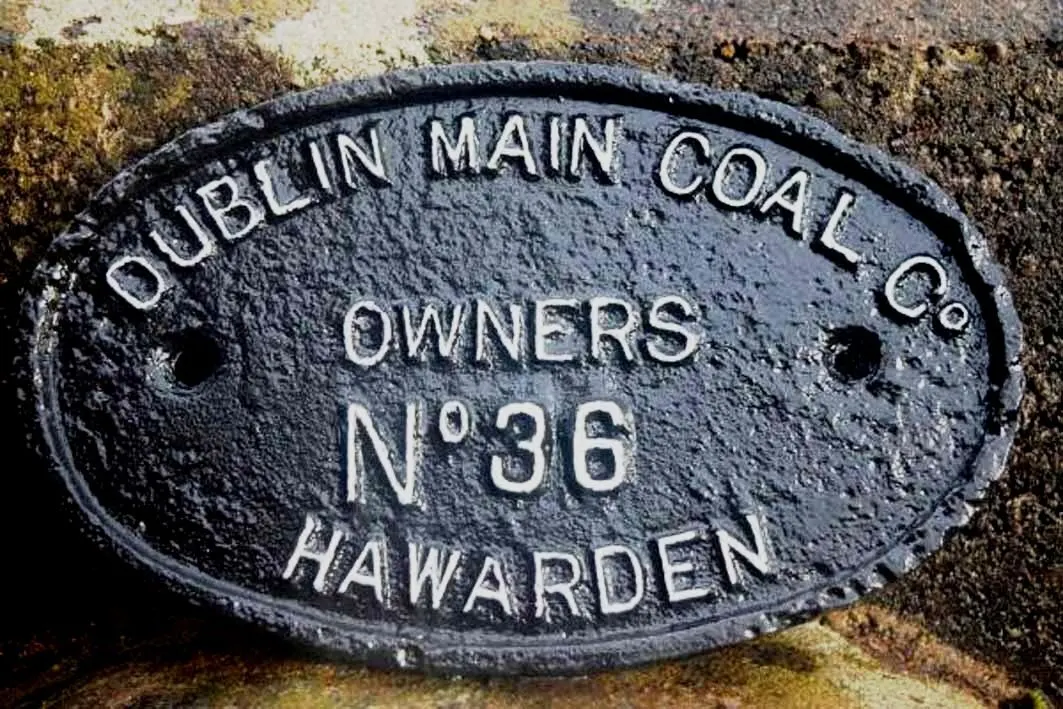
Dublin Main Company plaque 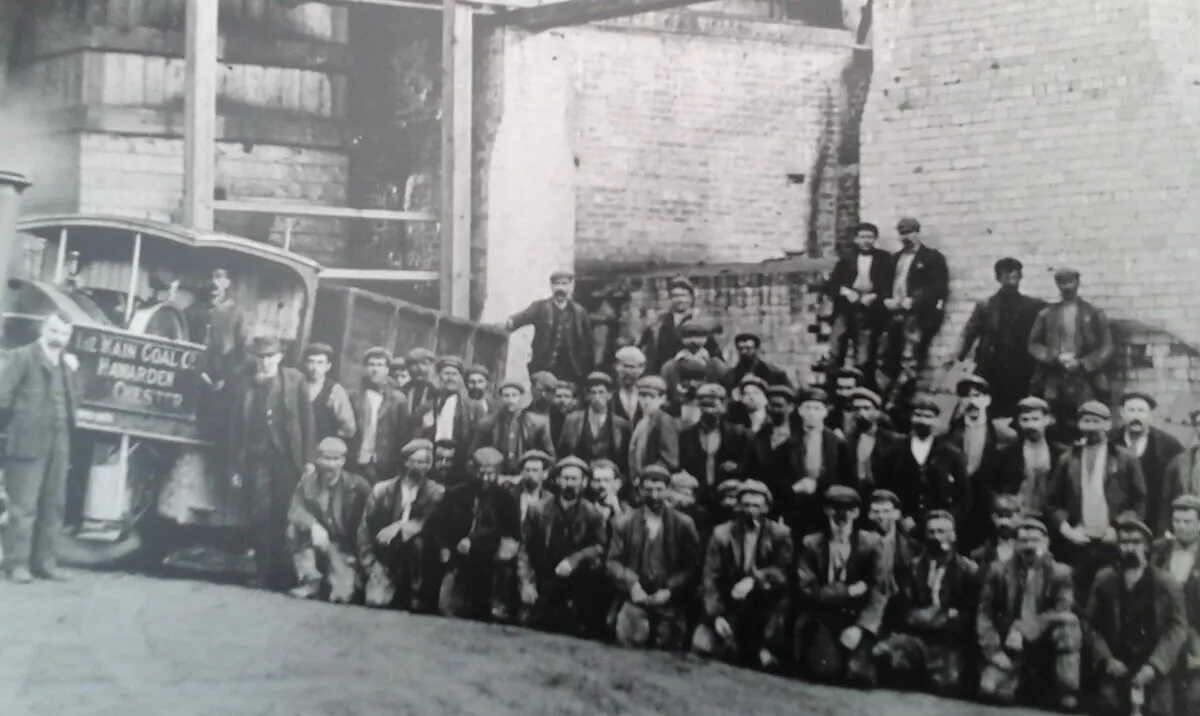
1st Main Coal Company 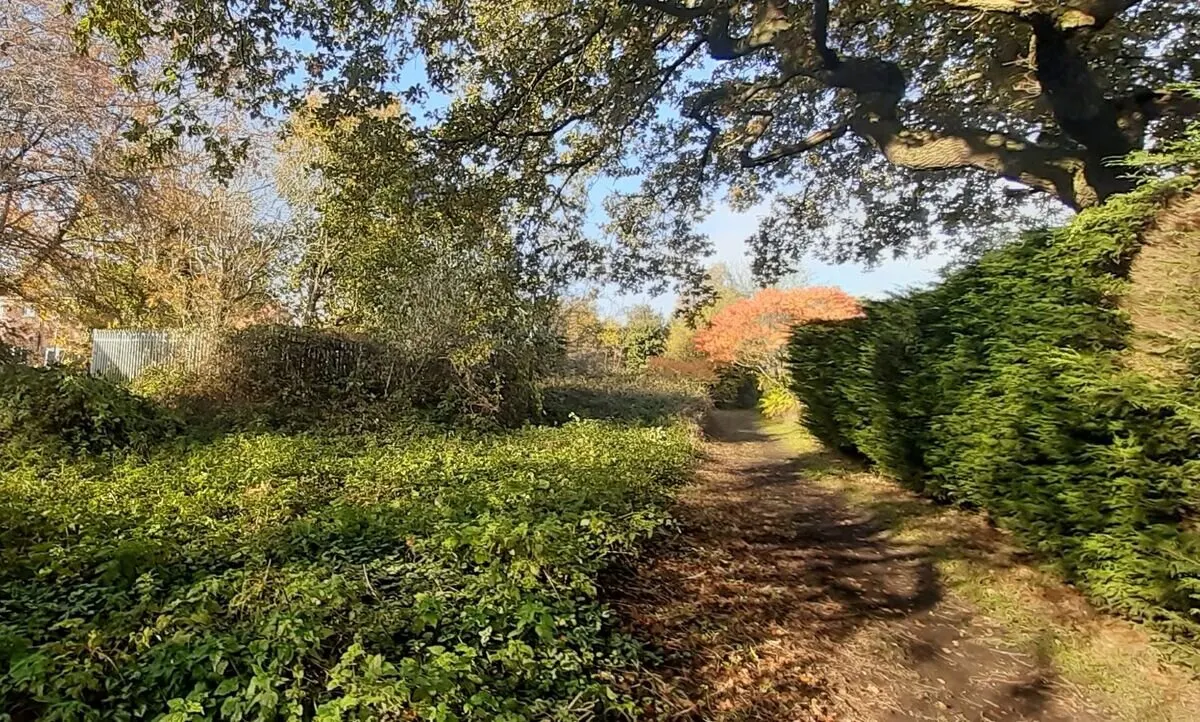
Fenced off Coal Mine on Public Footpath between Village Road & Chester Road. 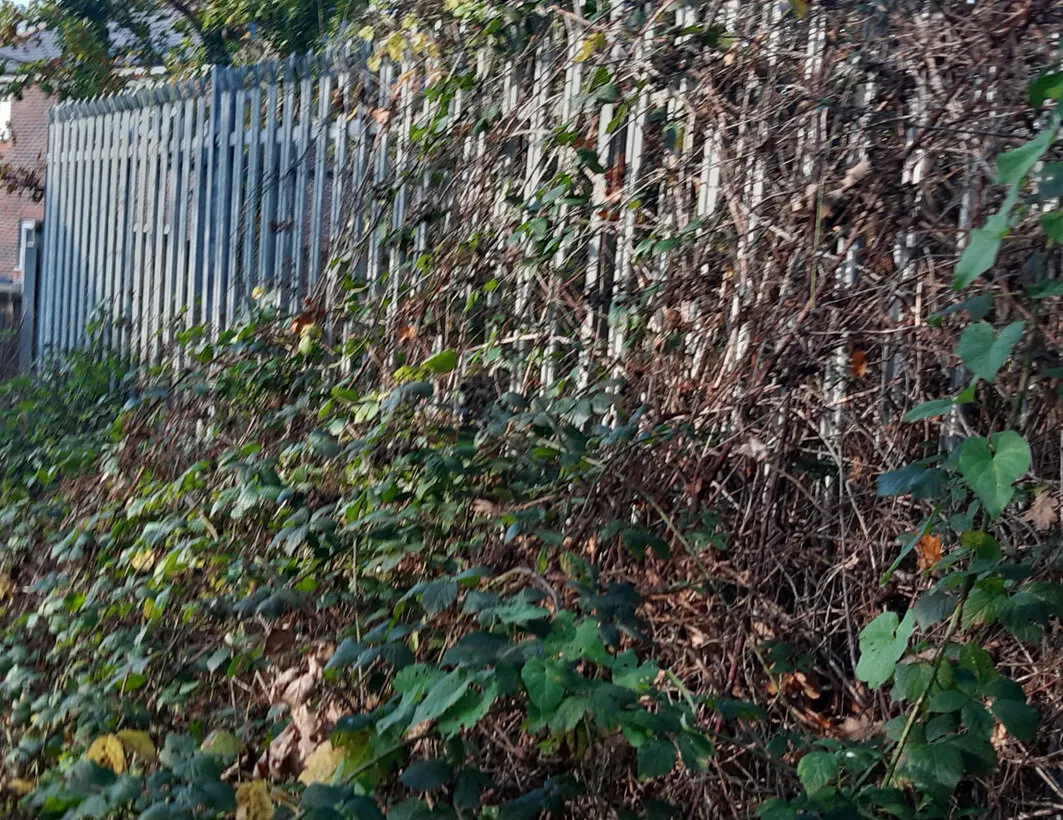
Enclosed Coal Mine shaft.
Coal was discovered in Ewloe woods as early as 1322.
Edward II granted Bleddyn Fychan the lease to mine the coal deposits. It was likely to be small open cast mining with the coal being taken by packhorse to Chester. In Lloyds Parochialia comments are made about local mines being greatly flooded and many men being drowned.
In the 1790's the Irish and Dublin coal company began extensive mining in the area. The owners were Sir John McCartney of Dublin, John Anderson of Cork, Daniel Bell and John Connolly. They employed local labour and built houses for them. They had an overseer Maurice Searey who lived in Irish Colliery house which later became a farm – Cae Eithin. Indentures were made with local landowners e.g John Williams , Thomas Morris, Pentremoch and George Wright enabling them to mine for coal on their lands. The area took Irish names - Dublin, Cork, Vinegar Hill - Hill of Berries in Irish, where Irish rebels in County Wexford were defeated by the British.
Mining was widespread and methods were primitive. Sometimes men were lowered by a basket and found their way with lighted candles. Joseph Powell (born in 1890) recalled his Grandfather telling him that coal was brought to the surface by baskets which were drawn on laggings drawn by men with braces on their backs.
A tramway was built to convey the coal to Connah's Quay. The horse drawn tramway was built by George Connah Landlord of the Quay House, the horses had difficulty with the last incline down to the Quay. The horses simply couldn’t take the strain. The problem was solved by a change from horse power to steam power. The company became bankrupt and Rigby and Hancock started the Northop Hall Coal Company about 1830.
The London Gazette of 12th November 1859 contained details of a proposed railway to link Buckley up to the River Dee at Connahs Quay and linking up with the Chester to Holyhead Main Line. The railway line from Buckley to the Dublin Main Colliery then on to Bryn Gwyn Lane before cutting through farmland to Connah's Quay Docks. In 1861 the standard gauge Railway was constructed by The Buckley Railway Company, it opened on 16th June 1862 sending 30,000 bricks to be shipped out to Connah’s Quay. The line carried bricks and coal from Major Jones’ brickworks, Hancock’s, The Standard, Davison’s Ewloe Wood Works. The Elm Colliery closed in 1934 and the Railway in 1967.