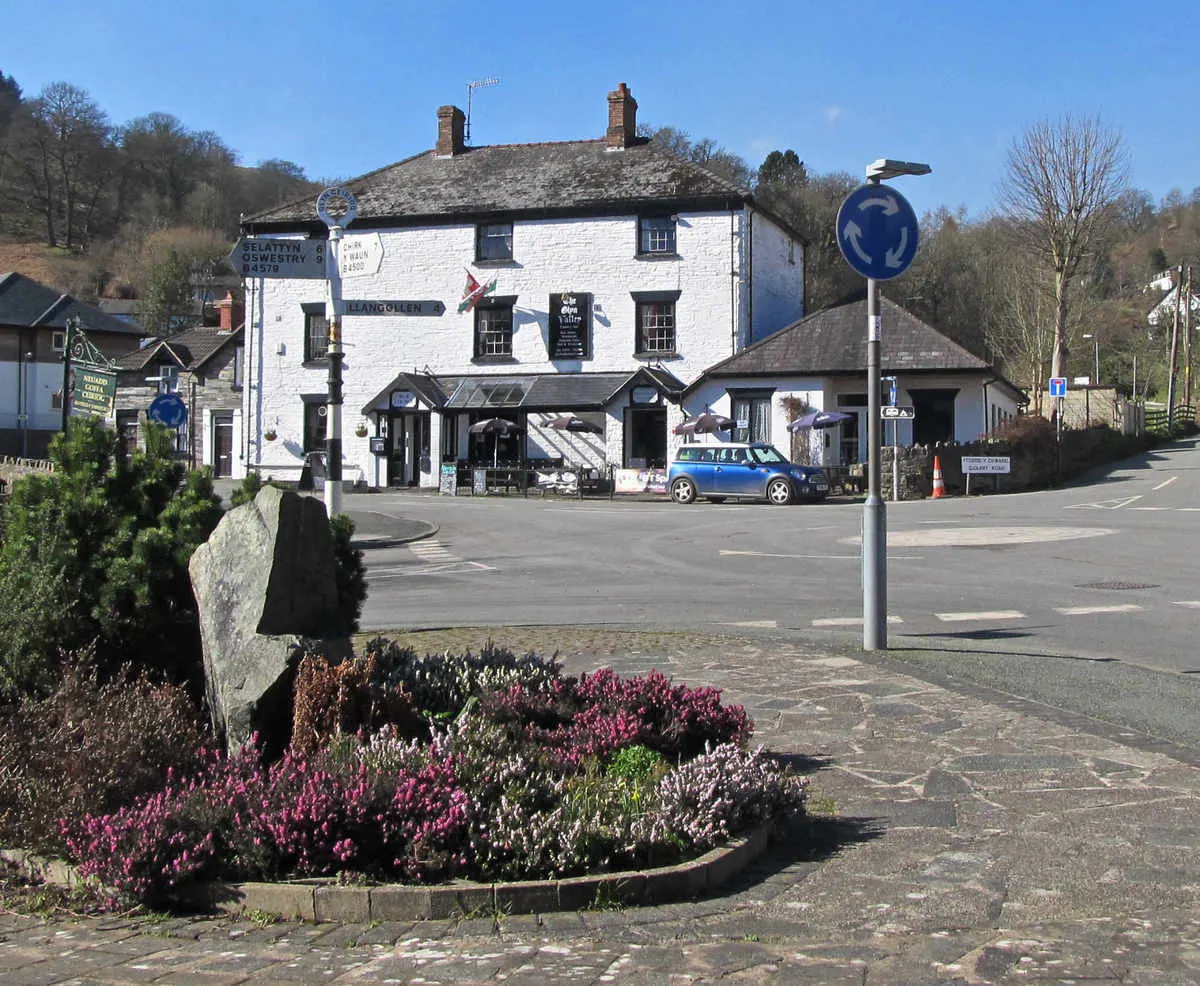
Glynceiriog
Permissive parking: Canolfan Ceiriog Centre car park. Please donate money in the box towards maintenance.
Facilities: Shops and post office. The Glyn Valley - pub and restaurant.
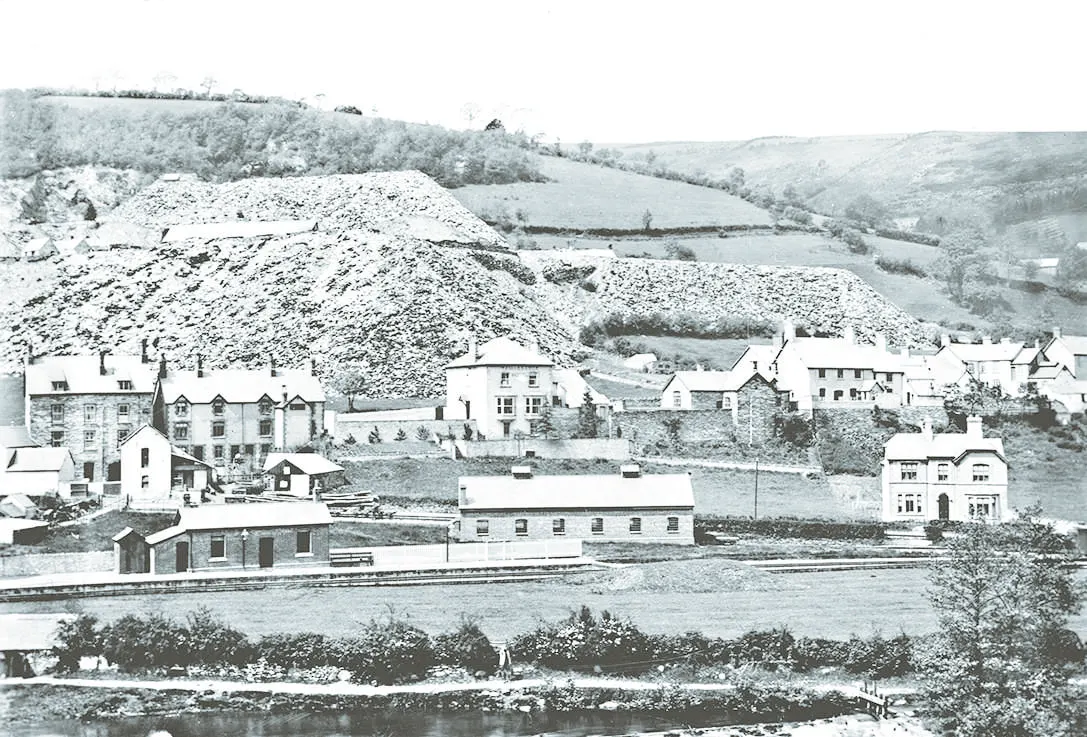
Quarry tip as it used to be... 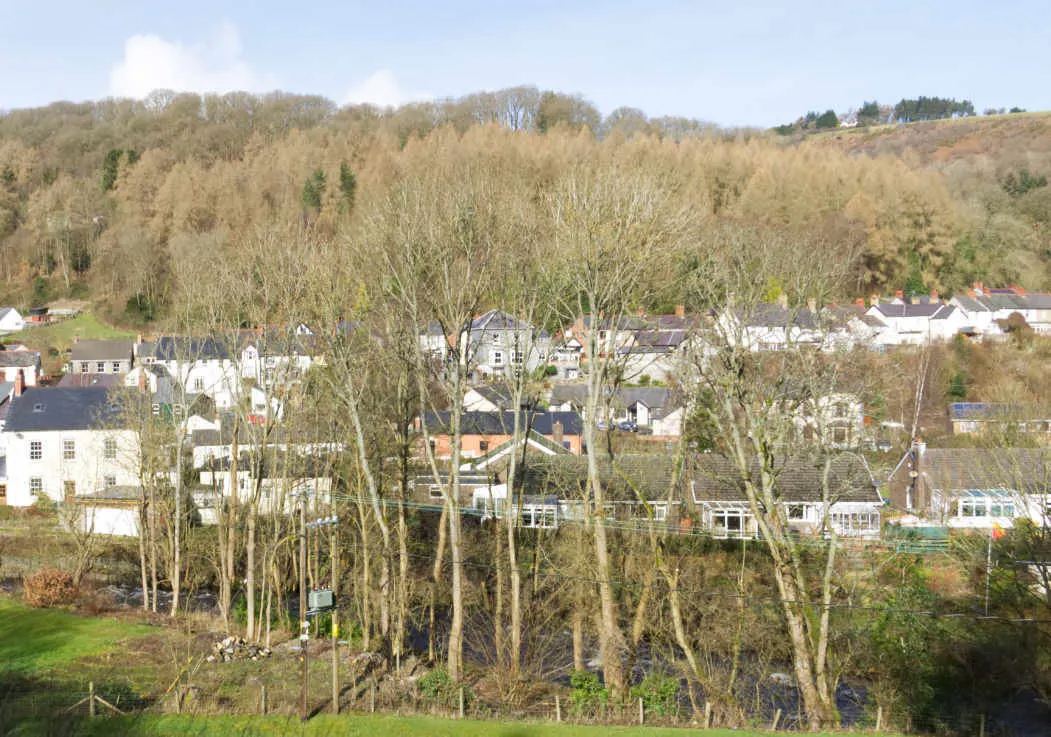
... and the same view today.
Wynne and Cambrian Slate Quarries
As you look around Glyn Ceiriog you may struggle to realise that there were two slate quarries here. Although not as big as Snowdonia’s quarries they produced a considerable amount of slate and were hugely important to the development of the village.
It is reputed that John Wynne set up the Wynne quarry in 1750, but it took until the second half of the 19th century to develop with rising production. In 1892 the Wynne and Cambrian slate quarries were amalgamated. Slate was transported on pack horse over rough terrain to the Ellesmere canal which had opened to Froncysyllte in 1802. In 1873 the Glyn Valley Tramway opened providing a much easier route for transporting slate.
“The Wynne Quarry was last worked in 1928; it is over fifty years, therefore, since men tramped up the quarry footpaths to their labours. …In the interim it had become a place for adventurous and perhaps foolhardy children to venture for a dare, a place to be frightened away from by tales of the ‘Ghost of Wynne Quarry’.” J.G. Isherwood 1984
The Cambrian quarry went on until 1947 when during a very bad winter the quarry workers found alternative work with the local council never to return.
Ceiriog Memorial Institute 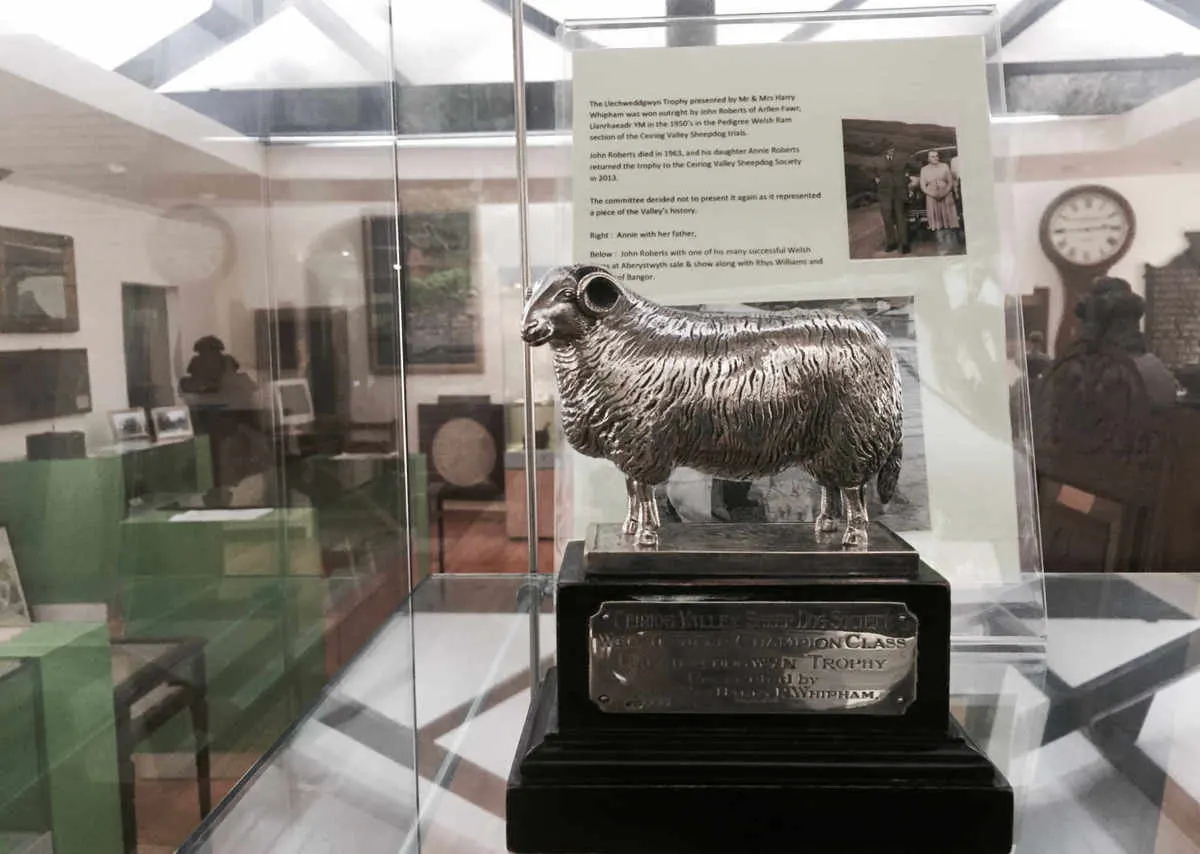
Ceiriog Memorial Museum 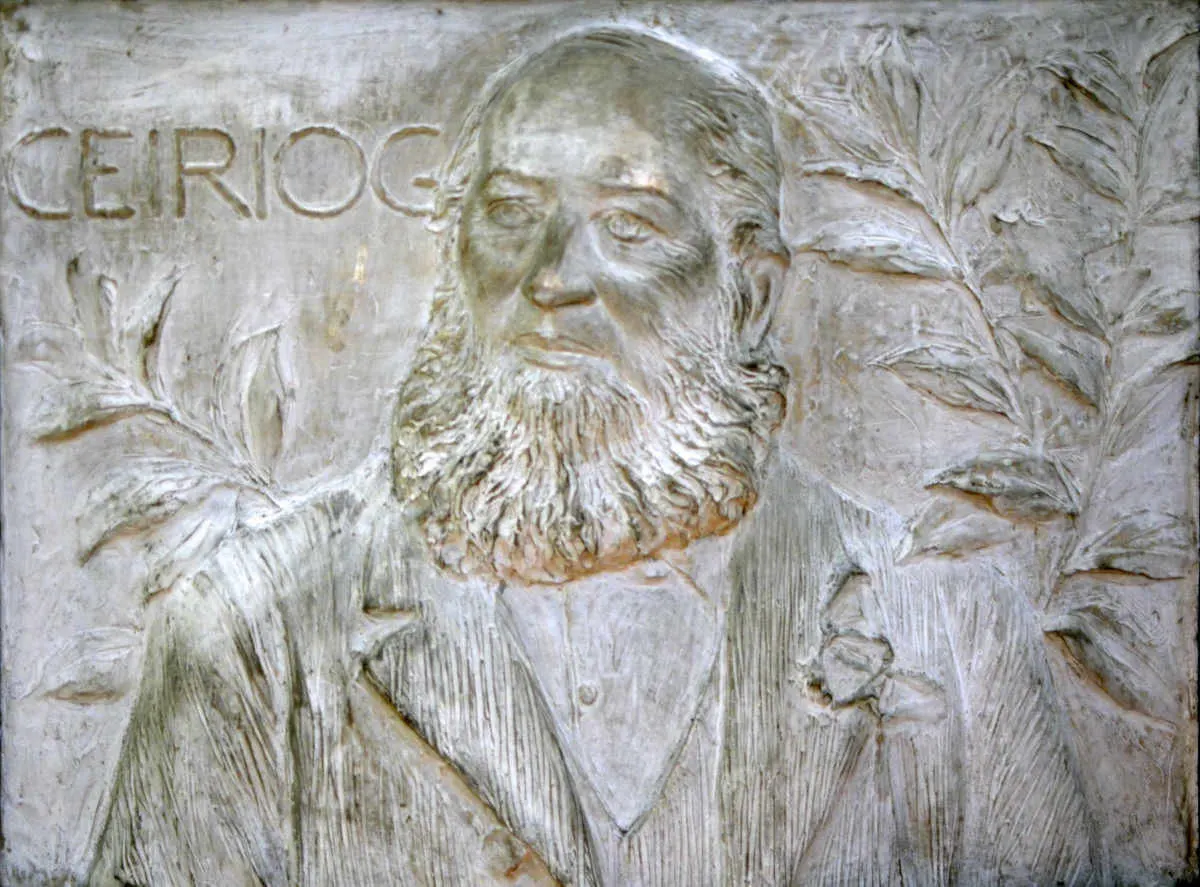
Poet John 'Ceiriog' Hughes 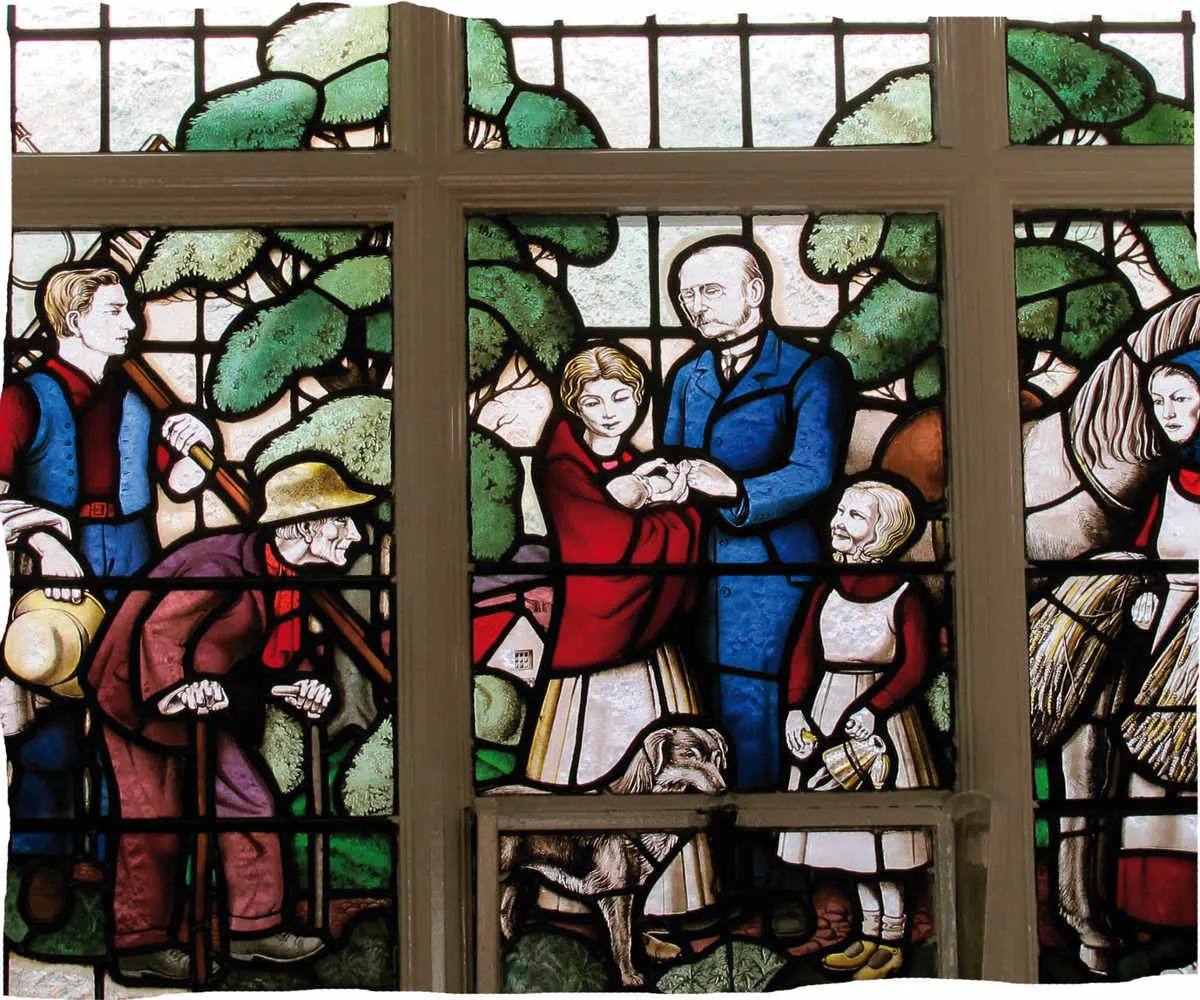
Stained glass window
Ceiriog Memorial Institute
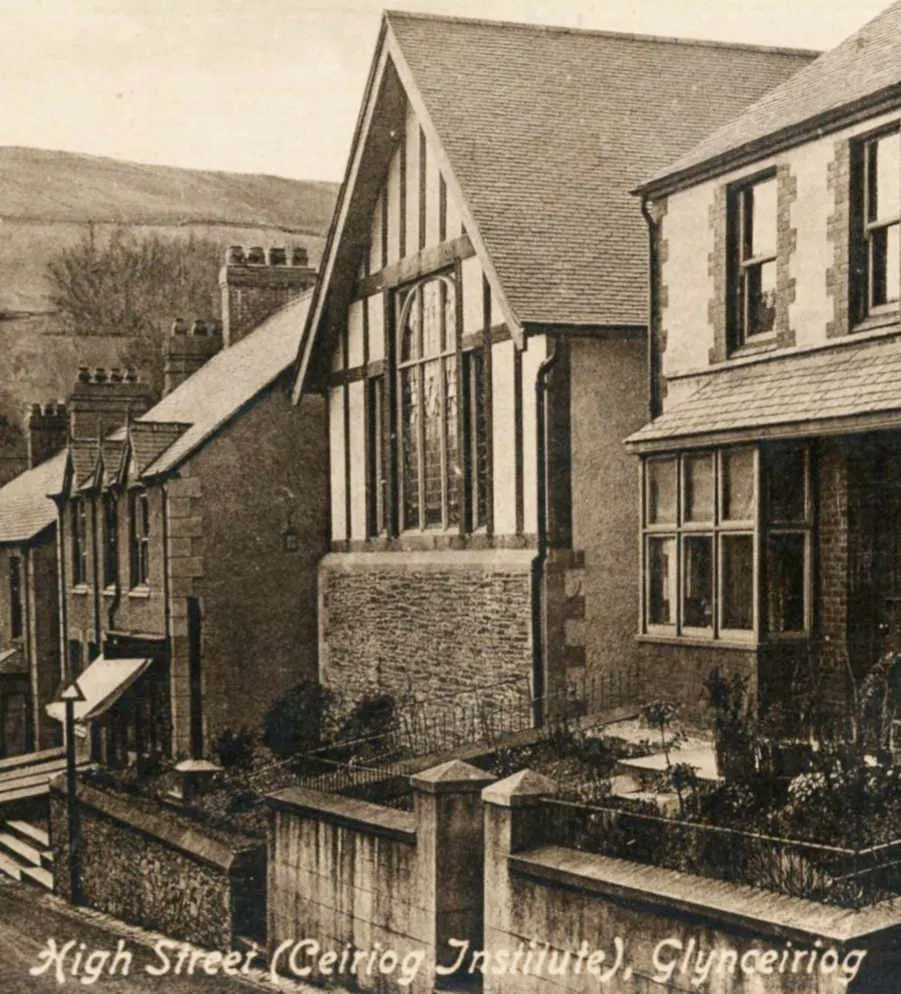
The Ceiriog Memorial Institute opened in 1911 and was designed by T. Taliesin Rees of Liverpool in the Arts and Craft style. It was founded by Alfred T. Davies of Pontfadog, councillor, and later 1st Permanent Secretary to the Welsh Department, Board of Education, London. He provided the site and started the endowment fund. It was a memorial to the great lyrical poet John ‘Ceiriog’ Hughes 1832-87), winner of the national Eisteddfod, and to other notable local Welshmen, particularly Huw ‘Eos’ Morus (1662-1709), a royalist poet, and the Rev Robert ‘Cynddelw’ Ellis (1812-75), poet and minister at Glyn Ceiriog for many years. The institute was also a village hall, library, museum, court house, district office, women's parlour, and club with games room. A plaque outside the building notes the influence of the Welsh spiritual revival of 1904-5 and the Temperance Movement. The Institute was extended in 1929 by T Alwyn Lloyd of Cardiff, and a garden of remembrance was added in front, in 1939. Items were donated to the Institute from all over Wales and beyond, such as the library cupboards and a table, which were donated by the Patagonian Welsh community. Many of the artefacts, at the time of writing, are in Wrexham Museum; they include the earliest Welsh bibles, dating back to the 17th century, busts by Sir W Goscombe John including one of John ‘Ceiriog’ Hughes, illustrations of 18th century ironwork by the Davies brothers of Croes Foel, and memorabilia donated by Lloyd George.
Notable local people are commemorated in many beautiful stained glass windows, the masterpiece a triptych of large 10ft. high 7ft. wide stained glass window with two smaller side windows.
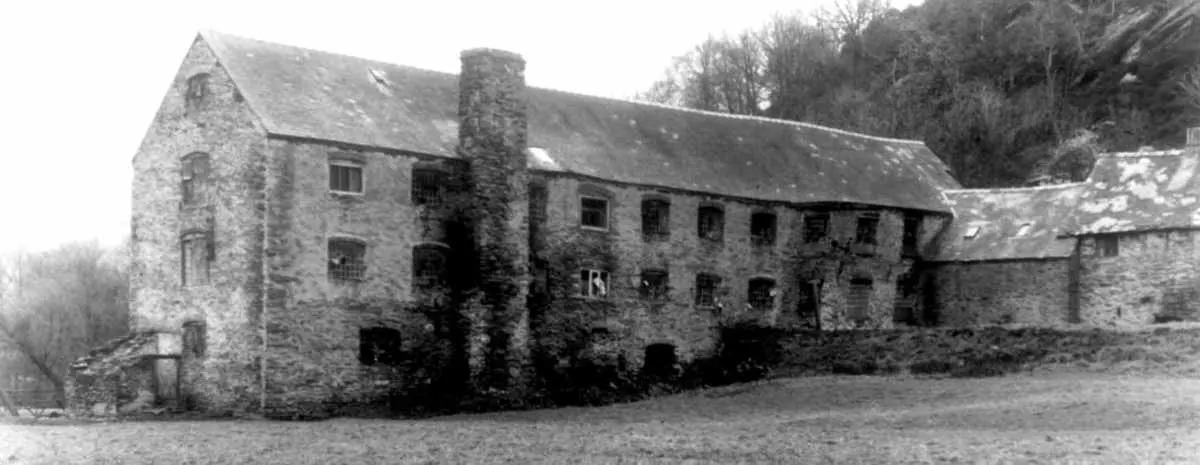
Upper Mill 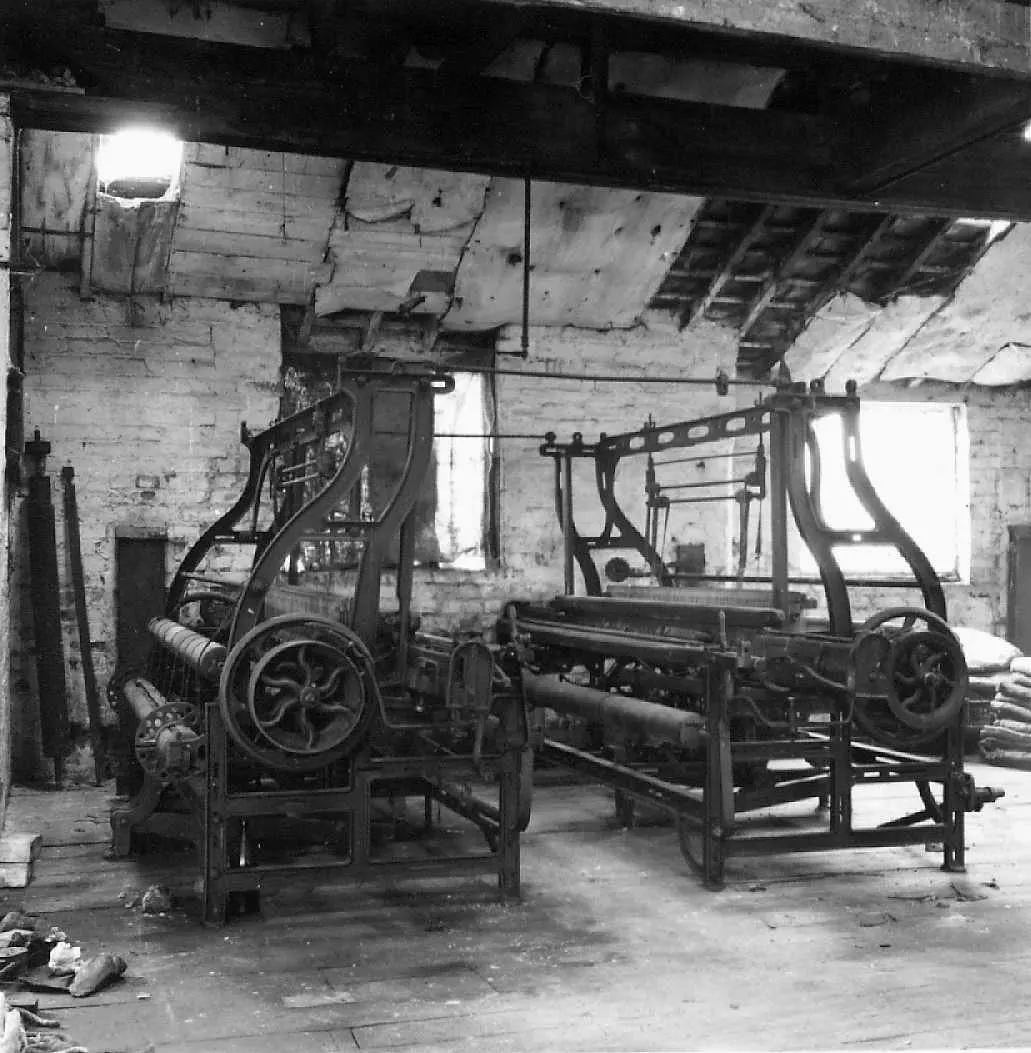
Upper Mill machinery
Fulling Mills
Fulling is the process of removing the natural greases from woollen fleeces. Glyn Ceiriog was an ideal location for the trade with plenty of sheep on the hills and water from the river to power the mills. There were 3 mills. Glyn Fawr (Upper Mill) started in 1810, ceased in 1950 and in 1978 became a trout Farm, now ceased. Berwyn Mill (Lower Mill) 1818 – 1947 is now Theo Davies and Sons’ furniture workshop. It lost its pitched roof and top floor in a fire. Felin Newydd (1880) was outside the village and produced flour and flannel.
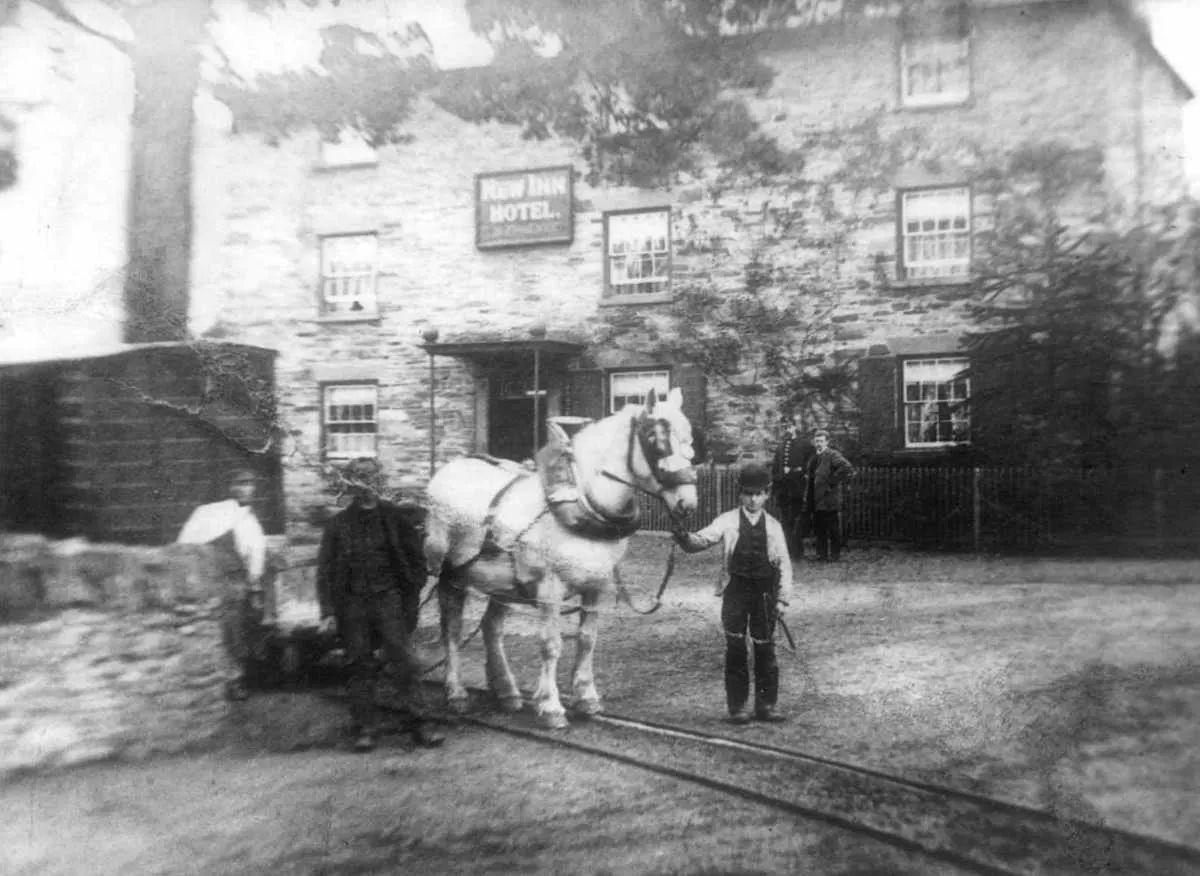
Horse-drawn tramway 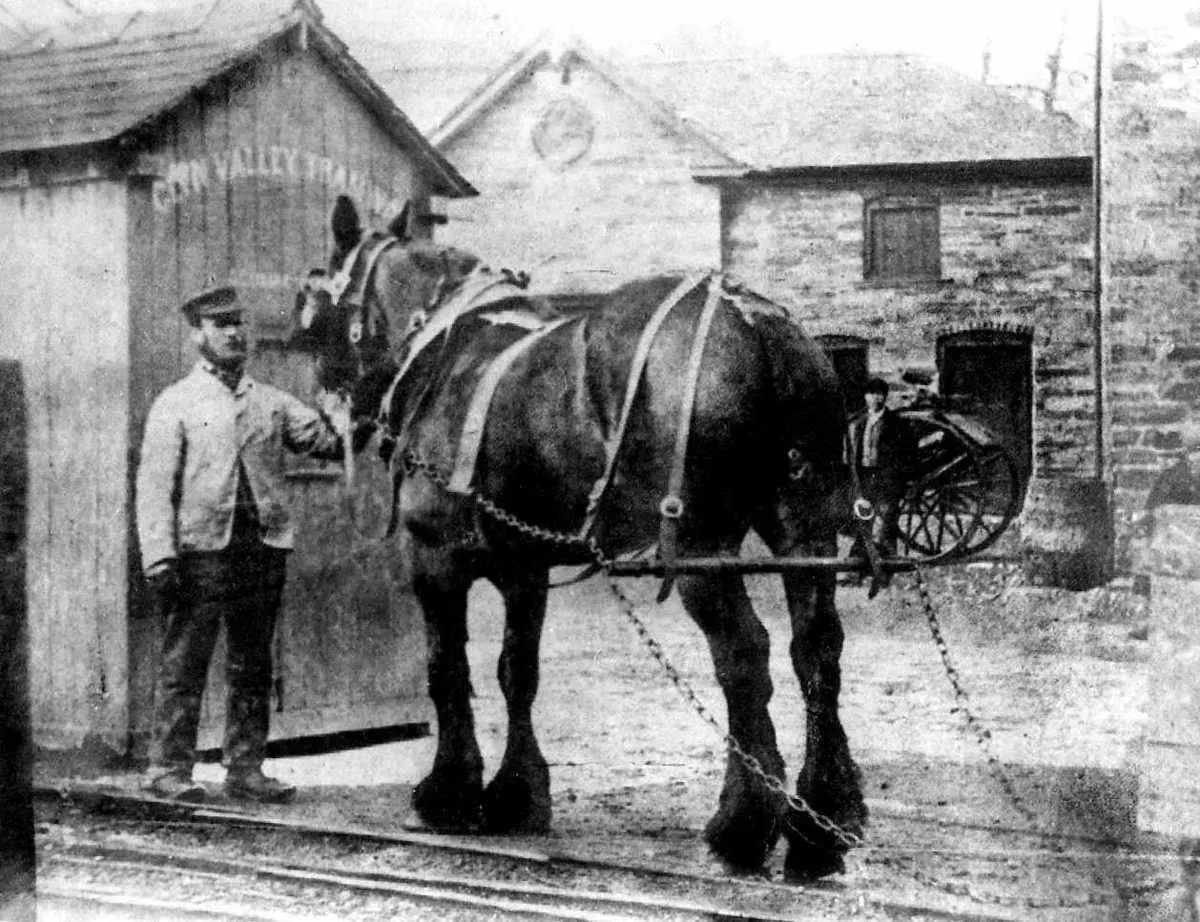
Horse-drawn tramway
Glyn Valley Tramway
The Glyn Valley Tramway (GVT) was of great importance to the development of the industries in Glyn Ceiriog. It opened as a horse-drawn narrow gauge tramway in 1873 between the Shropshire Union Canal and Glyn Ceiriog. A year later passenger traffic started. The tramway transformed the central area around The Cross with rails running along New Street with eventually branches linking up to the inclines to the Wynne and Cambrian quarries and later to Hendre quarry. Along with it came the buildings that go with a tramway. Stables, warehouse and later tram shed and station. In 1888 steam engines were introduced and in 1891 it was opened again to passengers after closing in 1886.
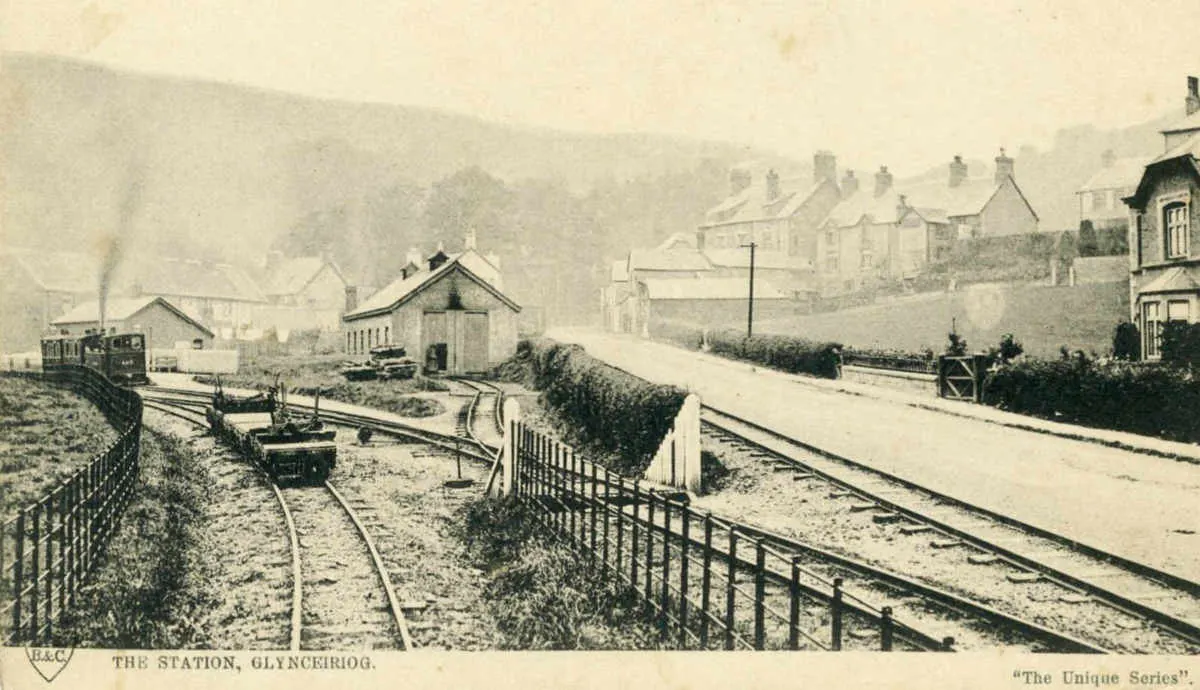
Glyn Ceiriog Station... 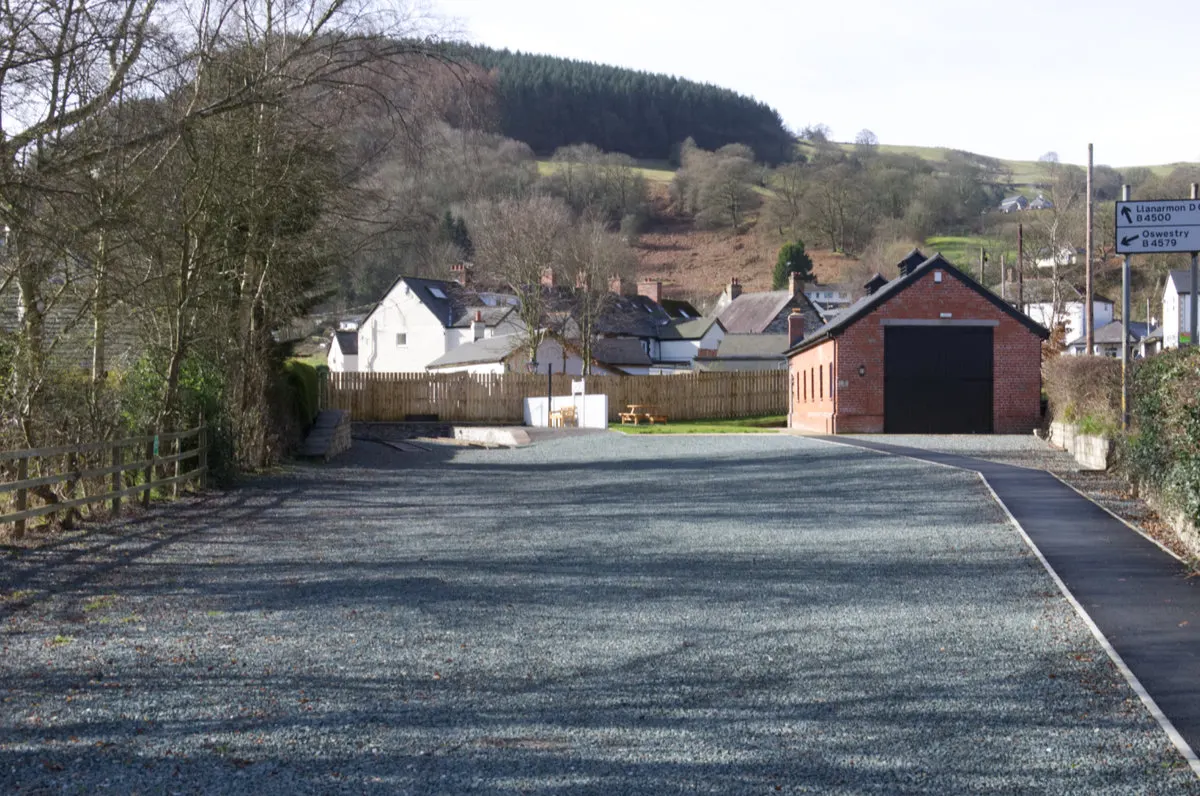
... now the GVT Museum.
The Tram Shed
The Tram Shed and part of the station site is now a museum run by the Glyn Valley Tramway and Industrial Heritage Trust. www.glynvalleytramway.org.uk Opening hours 10.00 to 4.00 on Saturdays.
Nature Note
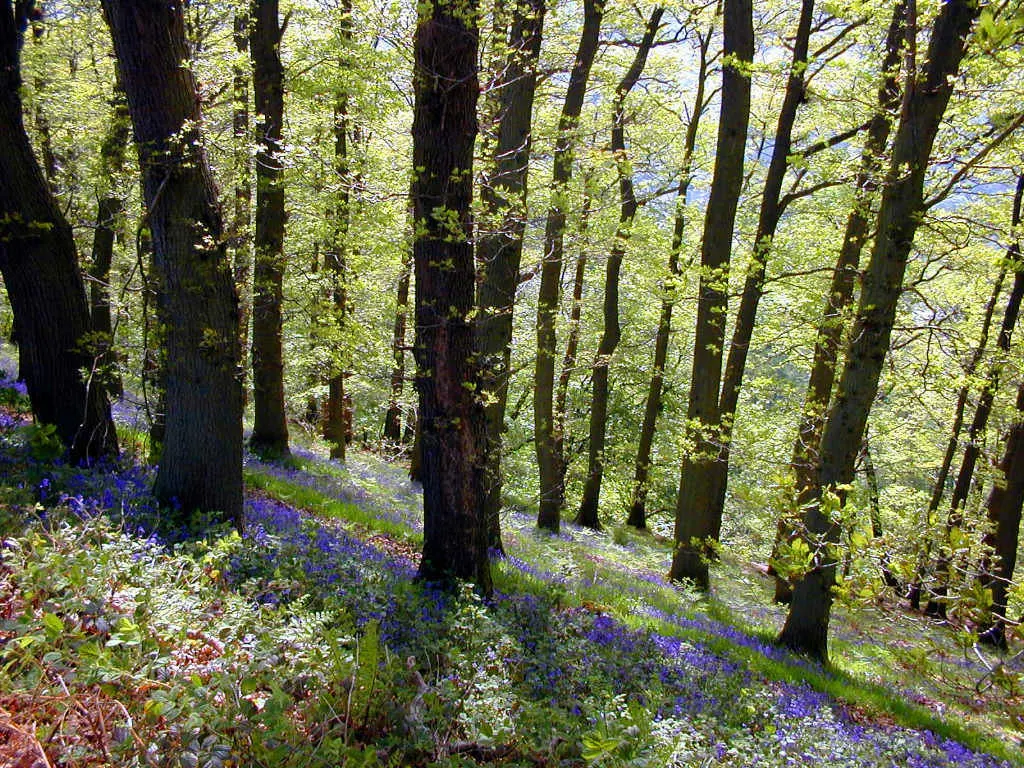
While the quarries were worked waste tips spread down the side of the valley above Glyn Ceiriog, but now you would not know that they were there because they were sprayed with peat and seeded. The waste tips “...have almost vanished from view under the ensuing grass, ferns and trees. Here unlike almost anywhere else in North Wales, nature has visually triumphed over the ravages of industrial man. Oak and elm grow where once the rock echoed to hammer and chisel. Birds sing and chatter where there was once only the crack and rumble of exploding powder and falling rock.” J.G. Isherwood 1984