Tramway and Quarries: Coed y Glyn
Parking: at the entrance of National Trust’s Glyn Valley Tramway.
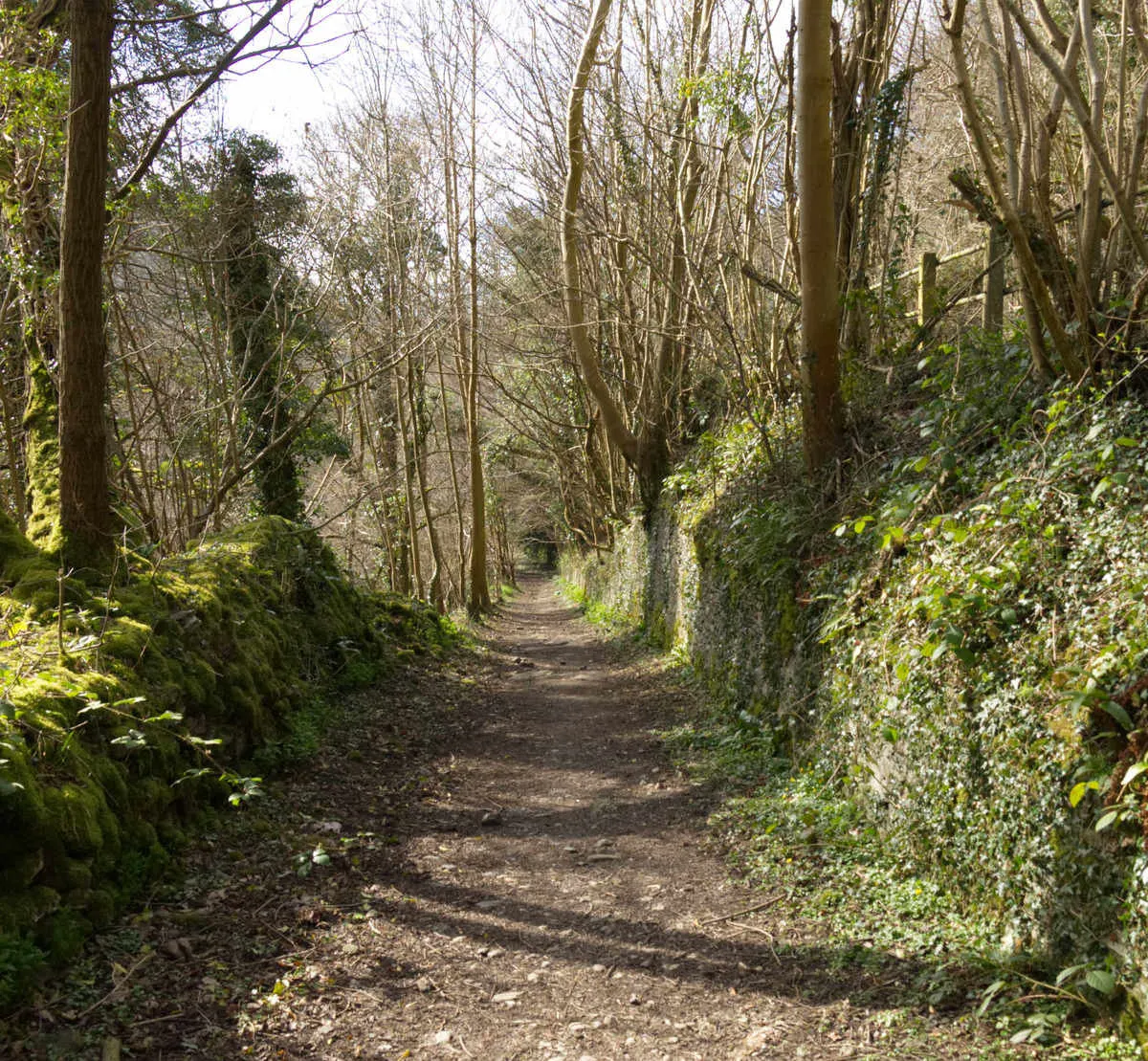
A linear walk along the Glyn Valley Tramway links the 3 Tramway Quarries points of interest. The walk is about 1.5 kilometres, the track may be muddy in places.
Glyn Valley Tramway Walk
In 1948 Charles B.C. Storey of Plas Nantyr placed the section of the Glyn Valley Tramway extension from Coed y Glyn Ucha to Pont y Meibion, into the care of the National Trust for use as a bridleway. A ramp with substantial stone walling was constructed from the B4500 opposite the Coed y Glyn quarry down to the GVT trackbed to provide access for walkers, horse riders and cyclists.
Coed y Glyn Quarry
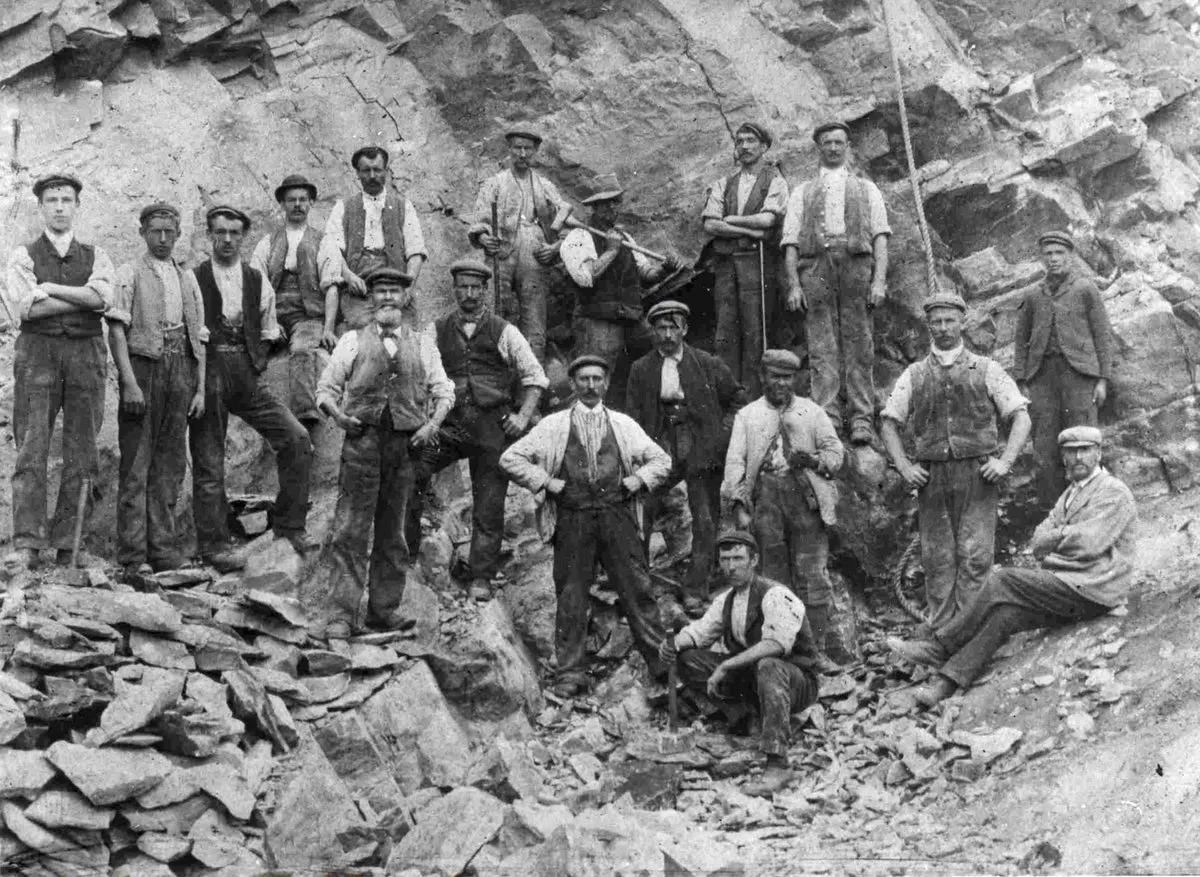
If you have parked by the National Trust sign you will see across the road, the locked gates to the Coed y Glyn quarry known locally as ‘the Caves’ which are now submerged. This was a roadstone quarry, which linked to the tramway where the Ddol Hir caravan park is now.
Crushing Plant
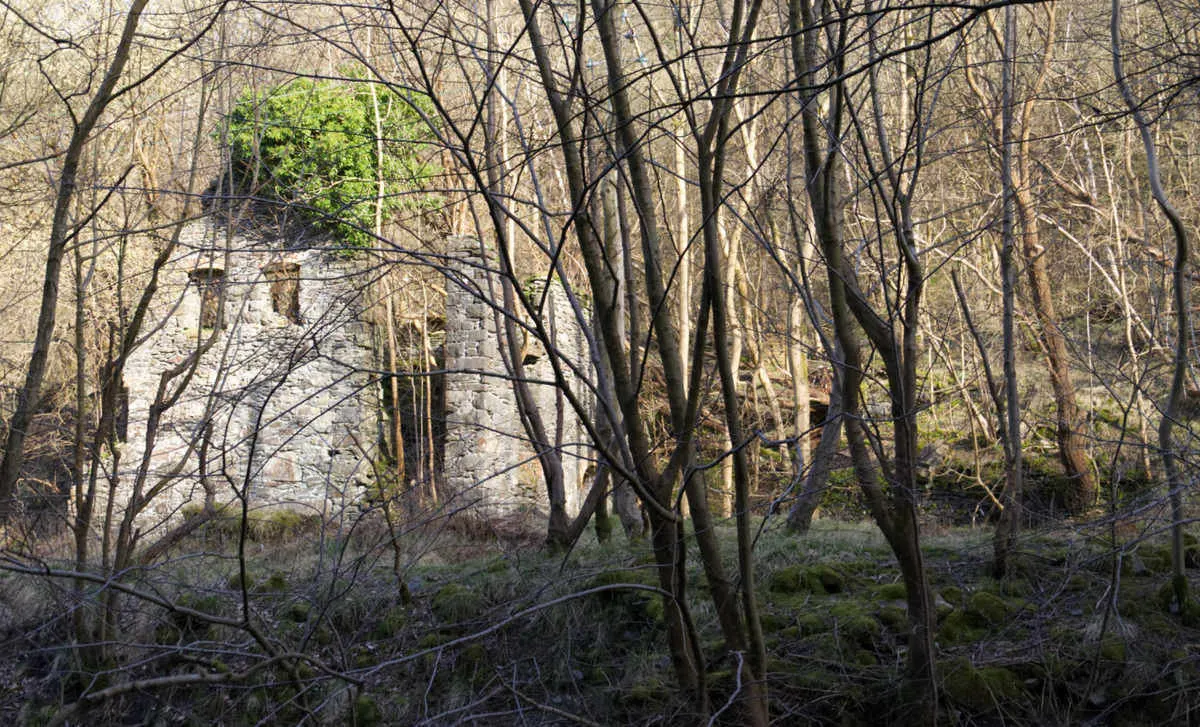
Walk down the ramp to the tramway and turn left, before you get to the caravan park you will see across the river the remains of the Lower Pandy Quarry and its crushing plant. Then walk back to the bottom of the ramp and carry on along the tramway to Pandy. Across the river are the remains of another tramway and a leat that provided water to the quarry. You will pass a house on the right and near it is the remains of a bridge that linked the two tramways together.
Lower Pandy Quarry
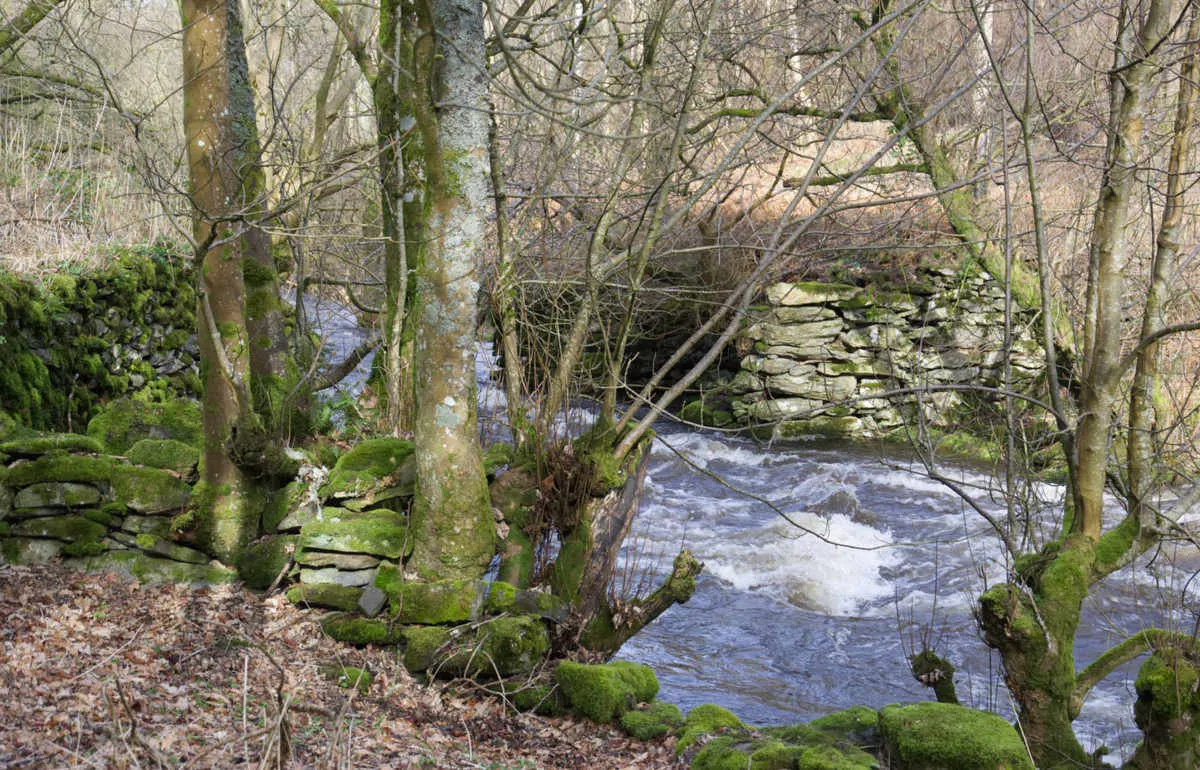
Pandy had a number of quarries the most important of which was Lower Pandy Quarry. This was taken over by the Ceiriog Granite Co. in the late 1880s. It had supplied chinastone to the Staffordshire china works. There was a large amount of chinastone waste left, which it was found could be used for railway ballast. A crushing plant was constructed powered by water diverted from the weir by the Pandy Mill down a leat. Later on an old chinastone quarry ‘Cae-Deicws’ was reopened and linked to the Lower Pandy Quarry.
Across the river are the remains of another tramway and a leat that provided water to the Lower Pandy Quarry. You will pass a house on the right and near it is the remains of the bridge that linked the two tramways together.
Carry on along the tramway to Pandy, the next point of interest.
Nature Note
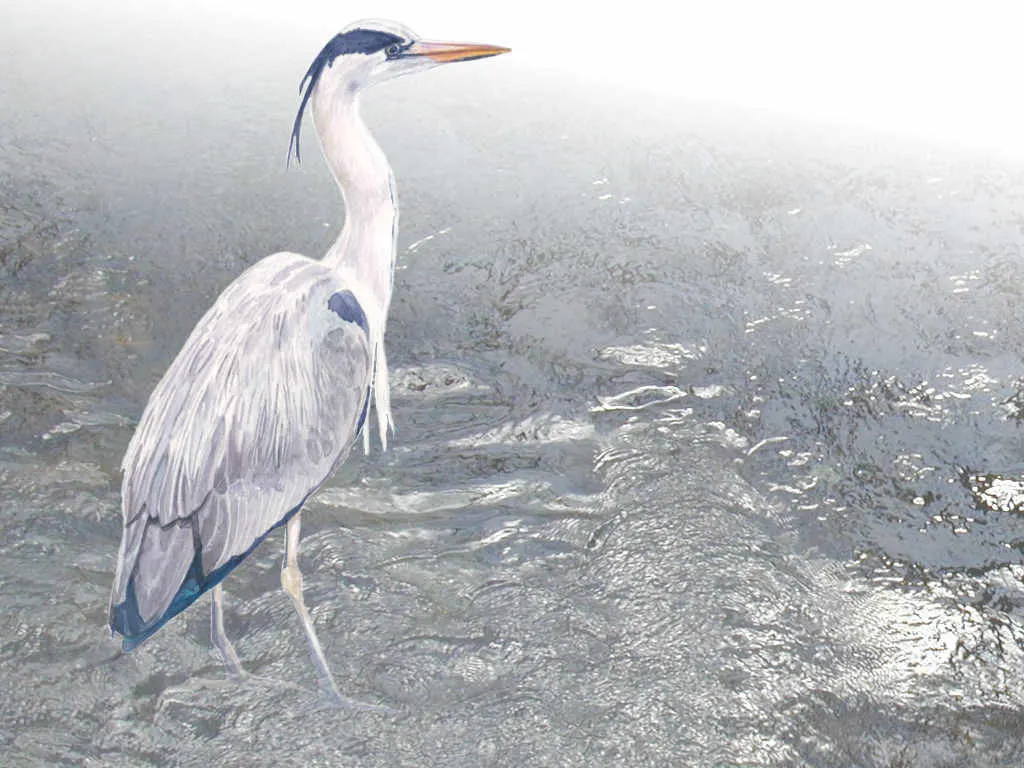
This quarrying area would have been very different when trams were clanging along the rails and the noise and dust of blasting and cutting filled the air. Trees shelter many woodland species of plants, birds and animals along the former tramway which is now a pleasant path to enjoy walking alongside the river. Look out for heron standing motionless on the bank or on a log or stone in the water ready to snatch a passing fish.