From Pandy village the tramway crosses the river and passes the Upper Pandy quarry on the left.
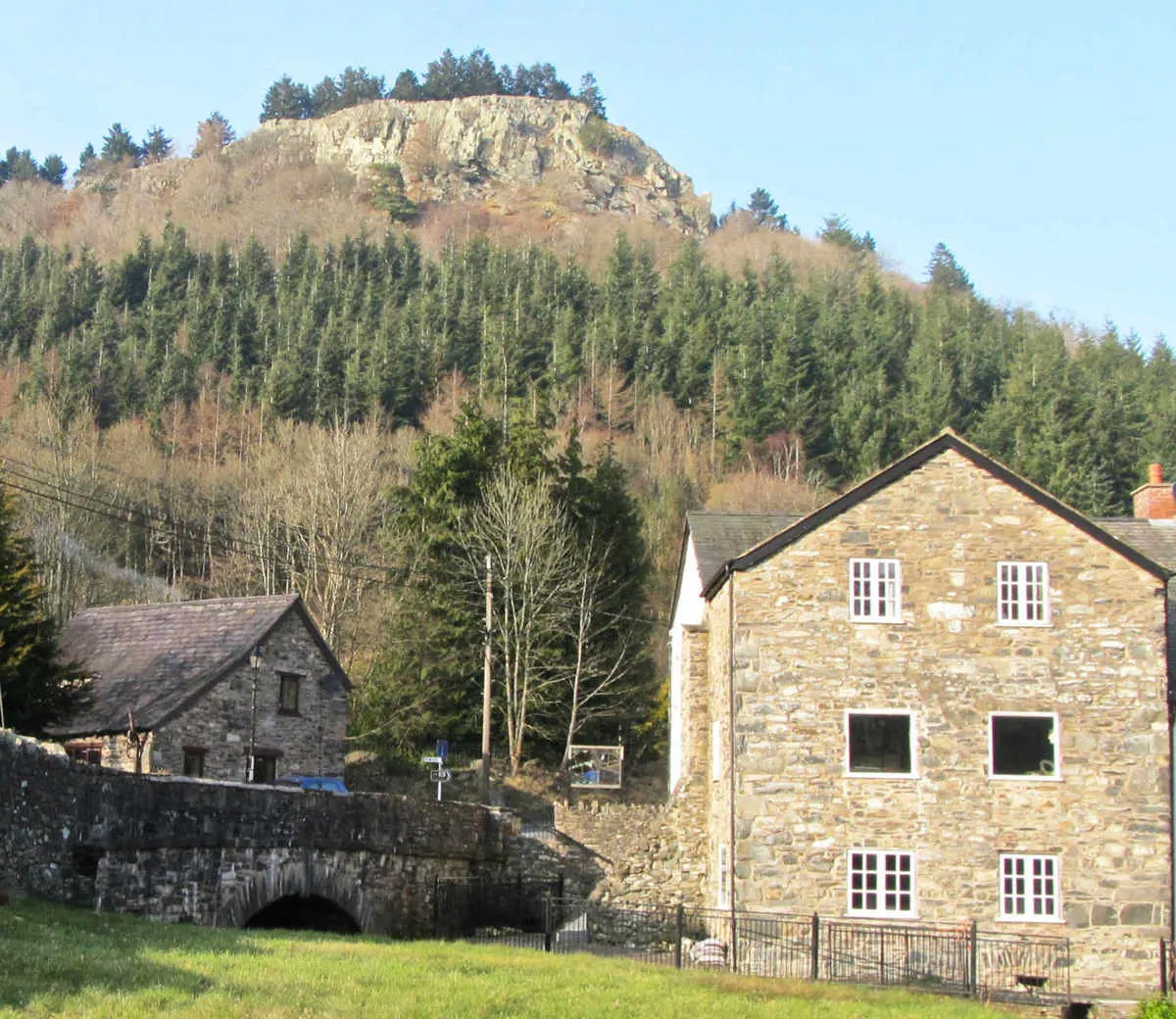
Pandy Crag
Some 500 million years ago, the area which was to become Wales was submerged under a sea. Underwater volcanoes erupted in what is now Snowdonia, spewing lava and ash amongst the mud deposits. One of these eruptions resulted in the deposit of tuff in the area. This can be seen today in Pandy Crag.
The Pandy area has three outcroppings of volcanic tuff deposits, the Cwm Clwyd, Swch Gorge and Pandy tuff formations. The Pandy tuff is exposed in crags on both the eastern and western slopes of the Ceiriog Valley and in the former quarries of Caedicus and Graig y Pandy. The crag is popular among professional rock climbers but can easily be viewed from the village of Pandy.
The area has been listed as a possible ‘Regionally Important Geological’ (RIG) site, as it contributes to a broader understanding of volcanic activity at this time.
Between Pandy and Coed y Glyn on the Craig side of the valley can be seen numerous large boulders believed to have detached from a severe earthquake in 1810.
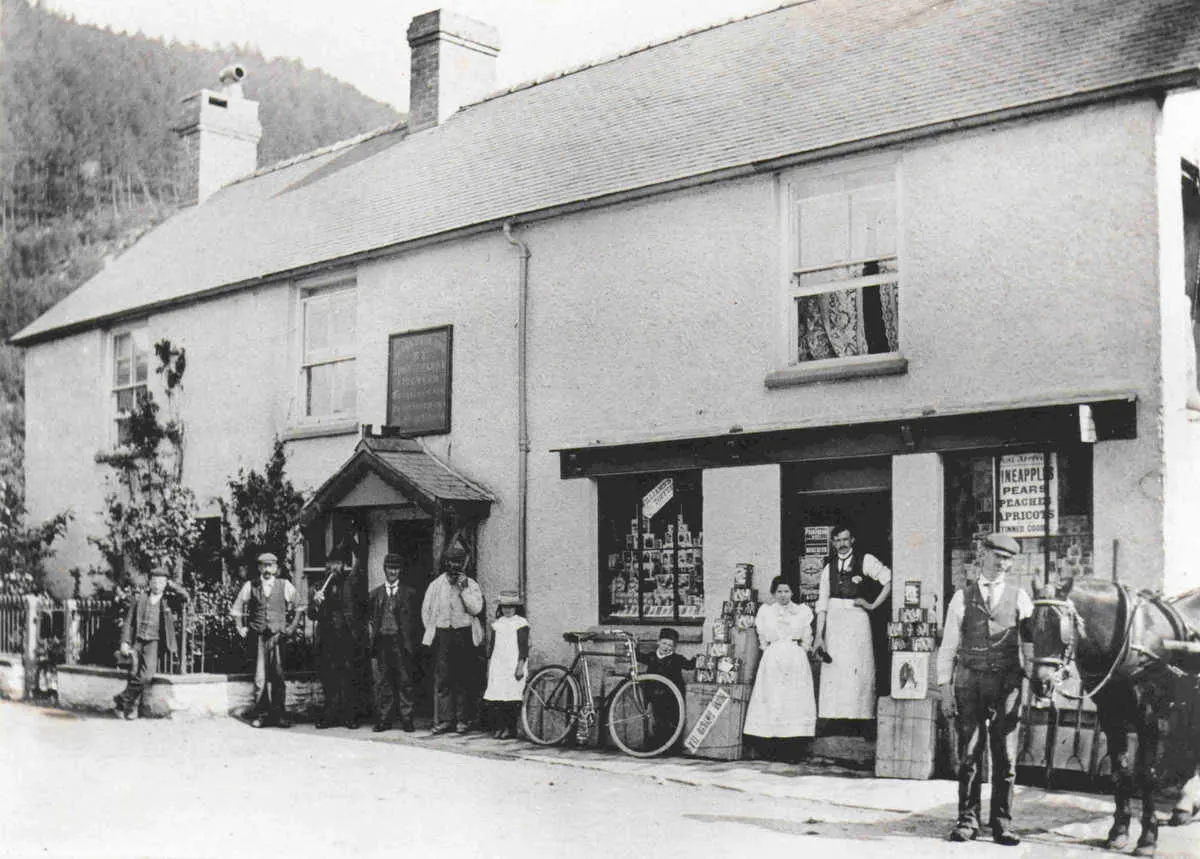
Pandy Mill / Melin Deirw
On the B4500 stands Pandy Mill. Pandy means ‘fulling mill’. Fulling is the process for cleaning woollen cloth, making it thicker and turning it into felt. The mill was built in 1365 and is thought to be the first fulling mill in Wales. In 1879 it became the Woolpack Inn and shop, later became a glass studio and is now a holiday cottage.
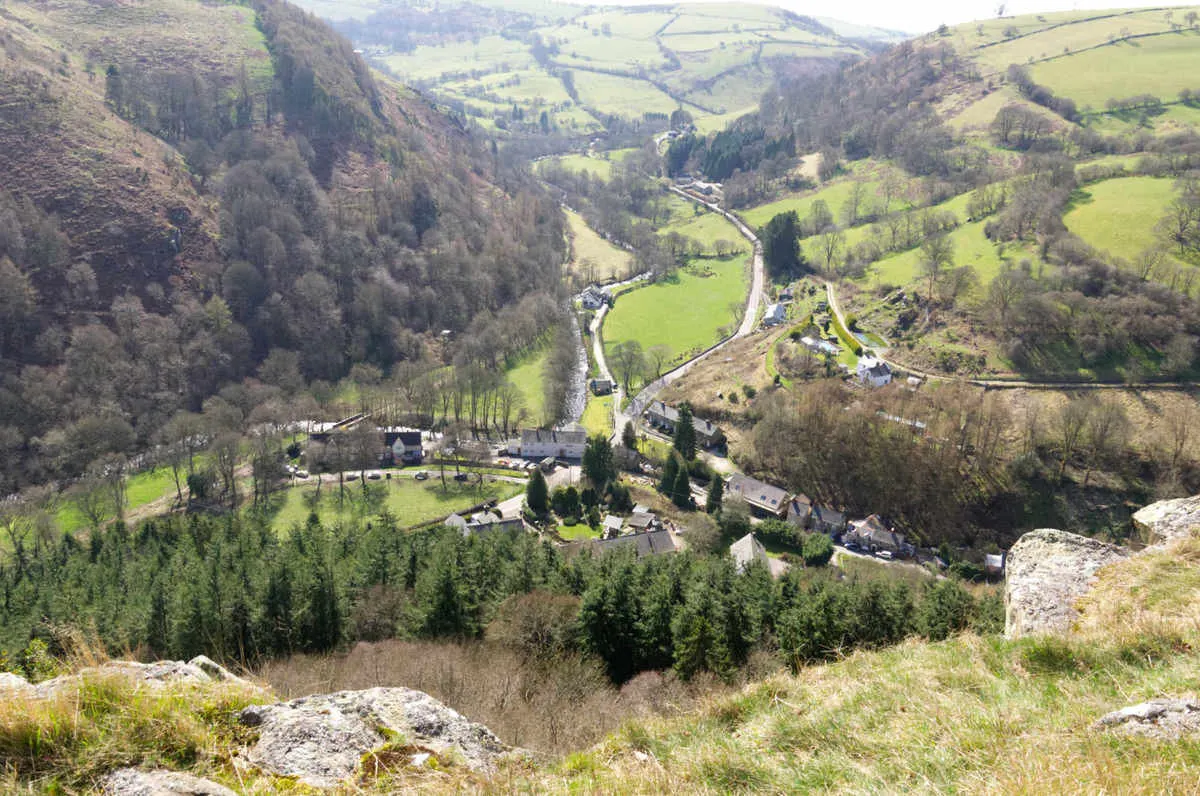
Glyn Valley Tramway
In 1874 it was proposed to extend the Glyn Valley Tramway to Pandy. It was also proposed to extend it up the Teirw valley to the Nantyr slate quarry, but this was never built. In the 1880s a coal yard was built in Pandy to serve the village as well as Tregeiriog and Llanarmon Dyffryn Ceiriog. This was later linked to the Teirw Hill Roadstone quarry tramway. Pandy became a hub for the GVT linking in tramways, inclines and works.
Continue along the tramway to the next point of interest, Pont y Meibion.
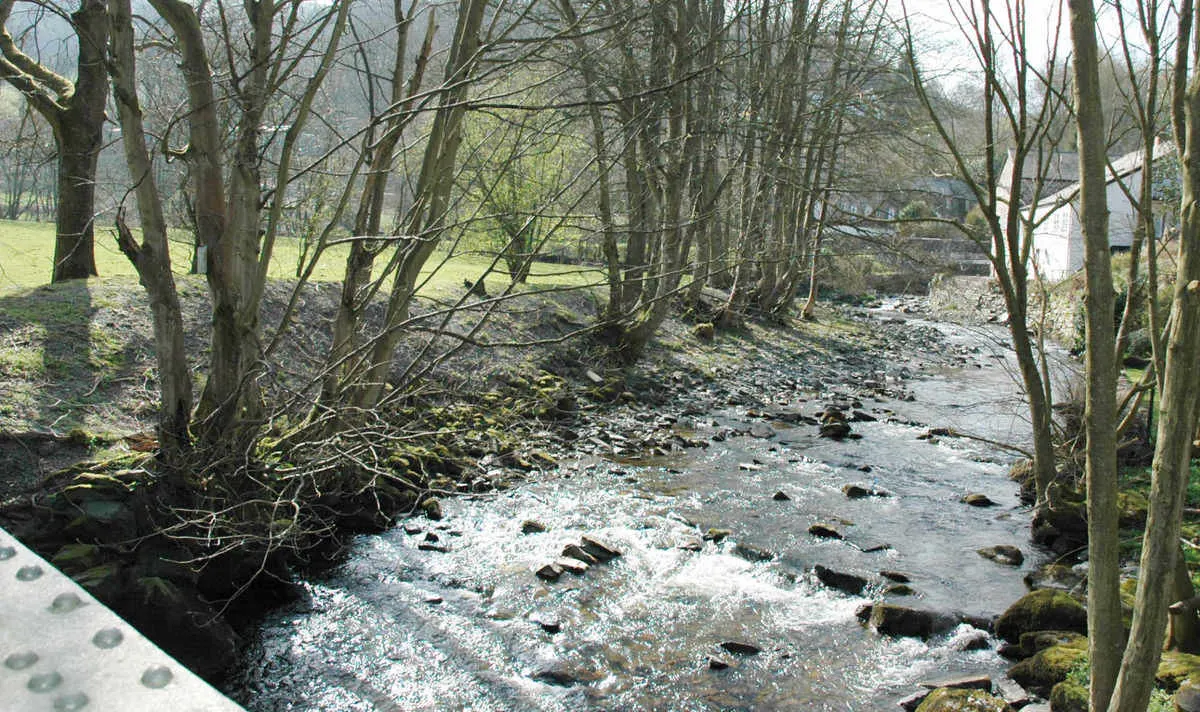
Nature Note
The River Teirw, the River Ceiriog’s main tributary, flows down from the Nantyr moors down to Pandy where it meets the Ceiriog just beyond the road bridge. The dynamics of the Ceiriog river system has been carving and reshaping its valley for millenia. Silt from the Berwyn moors where the fledgeling river rapidly cuts downwards to form a V-shape valley, is dropped further downstream where the water begins to cut sidewards and meander creating level meadows that provide good pasture for sheep and cattle. The Ceiriog has been harnessed for power throughout the valley but particularly here at Pandy where it drove the machinery of the fulling mill and the quarry works.