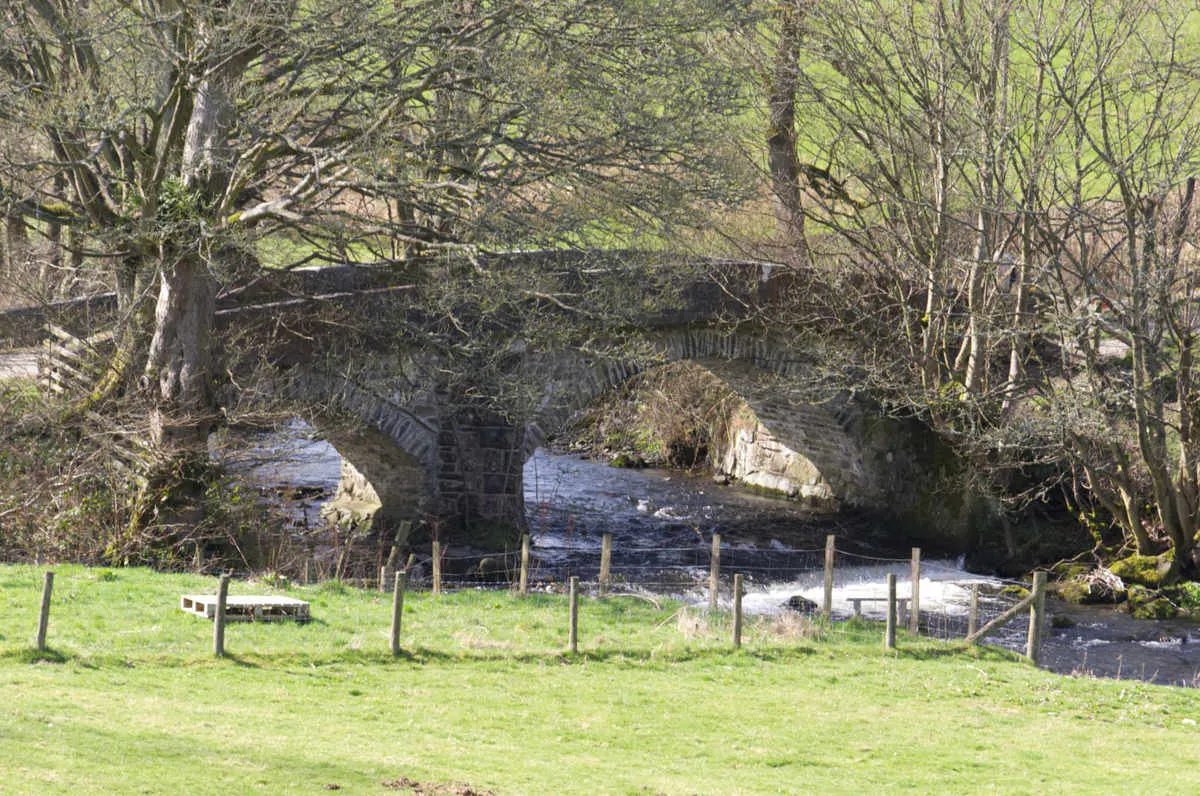
Pontricket Bridge
Parking: in the Nant Swrn layby.
From the Nant Swrn layby, turn right and cross the road. Turn left down the deep lane which leads to the bridge.
Go to the red plaque by the bridge.
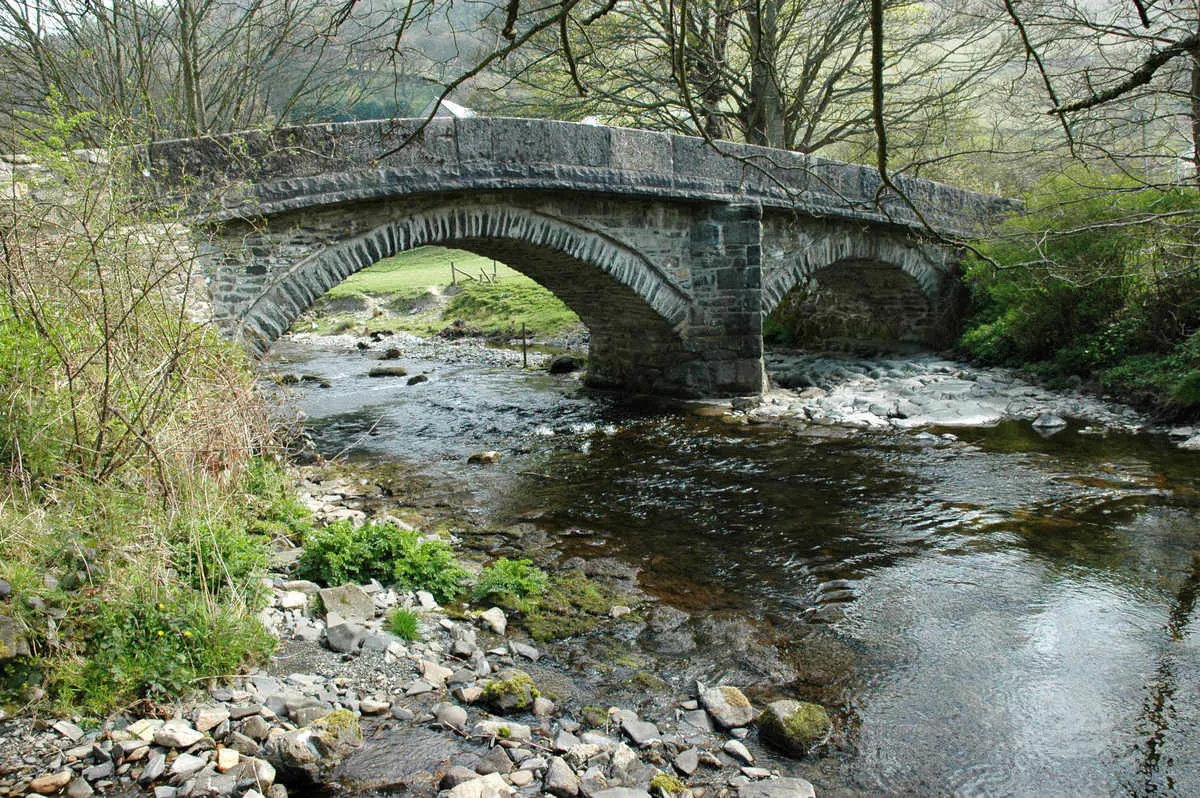
Pontricket Bridge
Pontricket is a corrupted form of Pont rhyd y gad which means ‘the bridge of the ford of the battle’. This is a perfect example of a placename recording history; firstly a bridge was built to replace a ford, secondly the ford was named after a significant battle. If you look down from the bridge on the southern side (upriver) you will see big flat stones that had been laid there to ford the river. When travelling in Wales and across the border it was important to know where the river crossings were so much so that the English word for ford was adopted in Welsh as the word for road, fordd.
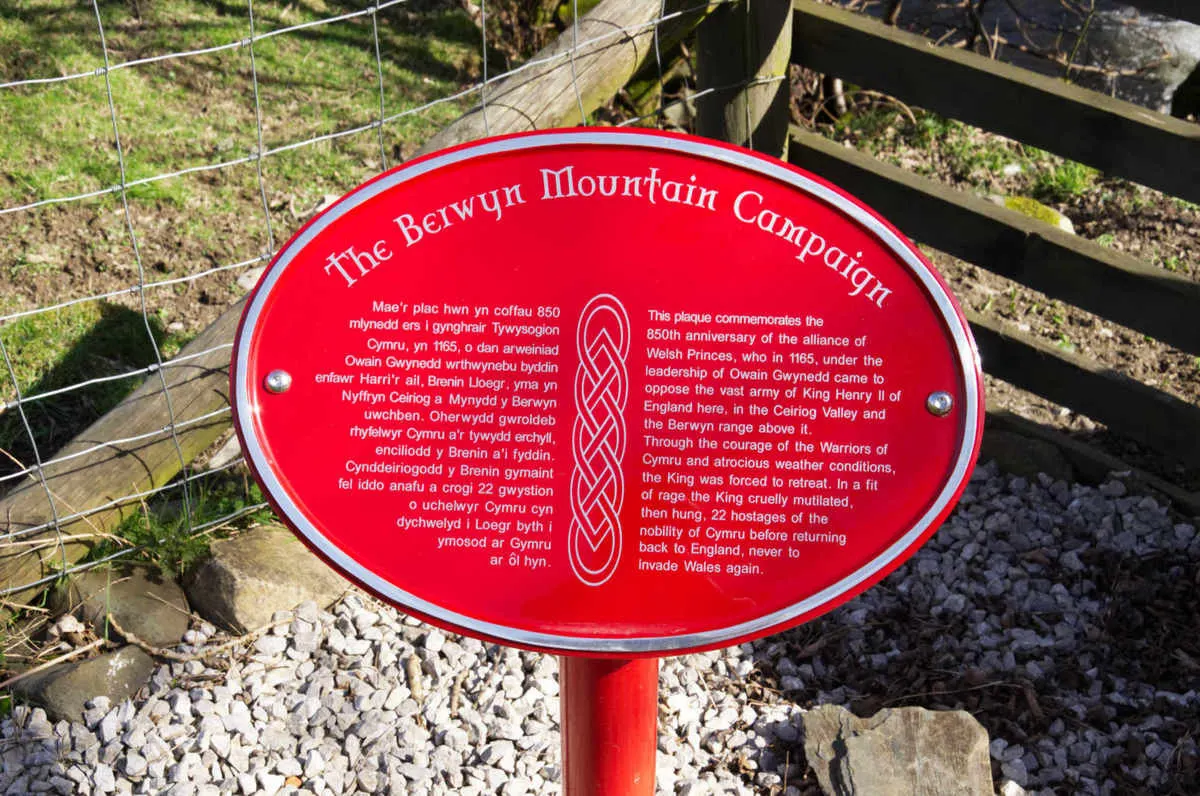
The Plaque
The red plaque commemorates the battle recorded by the name of the ford. It refers to the battle as being part of the Berwyn Campaign as tradition has not given a name to this skirmish unlike the battle of Crogen which took place in the lower Ceiriog Valley (iBeacon 3) and was part of the same attempt by Henry II to subdue the Welsh.
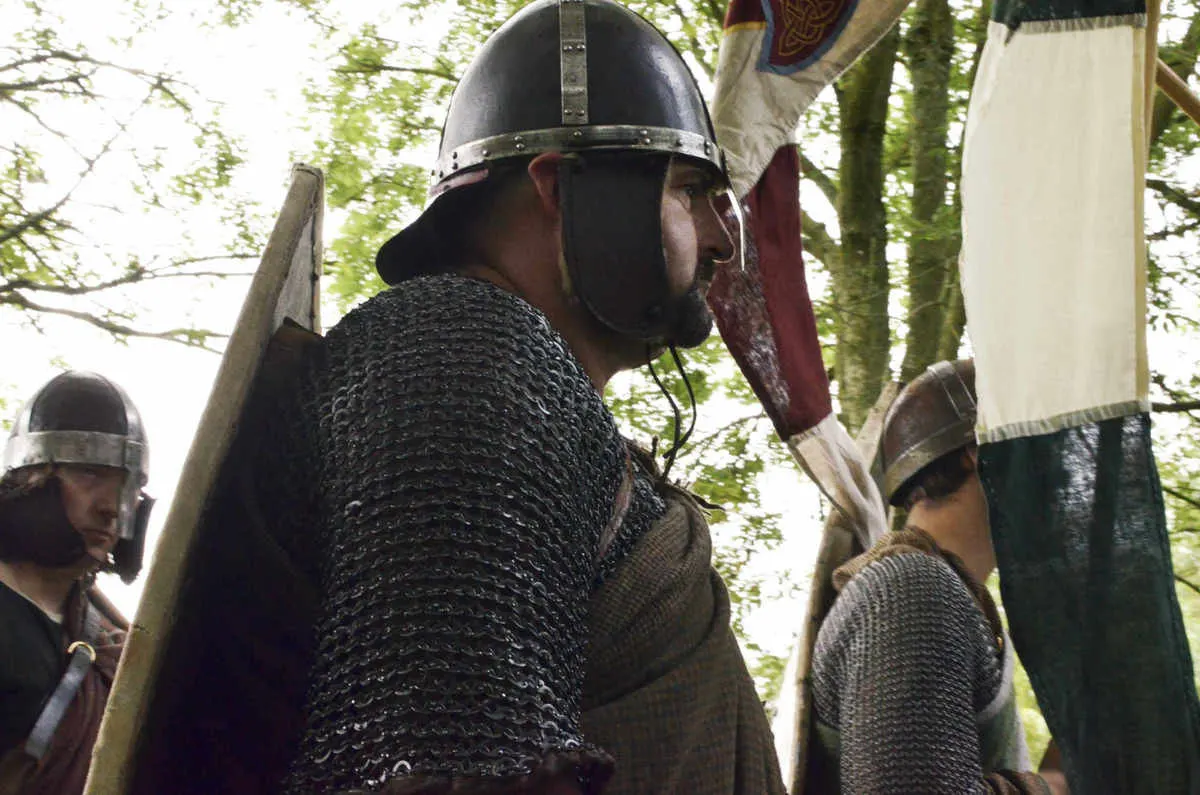
The Berwyn Campaign
In the summer of 1165, King Henry II of England gathered a great army from all parts of his vast Angevin empire at Shrewsbury. Its mission was to destroy the power of the rebellious Welsh Princes once and for all. This army was greater than any that had invaded Wales before and non of the individual Welsh territories could have any hope of defeating it alone. For once all the Welsh rulers came together to oppose Henry II under the leadership of Owain Gwynedd. The allies assembled near Corwen; Owain Gwynedd, his brother Cadwalader, the Princes of Powys, (who had often fought against Gwynedd’s expansion into Powys and had allied with Henry II against Gwynedd earlier), the Lord Rhys of Deheubarth, the rulers of the lands between the Wye and Severn and the men of South Wales. This was the only time in medieval Welsh history that all the Welsh leaders joined together to fight one common enemy.
Henry advanced his army to Oswestry, encamped and waited. The heavily wooded Ceiriog Valley and the Berwyn highlands lay between the two armies. After spending many days in their respective tents King Henry's infamous temper snapped. He gathered his select troops and moved into the lower Ceiriog Valley, while the main bulk of his army from Oswestry went to the upper valley near Tregeiriog. Henry, with his woodsmen clear-felling a slow path through the trees, was ambushed at Crogen near where Castle Mill is now. King Henry narrowly escaping with his own life pushed on up the Ceiriog valley before climbing the Berwyn uplands on the other side. Henry's principal force tried to follow him but were defeated by the Welsh allies here at the river crossing.
King Henry was cut off and harried by Welsh guerrilla tactics on the inhospitable Berwyn moors when a storm hit. The torrential rain and hail went on for days making it impossible to progress through the sodden quagmire. With his supply lines severed and his men starving, Henry ordered a withdrawal off the highland and either through negotiations or combat made his way back to his main army. In a fit of vengeance, Henry had the Welsh hostages, many of them children, horrifically maimed then hung, before his ignominious retreat. He and his army travelled to Chester were he awaited a Danish fleet from Ireland to assist him in his conquest but there were not enough ships to meet his plan. So with this final blow Henry finally gave up his expensive and fruitless venture. He later left Britain not to return for four years. He never invaded Wales again and from then on favoured a more diplomatic approach in his dealings with the Welsh. Wales remained independent for another 120 years.
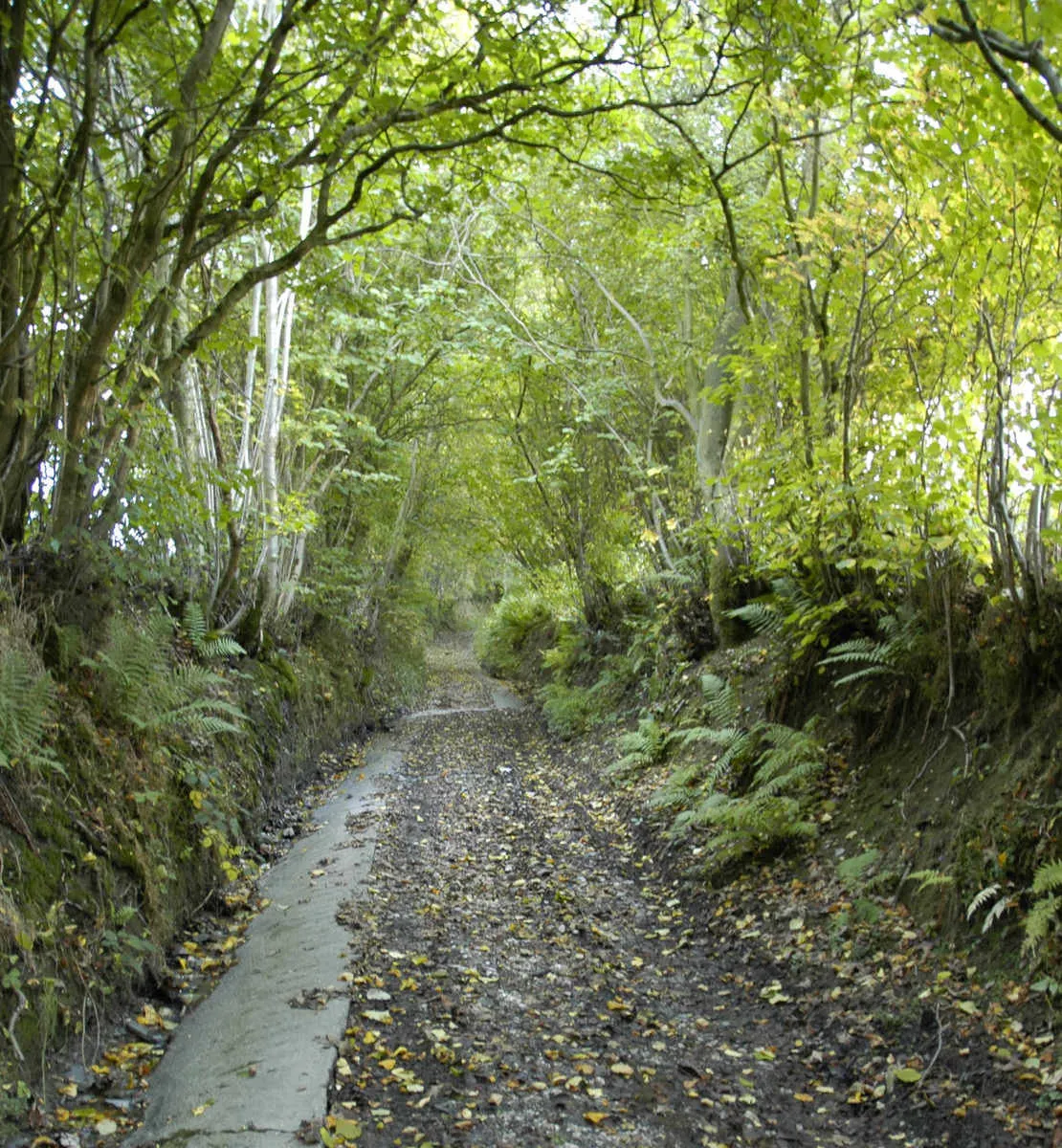
Deep lane. 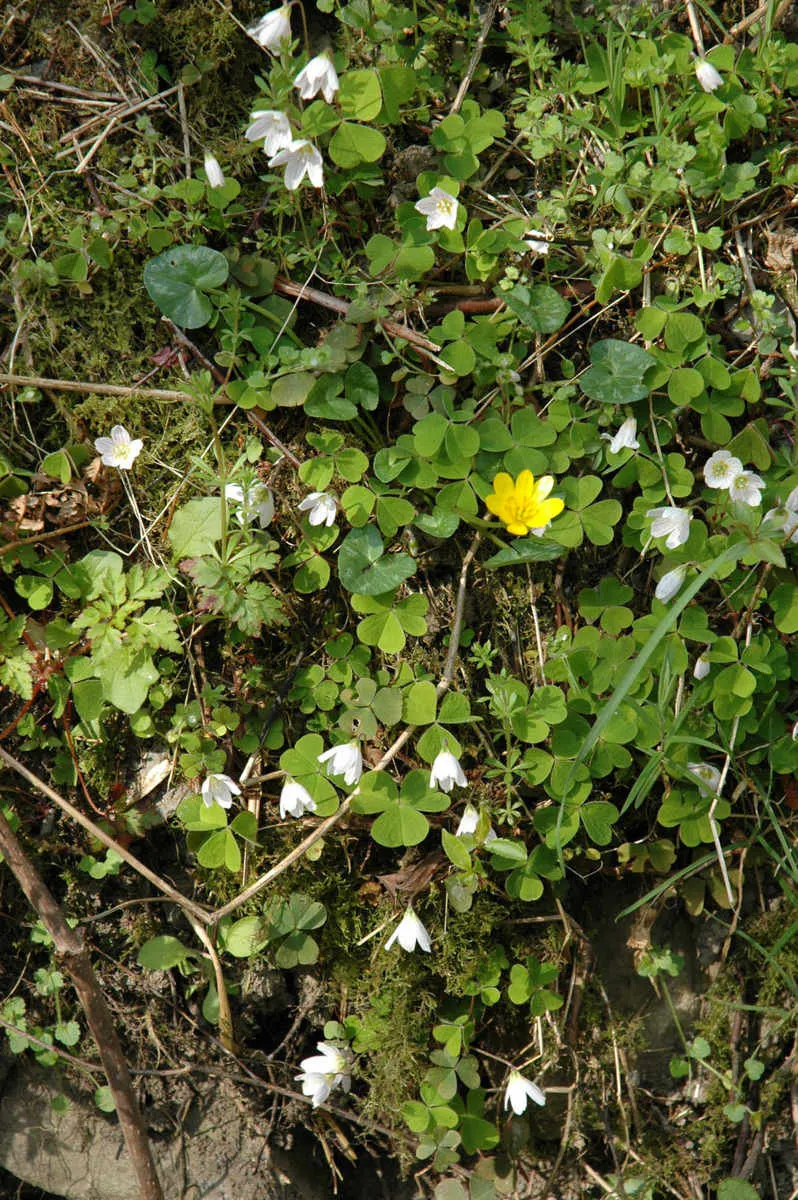
Wood Sorrel and Celandine.
Nature Note
It is hard to imagine such a tumultuous conflict in this beautiful spot today. The hedgerow banks in the deep lane from the B4500 and its continuation, the rough lane that goes up the hill, have a delightful variety of woodland flowers. Wild strawberry, dog-violet, primrose, wood sorrel are just a few of the many plants growing at perfect viewing height.